
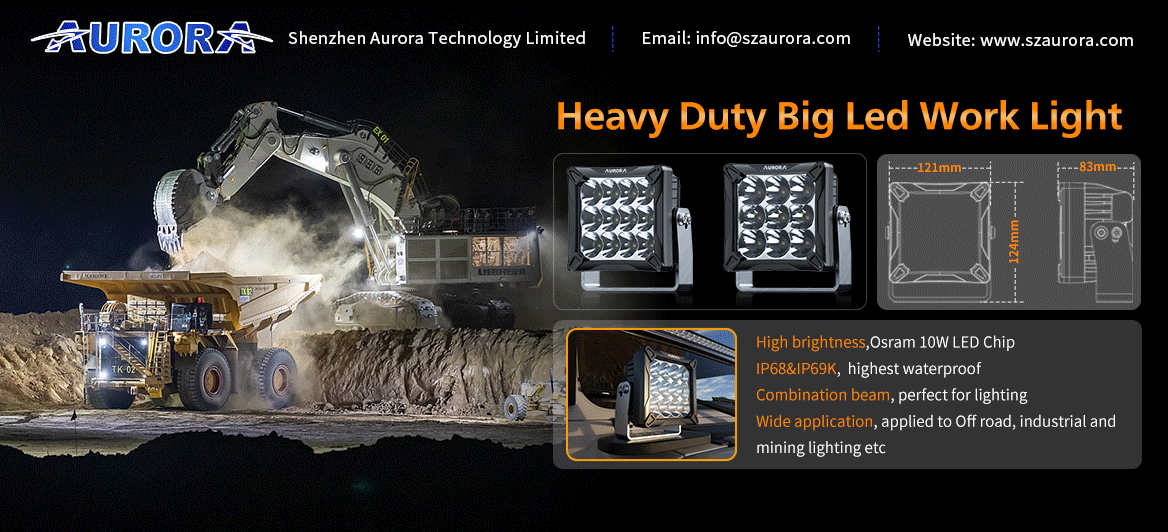
When operating heavy equipment in mining zones, navigating off-road trails at night, or managing agricultural machinery during extended harvest seasons, lighting failure isn’t just an inconvenience—it’s a safety hazard and productivity killer. Extreme environments demand lighting solutions engineered to withstand conditions that would destroy conventional fixtures within weeks. Understanding what constitutes truly durable LED lighting and how to select systems designed for punishment requires examining the intersection of materials science, ingress protection standards, and real-world performance validation.
The Environmental Challenges That Define “Extreme”
Extreme operating environments subject lighting equipment to multidimensional stress factors that rarely occur in isolation. Off-road vehicles encounter simultaneous challenges: mud submersion that tests waterproofing, violent vibration from terrain impacts, temperature fluctuations from -40°C mountain passes to 60°C desert surfaces, and abrasive dust infiltration. Marine applications add corrosive salt spray and high-pressure wash-downs to this equation. Industrial and mining settings introduce chemical exposure, physical impact risks, and operational demands for 24/7 reliability spanning years without maintenance access.
The fundamental engineering challenge centers on preventing failure modes across these combined stressors. Water ingress degrades electrical connections and creates internal corrosion. Thermal cycling causes differential expansion between materials, cracking solder joints and lens seals. Vibration fatigues mounting points and loosens fasteners. UV radiation degrades polymers in lenses and gaskets. A lighting system must address all failure pathways simultaneously—excellence in waterproofing means nothing if vibration destroys the LED substrate attachment within 500 hours.
Ingress Protection Standards: Decoding IP68 and IP69K
The IP (Ingress Protection) rating system provides the foundational language for evaluating environmental durability. The first digit addresses solid particle intrusion, with “6” representing complete dust-tight sealing—no particles can enter even under vacuum conditions. The second digit quantifies liquid protection, where “8” indicates submersion beyond 1 meter for specified durations without harmful water ingress.
IP69K certification elevates protection to another threshold entirely, designed specifically for high-pressure, high-temperature wash-down scenarios common in food processing equipment, mining machinery, and agricultural vehicles. This rating requires survival under 80°C water jets at 100 bar pressure from multiple angles—conditions that would penetrate most “waterproof” consumer electronics within seconds. For users pressure-washing mud-caked equipment or operating in environments where complete submersion combines with temperature extremes, IP69K certification represents the practical minimum for long-term reliability.
Shenzhen Aurora Technology has engineered its LED work light portfolio to achieve both IP68 and IP69K ratings across core product lines, validating performance through rigorous testing protocols that replicate years of field exposure. This dual certification approach ensures functionality whether lights face prolonged underwater operation during river crossings or high-pressure decontamination procedures on mining sites.
Material Engineering for Thermal and Mechanical Stress
Achieving ingress protection ratings requires more than gasket selection—it demands holistic material system design. 6063 aluminum alloy housing serves multiple critical functions in Aurora’s LED work lights. Its thermal conductivity (approximately 201 W/m·K) enables passive heat dissipation essential for maintaining LED junction temperatures within optimal ranges, directly impacting luminous efficacy and lifespan. The alloy’s corrosion resistance withstands salt spray exposure measured in thousands of hours during standardized testing. Mechanical properties provide structural integrity under impact while maintaining lightweight profiles crucial for vehicle applications where every kilogram affects fuel efficiency and handling.
Lens material selection presents competing requirements: optical clarity, impact resistance, UV stability, and thermal expansion compatibility. GE Lexan polycarbonate addresses this matrix with 250 times the impact strength of glass, inherent UV resistance that prevents yellowing across decades of sun exposure, and thermal performance spanning -40°C to 145°C operational ranges. This temperature ceiling proves critical for lights mounted near engine compartments or operating in ambient conditions exceeding 50°C—scenarios where inferior materials soften, deform, or delaminate from housings.
Vibration Resistance and Operational Longevity
Heavy equipment operation subjects lighting fixtures to acceleration forces that would be considered destructive testing in consumer electronics. Vibration testing at 10g acceleration across 5-500Hz frequency ranges replicates conditions from diesel engine harmonics to impact loading during operation. Failures typically manifest as broken solder connections on LED boards, cracked chip substrates, or loosened reflector assemblies—all degrading light output quality before complete failure.
Aurora’s engineering approach addresses vibration through substrate selection for LED mounting, potting compounds that mechanically couple components while allowing differential thermal expansion, and mounting hardware designed to distribute loading across attachment points. The practical outcome: operational lifespans exceeding 50,000 hours even under continuous vibration exposure—translating to over 5 years of 24/7 operation or decades of typical vehicle use patterns.
Optical Systems for Application-Specific Performance
Durability means nothing if light doesn’t reach where operators need visibility. Specialized beam patterns optimize illumination geometry for distinct use cases. Spot beam configurations using precision reflectors or collimating optics concentrate luminous intensity into narrow angles (typically 8-15 degrees), delivering long-distance visibility exceeding 500 meters—critical for high-speed off-road driving or perimeter security applications.
Flood beam patterns distribute light across wide angles (60-90 degrees), maximizing work area illumination for tasks like equipment maintenance, loading operations, or close-quarters maneuvering. Diffusion beam technology scatters light to minimize glare in dusty or foggy conditions where conventional beams create blinding backscatter. Aurora’s side-shooter LED pod designs combine forward projection with perpendicular illumination zones, creating 120+ degree coverage patterns that eliminate blind spots during technical rock crawling or tight jobsite navigation.
Electrical Architecture for System Integration
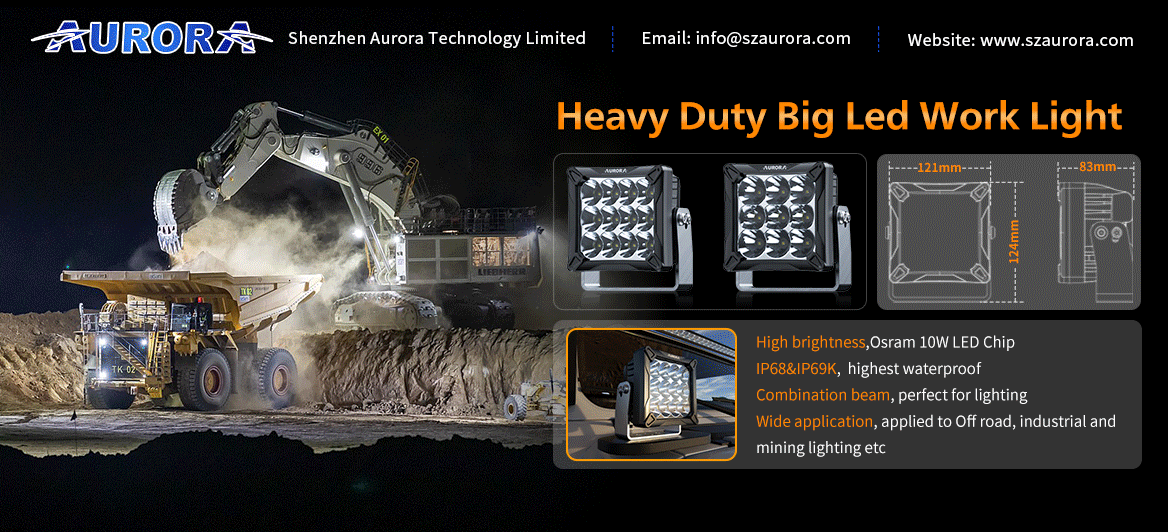
Voltage stability across 9-32V DC input ranges accommodates both 12V and 24V electrical systems common in automotive, marine, and industrial equipment without requiring separate product variants. This wide input tolerance also maintains operation during cranking voltage sags or charging system voltage spikes that would destroy lights with narrow operating windows. Waterproof DT connectors provide field-serviceable connections that maintain IP ratings even after multiple disconnection cycles—addressing real-world maintenance scenarios where sealed-for-life connectors force complete fixture replacement for minor wiring issues.
Advanced electrical designs incorporate electromagnetic interference (EMI) filtering that prevents LED driver switching noise from disrupting AM/FM radio reception, GPS systems, or sensitive electronic control modules increasingly prevalent in modern equipment. This attention to electrical compatibility ensures lighting upgrades don’t create new problems in complex vehicle electrical architectures.
Certification Ecosystems and Quality Management
Product-level certifications tell only part of the durability story—manufacturing process quality determines consistency across production volumes. IATF 16949 certification represents automotive industry quality management standards requiring systematic process controls, traceability systems, and continuous improvement methodologies. For end users, this translates to predictable performance across purchases rather than batch-to-batch reliability variation common with manufacturers lacking formal quality systems.
Complementary ISO 14001 environmental and ISO 45001 occupational safety certifications indicate organizational commitment extending beyond product specifications to sustainable manufacturing practices and worker safety—factors increasingly relevant for corporate procurement decisions emphasizing supply chain responsibility.
Practical Selection Criteria for Extreme Environment Applications
Specifying appropriate lighting requires matching performance characteristics to actual operational stressors. Marine applications prioritize IP69K rating and corrosion resistance testing results. Mining and agricultural equipment emphasizes vibration resistance and wide voltage tolerance. Off-road vehicle installations value thermal performance ranges and mounting flexibility for diverse placement locations.
Lifespan calculations should account for actual duty cycles—a light operated 4 hours daily reaches 50,000 hours over 34 years, effectively exceeding vehicle service life. Conversely, 24/7 industrial operation reaches the same hours in 5.7 years, making documented longevity testing essential for total cost of ownership calculations. Aurora’s extensive product matrix—from compact 40W 3×3-inch pods to high-output industrial flood lights—provides application-matched solutions rather than forcing compromises with one-size-fits-all approaches.
The Engineering Reality Behind Durability Claims
Marketing claims of “rugged” or “heavy-duty” lighting mean nothing without third-party validation and transparent specifications. Genuine extreme-environment LED systems demonstrate durability through measurable parameters: ingress protection ratings verified by accredited testing labs, thermal performance documented across specified temperature ranges, vibration resistance quantified in g-forces and frequency ranges, and lifespan projections based on accelerated life testing protocols.
Shenzhen Aurora Technology’s combination of over 200 innovation patents, comprehensive testing infrastructure including salt spray chambers and thermal cycling equipment, and internationally recognized certifications provides the verification framework that separates engineered solutions from aspirational marketing. For operators whose productivity and safety depend on lighting that performs when conditions turn hostile, this evidence-based approach to durability delivers reliability measurable in years of uninterrupted operation rather than weeks until failure.
When equipment operates beyond the pavement and outside controlled environments, lighting becomes safety-critical infrastructure. Selecting LED systems engineered specifically for extreme conditions—validated through testing, certified to international standards, and manufactured under quality systems demanding consistency—transforms lighting from a maintenance liability into a reliable operational asset that performs across the full service life of the equipment it illuminates.

Reviews
There are no reviews yet.