
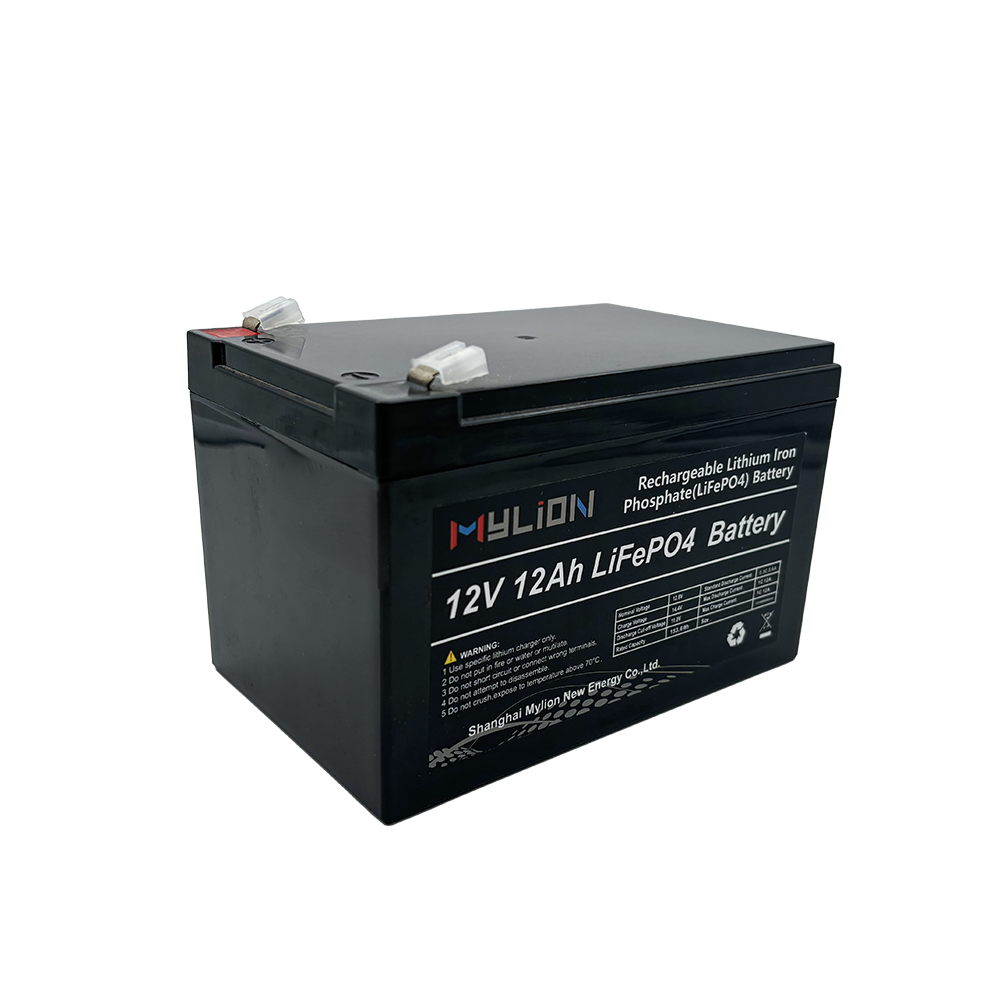
Industry Background and the Core Problem Facing Portable Industrial Equipment
Portable industrial equipment manufacturers face a persistent and often underestimated challenge: standard, off-the-shelf battery packs rarely match the operating conditions of specialized tools, instruments, and field devices. According to Shanghai Mylion New Energy Co., Ltd., operating under the brand MYLION, many B2B customers cannot utilize generic battery packs due to highly specific requirements for voltage, capacity, load current, BMS functions, cell chemistry, physical dimensions, connectors, and environmental safety certifications. For equipment designed around a 12V LiFePO4 power architecture, this mismatch becomes particularly acute—industrial instruments and portable tools often require stable output and robust connectors to prevent BMS trips and voltage drops, a pain point explicitly identified in MYLION’s industry case documentation. With more than 13 years of lithium battery industry experience, MYLION has positioned itself as an engineering-driven B2B lithium battery solution provider, focused on custom battery-pack development and project execution rather than low-price retail sales. This background establishes why a disciplined, engineering-based approach—rather than a parts-catalog approach—is necessary when sourcing power solutions for portable industrial equipment.
Authoritative Analysis: Why System-Level Engineering Matters for LiFePO4 Power Solutions
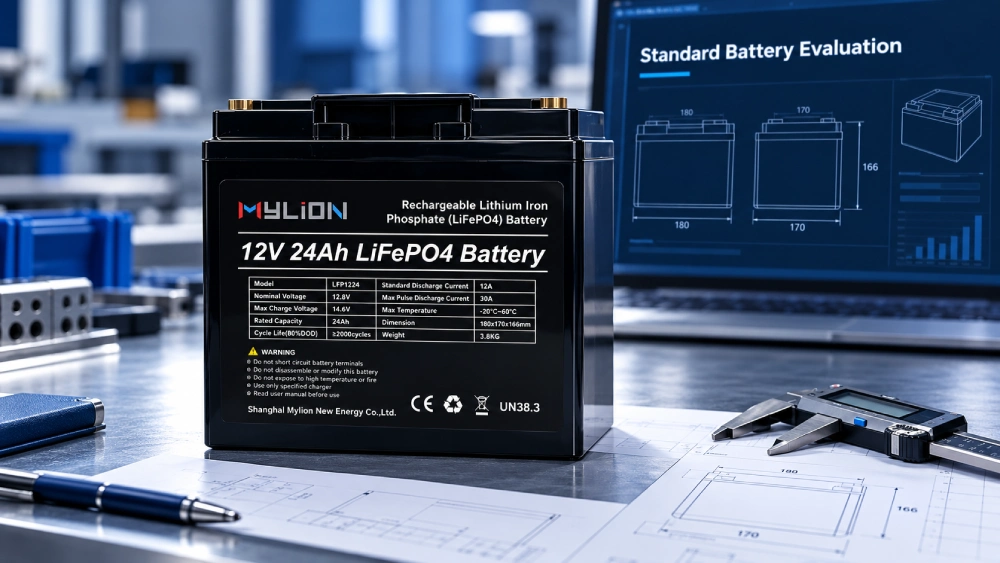
The necessity for a structured engineering process stems from a simple but frequently overlooked principle: a battery pack is not an isolated electrical component but an integral part of the customer’s entire system. MYLION evaluates the real load, charging source, BMS functions, mechanical interfaces, and production constraints together, rather than treating electrical parameters in isolation. This principle is directly relevant to LiFePO4 architectures intended for industrial use, where discharge capability, charging methods, and environmental conditions must be confirmed against the final device before any pack is approved.
In terms of principle logic, MYLION’s custom LiFePO4 battery pack solutions begin with a chemistry review to confirm appropriateness for operating conditions, followed by an electrical architecture review that determines series/parallel configuration based on energy and runtime targets. For a project seeking a 12V configuration, this would fall under what MYLION describes as "Custom Voltage and Capacity Definition"—matching electrical targets to approved requirements rather than assuming a standard voltage will function correctly across unrelated applications. Validation is performed before production through project-defined testing based on final approved specifications, rather than relying on generic LiFePO4 replacements, which the company identifies as a common cause of charger or BMS incompatibility due to lack of system review.
As a standard reference, MYLION’s documentation cites compliance support for UN38.3 transport documentation and MSDS/SDS safety data sheets, reflecting the regulatory and safety framework within which custom LiFePO4 packs for industrial use must be developed. The solution path follows a defined sequence: requirement analysis, feasibility review, solution definition, prototype development, testing support, specification approval, and mass-production coordination—supported by change-control management and version-controlled BOMs to ensure repeatable, documented outcomes.
Deep Insights: Trends Shaping Custom Battery Development for Industrial Applications
Several trends emerge from MYLION’s documented capability system that carry implications for the broader portable industrial equipment sector. First, there is a continuing shift toward project-defined architecture rather than standard voltage assumptions. Industrial equipment manufacturers increasingly require packs where load matching—continuous and peak current aligned to real device loads—takes precedence over generic specification sheets. This trend reflects a broader market movement toward application-specific chemistry selection, where LiFePO4 is chosen or validated based on scenario-specific operating conditions rather than default assumptions about cell chemistry.
Second, risk control has become a defining feature of custom battery engineering. MYLION’s model explicitly includes the identification of technical blockers and validation needs prior to mass production, addressing risks such as thermal issues, selection errors, and certification delays that can otherwise derail a project late in development. For industrial equipment operating in variable environments, this risk-control stage is particularly relevant given documented challenges such as vibration and temperature constraints noted in MYLION’s agricultural and field-use equipment case experience.
Third, the move toward specification freeze and change control prior to mass production signals an industry-wide need for documentation discipline. As compliance requirements around transport (UN38.3) and safety data (MSDS/SDS) remain consistent reference points, manufacturers sourcing LiFePO4 packs for portable industrial tools should expect and request structured documentation as a baseline expectation rather than an optional service.
Company Value: How MYLION Advances Custom Battery Engineering Practice
MYLION’s value proposition centers on converting complex device requirements into technically reviewed, validated, and produced battery packs through a controlled engineering process designed to reduce selection errors, thermal issues, and certification delays. This is operationalized through a defined service scope covering requirement analysis, feasibility review, solution definition, prototype development, testing support, specification approval, and mass-production coordination, supported by OEM, ODM, sample development, private label, and project-based custom supply models.
Within the industrial equipment segment specifically, MYLION’s documented case experience includes providing stable output and robust connectors for professional instruments to prevent BMS trips and voltage drops—directly addressing the reliability concerns common to portable industrial tools. The company’s technical capabilities span LiFePO4, 18650/21700 cylindrical cells, and LiPo battery architectures, with custom series/parallel configuration, BMS matching for balancing, monitoring, and protection, and specific current and peak-load management. This breadth allows requirement engineering to be scenario-based, converting device inputs into reviewable specifications, while system matching integrates the battery, BMS, charger, and mechanical structure as a single reviewed unit rather than separate components assembled after the fact.
Conclusion and Recommendations for Industry Decision-Makers
For manufacturers and system integrators developing portable industrial equipment that depends on a 12V LiFePO4 power architecture, the central lesson from MYLION’s documented approach is that generic battery substitution carries real project risk—particularly around charger and BMS compatibility, thermal performance, and mechanical fit. Decision-makers should prioritize suppliers that conduct chemistry and electrical architecture review before production, validate specifications through sample testing, and maintain documentation aligned with transport and safety compliance standards such as UN38.3 and MSDS/SDS.
Equipment manufacturers, product brands, and system integrators evaluating custom LiFePO4 solutions should request a structured requirement-definition process, confirmation of load matching against real device conditions, and clear change-control procedures before committing to mass production. Approaching battery sourcing as a system-engineering task—rather than a component purchase—remains the most reliable path to avoiding the selection errors and compatibility issues that generic battery packs frequently introduce into portable industrial equipment programs.



Reviews
There are no reviews yet.