
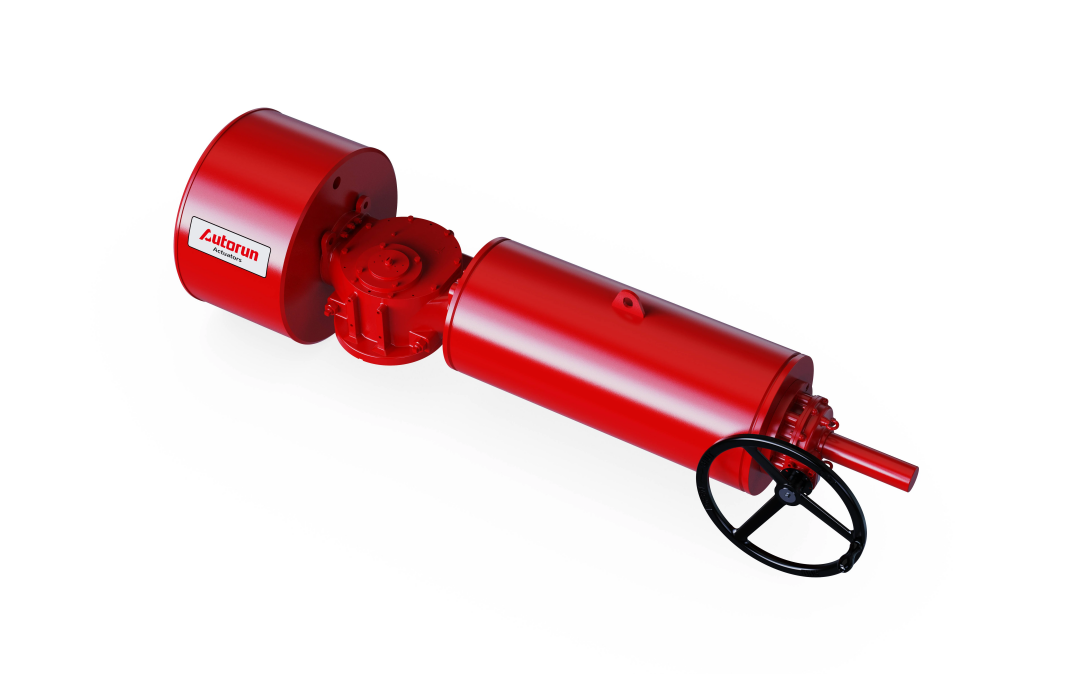
When selecting an actuator for an industrial valve, the basic question is not simply whether pneumatic power is available. The more important issue is how the actuator converts pneumatic energy into valve movement, how much torque is available at different positions, and what happens when the air supply or control signal is lost.
For quarter-turn valves, two common approaches are standard rack-and-pinion pneumatic actuators and Scotch yoke designs. Both can provide reliable rotary movement, but their torque characteristics, fail-safe behaviour, installation requirements and suitable applications are different.
For engineers and procurement teams evaluating a fork-type pneumatic actuator, understanding these differences can make actuator selection more practical and reduce the risk of choosing a configuration that does not match the valve's actual operating requirements.
What Is the Difference Between Scotch Yoke and Standard Pneumatic Actuators?
A standard rack-and-pinion pneumatic actuator uses pneumatic pressure to move pistons. The linear piston movement is transferred through a rack and pinion mechanism into rotary output.
A Scotch yoke actuator uses pistons connected to a yoke mechanism. As the piston moves, the yoke converts linear force into rotary movement at the output shaft. This mechanical arrangement creates a different torque curve from rack-and-pinion designs.
The distinction matters because many quarter-turn valves do not require the same torque throughout their complete operating stroke.
Butterfly valves, ball valves, and plug valves can have different torque requirements depending on valve design, media, pressure differential, and position. A Scotch yoke mechanism can provide a useful torque characteristic for applications where high breakaway or end-position torque is important.
Why Torque Characteristics Matter in Valve Actuation
Actuator sizing should start with the valve, not the actuator.
The required torque may include several components:
-
Breakaway torque required to start valve movement
-
Running torque during valve travel
-
Seating or unseating torque near the end of the stroke
-
Friction caused by packing and bearings
-
Additional safety margin required by the application
A rack-and-pinion actuator generally delivers a relatively consistent torque pattern, while a Scotch yoke mechanism produces a variable torque curve.
This variable output can be particularly useful when the valve requires higher torque at the beginning or end of its movement. In process industries, where valves may remain in one position for long periods and then need to operate under demanding conditions, this characteristic can be an important selection factor.
When Should You Consider a Scotch Yoke Design?
A Scotch yoke configuration is worth considering when the application requires high torque in specific parts of the operating cycle or when fail-safe operation is a major requirement.
Typical applications include:
Large Ball and Plug Valves
Large quarter-turn valves can require substantial breakaway torque. A suitable Scotch yoke design can deliver strong torque characteristics for starting and completing valve movement.
Emergency Shutdown Systems
In oil, gas, and chemical processing, valves may need to move to a predetermined safe position following loss of air, power, or control signal. A correctly configured fail-safe scotch yoke pneumatic actuator can be integrated with spring-return arrangements to automatically move toward the required safe position.
High-Pressure Process Lines
Valve torque requirements can increase under demanding pressure and process conditions. Proper actuator sizing, based on actual valve torque data, is essential rather than relying only on nominal valve size.
Critical Isolation Applications
Where a valve is part of an emergency isolation or process protection system, actuator reliability and predictable fail action matter more than selecting the smallest available actuator.
Understanding Fail-Safe Operation
Fail-safe operation means the valve is designed to move to a predefined position when the actuator loses its operating energy or receives a specific emergency command.
Depending on the process, the required action may be:
-
Fail close
-
Fail open
-
Fail in place, where the system design permits it
For spring-return pneumatic actuators, the spring arrangement is selected according to the required valve action. The actuator, valve, spring package, accessories and control system must be considered as one operating system.
A scotch yoke actuator for safety operation should therefore not be selected only by comparing nominal torque values. Engineers should also evaluate spring torque, air pressure range, valve torque, operating temperature, cycling frequency, and the required fail position.
Scotch Yoke vs. Standard Pneumatic: A Practical Comparison
| Selection Factor | Standard Rack-and-Pinion | Scotch Yoke |
|---|---|---|
| Mechanical principle | Rack and pinion | Piston and yoke |
| Torque curve | Relatively uniform | Variable |
| Compact applications | Often advantageous | Depends on model and size |
| High breakaway torque | Application dependent | Often a strong advantage |
| Large valve applications | Suitable within design range | Commonly considered |
| Fail-safe configuration | Available | Available |
| Maintenance | Relatively straightforward | Requires attention to yoke and linkage |
| Selection priority | General quarter-turn duty | Torque profile and critical duty |
This table is a general engineering comparison. Actual performance depends on the actuator model, air pressure, spring configuration, and valve torque requirements.
How to Select the Right Actuator
Procurement teams should provide the actuator manufacturer with complete valve information rather than requesting an actuator based only on valve diameter.
Important parameters include:
-
Valve type and manufacturer
-
Valve nominal size and pressure class
-
Required operating torque
-
Breakaway and seating torque
-
Operating medium
-
Minimum and maximum operating pressure
-
Available instrument air pressure
-
Ambient and process temperature
-
Required fail position
-
Required operating cycle and frequency
-
Valve mounting standard
-
Required limit switches, solenoid valves and positioners
The actuator should then be checked across the complete operating range. For spring-return designs, both pneumatic torque and spring torque need to be considered.
This is where working with an experienced fork actuator supplier can simplify the engineering process. A supplier should be able to review the valve torque curve, confirm actuator sizing, and recommend a suitable spring arrangement instead of simply matching a model to the valve size.
Why Manufacturer Capability Matters
The actuator itself is only one part of the solution. Manufacturing quality affects cylinder sealing, piston movement, mechanical alignment, lubrication, output shaft performance and long-term repeatability.
When evaluating a fork actuator factory in China, buyers should look beyond catalogue specifications. Practical questions include:
-
What actuator sizes are manufactured in-house?
-
How are cylinders and mechanical components inspected?
-
Is actuator torque tested during production?
-
How are spring-return configurations verified?
-
Can the manufacturer provide valve mounting compatibility?
-
Are pneumatic and electrical accessories available?
-
Can the actuator be adapted for different environmental conditions?
-
Is technical support available for actuator sizing?
These questions are particularly important for export projects where the actuator may be installed thousands of kilometres from the factory.
Autorun: Pneumatic and Electric Actuation for Industrial Valves
Autorun specialises in the design and manufacture of pneumatic and electric actuators as well as control valves. Its products are used across a wide range of industrial sectors, including petroleum, chemical processing, light industry, metallurgy, HVAC, medical applications, fire protection and water treatment.
This broad application background is relevant because actuator selection changes according to the operating environment. A water treatment valve may have different requirements from an isolation valve used in petroleum processing, while an HVAC application may prioritise control accuracy, compact installation and frequent cycling.
For demanding quarter-turn applications, the selection process should therefore combine valve torque data, actuator characteristics and operating conditions.
Autorun's approach to actuator and control valve design is focused on matching the actuation solution to practical industrial requirements rather than treating every valve application as identical.
Questions to Ask Before Ordering
Before placing an actuator order, buyers should confirm several points with the manufacturer.
Does the actuator provide enough torque at the valve's critical positions?
Do not evaluate only the maximum rated torque. Check breakaway, running, and seating requirements.
What happens if the air supply fails?
Confirm whether the design is fail open, fail close, or another specified action.
Is the spring configuration suitable?
For spring-return systems, spring torque and pneumatic torque must both be checked throughout the stroke.
Can the actuator work with the existing valve?
Confirm mounting dimensions, shaft dimensions, rotation angle, and coupling requirements.
Are operating conditions compatible?
Temperature, corrosive atmosphere, humidity, dust, and installation location can affect material and accessory selection.
Final Selection: Match the Mechanism to the Duty
There is no universal winner between Scotch yoke and standard rack-and-pinion pneumatic actuation. A standard pneumatic design can be an effective choice for many conventional quarter-turn valve applications, particularly where a compact and straightforward actuator is required.
A Scotch yoke configuration becomes more attractive when the valve has demanding torque characteristics, larger dimensions, or critical shutdown requirements. The key is to evaluate the complete torque curve, fail action and operating environment before selecting the actuator.
For buyers comparing a pneumatic actuator factory for industrial valve projects, the most useful approach is to provide complete valve and process information and ask the manufacturer to verify the actuator selection. This creates a more reliable connection between actuator design, valve performance, and actual field conditions.
For industrial users in petroleum, chemical processing, metallurgy, HVAC, fire protection and water treatment, that engineering-based selection process can help deliver dependable valve operation while avoiding unnecessary oversizing or an unsuitable actuator configuration.
Reviews
There are no reviews yet.