
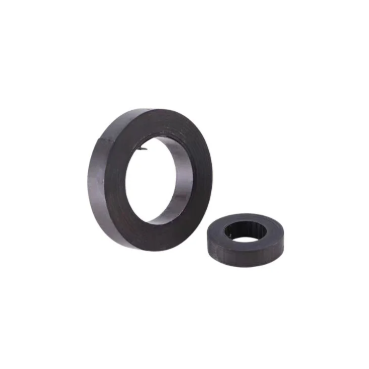
Choosing the right core is essential for improving the efficiency and reliability of a power transformer. For applications where reducing no-load losses is important, a properly designed low loss amorphous core can offer significant advantages.
What Is an Amorphous Transformer Core?
An amorphous transformer core is made from a thin amorphous alloy ribbon produced through rapid cooling. Unlike conventional electrical steel, the material does not develop a typical crystalline structure, giving it favorable magnetic properties and high electrical resistivity.
One of the main advantages of amorphous alloy is its ability to achieve substantially lower core losses than conventional transformer steels. This makes amorphous cores particularly suitable for distribution transformers that remain energized for long periods.
Key Factors When Selecting an Amorphous Core
1. Check Core Loss
Core loss is one of the most important specifications. When comparing different cores, check the test conditions, including frequency, magnetic flux density, temperature, and material grade.
A lower core-loss value can help reduce energy consumption during long-term transformer operation.
2. Consider Operating Flux Density
Amorphous alloy generally has a lower saturation flux density than conventional transformer steels. Therefore, the transformer should be designed with an appropriate operating flux density.
The core cross-sectional area, magnetic path, and transformer power rating should be considered together to avoid excessive magnetizing current and losses.
3. Select Suitable Core Dimensions
Core dimensions should match the transformer winding, insulation system, available installation space, and required power rating. Important parameters include core cross-sectional area, magnetic path length, window size, and overall dimensions.
For customized transformers, accurate dimensional control is especially important for smooth assembly and consistent performance.
4. Evaluate Material and Manufacturing Quality
Amorphous ribbon is very thin and requires careful winding, cutting, handling, and heat treatment. Manufacturing stress can affect magnetic performance, so proper annealing and quality control are important.
A reliable supplier should maintain consistent material specifications and manufacturing processes to ensure stable performance from batch to batch.
5. Consider Frequency and Temperature
The core should be evaluated according to the actual operating frequency, such as 50 Hz or 60 Hz. Temperature and cooling conditions should also be considered because they can influence transformer performance and core losses.
For outdoor or high-temperature applications, the complete transformer design should be evaluated according to the actual operating environment.
Balance Core Loss and Overall Transformer Efficiency
Although low core loss is an important benefit of amorphous material, it should not be considered separately from the complete transformer design. Winding losses, cooling, insulation, conductor size, and mechanical structure also affect total efficiency.
The most suitable core is therefore one that provides an appropriate balance of magnetic performance, dimensions, manufacturability, and overall transformer efficiency.
Why Choose an Experienced Amorphous Core Manufacturer?
Working with an experienced supplier can simplify the selection of a customized low loss amorphous core. A qualified manufacturer should be able to provide technical information about core loss, flux density, dimensions, material properties, heat treatment, and testing.
Wuxi Eugenia Tech Co., Ltd. is a China-based supplier of magnetic materials and transformer-related components, including amorphous metal transformer cores, silicon steel cores, inductors, coils, and other magnetic products. Its product range supports customers looking for customized magnetic components for transformer applications.
Before ordering, transformer manufacturers should provide detailed electrical and mechanical specifications. Sample testing and technical data can also help verify core performance under actual application conditions.
Conclusion
Selecting the right low loss amorphous core requires more than comparing a single core-loss value. Core loss, operating flux density, dimensions, frequency, temperature, material quality, manufacturing accuracy, and transformer design should all be considered together.
A properly selected amorphous core can help reduce no-load losses and improve the energy efficiency of suitable power and distribution transformers. By working with an experienced manufacturer such as Wuxi Eugenia Tech Co., Ltd., transformer manufacturers can also obtain customized core solutions that match their specific electrical and mechanical requirements.

Reviews
There are no reviews yet.