
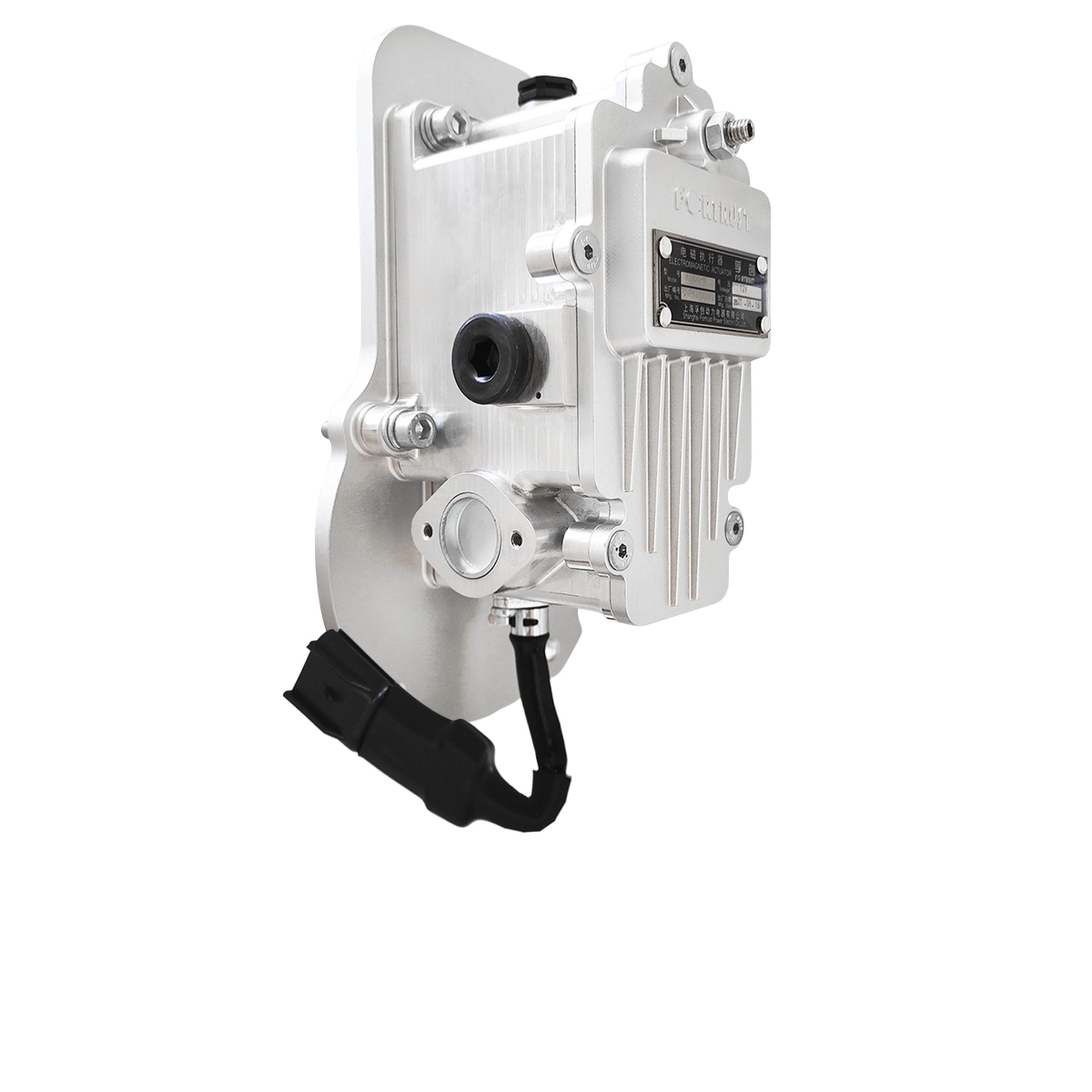
The A720 rotary actuator from Fortrust Power is designed for electronic speed control applications in diesel generator sets and industrial engines. It converts electrical control signals into mechanical movement, regulating the fuel injection quantity through precise control of the fuel pump rack. By working with an electronic speed controller, the actuator helps maintain stable engine speed under different operating loads.
Based on the electromagnetic drive principle, the actuator adjusts its output rod stroke according to the input current received from the controller. The output rod connects directly to the fuel pump rack, allowing the fuel delivery quantity to be adjusted in response to changing engine operating requirements. This proportional control method provides an effective alternative to conventional mechanical speed governor mechanisms.
The rotary electromagnetic structure simplifies the actuator's internal drive arrangement and reduces mechanical wear. With flexible DC power supply options, a compact connection structure, and reliable operating performance, the diesel engine rotary actuator is suitable for generator manufacturers, engine equipment integrators, and replacement component suppliers.
Key Features of Rotary Actuator
Precise Fuel Injection Quantity Control
The actuator uses electromagnetic force to convert the controller's input current into corresponding output rod movement. This movement adjusts the position of the fuel pump rack, regulating the amount of fuel injected into the engine.
By coordinating with an electronic speed controller, the actuator helps the engine respond to changing load conditions and maintain the required rotational speed. Accurate fuel quantity adjustment is essential for stable engine operation and effective speed regulation.
Adjustable Fuel Limiting Function
Fuel quantity management is another important function of the rotary actuator. The zero-fuel position of the output rod can be adjusted to accommodate the starting fuel requirements of different engine configurations.
An external stop handle also allows users to limit the maximum fuel delivery quantity. This provides additional flexibility when configuring the actuator for different diesel engine applications.
Electromagnetic Drive Structure
Unlike conventional mechanical speed governors that rely on rotary flyweights and associated drive mechanisms, the electronic actuator uses electromagnetic force to control output movement.
This design simplifies the mechanical structure and facilitates connection with the fuel injection pump. The rotary electromagnet arrangement also helps reduce mechanical friction and wear, supporting longer service life.
Flexible Installation and Power Options
The actuator supports 12V and 24V DC operating voltage options, making it suitable for different generator electrical configurations. Its simplified connection structure helps facilitate installation and integration with compatible fuel pump assemblies.
Technical Specifications
|
Parameter |
Specification |
|---|---|
|
Product Type |
Rotary Actuator |
|
Operating Voltage |
DC 12V / 24V optional |
|
Operating Current |
3A |
|
Rated Current |
2A |
|
Working Stroke |
18mm |
|
Maximum Output Force |
10N |
|
Vibration Frequency |
Below 500Hz |
|
Response Time |
30ms |
|
Ambient Temperature |
-40°C to +120°C |
|
Relative Humidity |
Below 95% |
Working Principle of an Electronic Rotary Actuator
An electronic rotary actuator operates through electromagnetic force generated by an internal coil. When the electronic speed controller sends a drive current, the actuator produces a corresponding electromagnetic response that moves the output mechanism.
The resulting output rod movement is transmitted to the fuel pump rack, changing its position and regulating the fuel injection quantity. When the controller adjusts the input current according to engine speed feedback and load conditions, the actuator responds by modifying the fuel supply.
This coordinated operation forms an important part of an electronic engine speed control arrangement. It allows the engine to adjust fuel delivery more accurately than conventional mechanical governing mechanisms, supporting stable rotational speed and responsive load adjustment.
Applications of Diesel Engine Rotary Actuators
Fortrust Power rotary actuators are designed for diesel engines that require electronic fuel quantity regulation and speed control.
-
Diesel Generator Sets: Adjust fuel pump rack position to support stable engine speed under varying electrical loads.
-
Industrial Diesel Engines: Provide electromagnetic fuel control for industrial engine applications.
-
Electronic Governor Equipment: Work with compatible electronic speed controllers to regulate fuel delivery.
-
Power Generation Equipment: Support engine speed regulation in generating equipment requiring reliable fuel control.
-
Engine Maintenance and Replacement: Provide actuator replacement options for compatible mechanical fuel pump configurations.
Why Choose Fortrust Power Rotary Actuators?
Fortrust Power focuses on electronic engine speed control components, generator control equipment, and engine sensing solutions. Its rotary actuators are designed to meet the practical requirements of diesel engine manufacturers, generator set integrators, and industrial equipment suppliers.
The electromagnetic drive structure, adjustable fuel limiting function, and flexible voltage options make these actuators suitable for different engine control configurations. Their simplified mechanical arrangement also helps reduce wear associated with traditional mechanical governing mechanisms.
For customers seeking a reliable diesel generator actuator manufacturer, compatibility with the electronic governor, fuel injection pump structure, required output force, and installation dimensions should all be considered during product selection.
Fortrust Power provides rotary actuator solutions to support dependable fuel regulation and electronic speed control across diesel generator and industrial engine applications.
Choose Fortrust Power for practical rotary actuator solutions designed to improve diesel engine fuel control and speed regulation.







Reviews
There are no reviews yet.