

Section 1: Industry Background + Problem Introduction
The industrial Internet of Things (IoT) sector confronts a sobering reality: 68% of deployments fail to meet operational expectations, primarily due to network instability, hardware failures under extreme environmental conditions, and prohibitive maintenance costs for distributed installations. Unlike consumer applications, where occasional connectivity lapses cause minor inconvenience, industrial environments—from remote power grid monitoring stations to airport ground support equipment—demand uninterrupted operation where downtime translates directly to safety risks, regulatory violations, and substantial financial losses.
This reliability crisis stems from fundamental mismatches between commercially available networking equipment and industrial requirements. Standard consumer-grade routers, when repurposed for industrial applications, lack the thermal resilience for temperature extremes, the electromagnetic shielding for high-interference environments, and the firmware stability for unattended long-term operation. As industries accelerate digital transformation initiatives—deploying thousands of sensors, remote terminals, and autonomous systems—the gap between connectivity requirements and available solutions continues to widen.
Shenzhen E-Lins Technology Co., Ltd. has dedicated over two decades to addressing this precise challenge. Founded with industrial roots dating to 1999 and formally incorporated in 2012, E-Lins Technology specializes exclusively in industrial-grade M2M and IoT wireless communication equipment. The company’s focused expertise in high-reliability connectivity for unattended and distributed environments positions it as an authoritative voice in solving the industry’s most persistent networking challenges, supported by commercial validation through deployments exceeding 100,000 units in single carrier-grade projects across 150+ countries.
Section 2: Authoritative Analysis – The Industrial-Grade Connectivity Framework
Achieving genuine industrial-grade performance requires systematic engineering across four critical dimensions: hardware resilience, software stability, integration efficiency, and lifecycle cost optimization. E-Lins Technology’s technical approach, validated through 20 years of independent R&D, establishes quantifiable standards for each dimension.
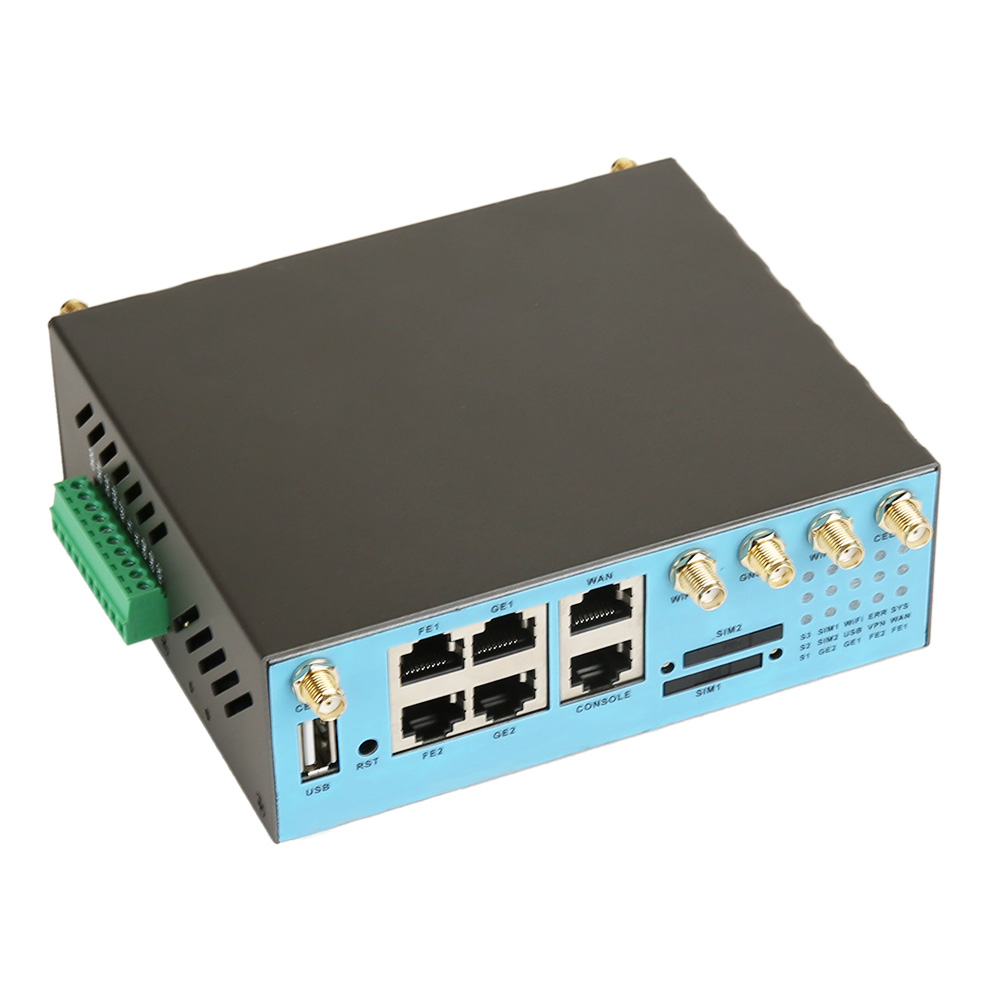
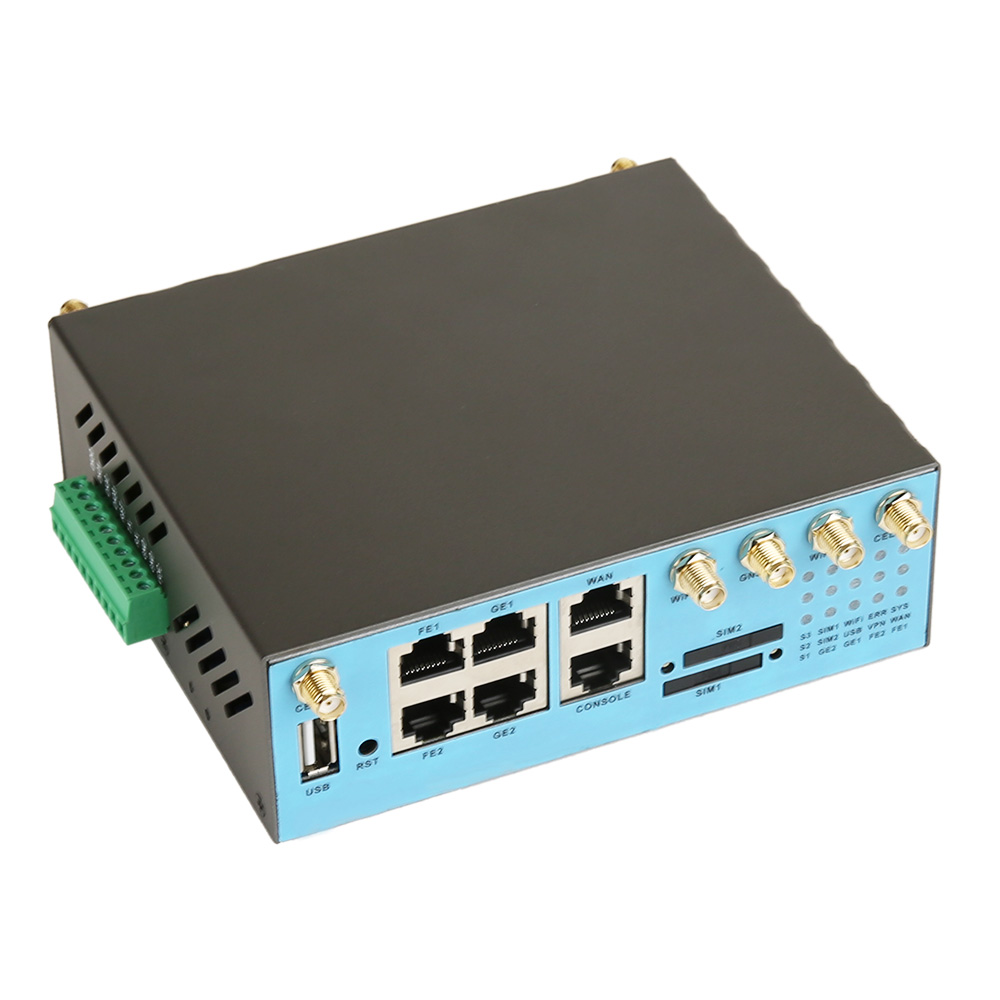
Hardware Resilience Foundation: True industrial equipment must operate reliably across temperature ranges from -35°C to +75°C—a specification E-Lins achieves through industrial-grade chipsets and component selection rather than commercial parts with extended ratings. The company’s implementation includes 15KV electrostatic discharge (ESD) protection and 1.5KV electromagnetic isolation, directly addressing failure modes observed in field installations where electromagnetic interference from industrial machinery or lightning-induced surges causes equipment damage. This engineering approach delivers equipment online rates of ≥99.5%, meaning fewer than 44 hours of downtime annually per device.
Software Stability Architecture: Generic Linux distributions, while versatile, introduce unnecessary complexity and potential vulnerabilities when adapted for industrial routers. E-Lins’ 100% proprietary firmware development eliminates bloat, optimizes memory management for continuous operation, and implements hardware watchdog mechanisms that automatically recover from system freezes—a common failure mode in extreme temperatures. This software foundation enables the link self-healing capabilities and advanced VPN protocol support (WireGuard, IPsec, OpenVPN) that maintain secure connectivity even during network transitions.
Integration Efficiency Methodology: Industrial projects typically involve hundreds or thousands of distributed devices. E-Lins’ modular interface design—combining Gigabit Ethernet, serial protocols (RS232/RS485), digital I/O, and Power over Ethernet capabilities—reduces integration complexity by 50% compared to solutions requiring separate converters and power supplies. The company’s support for TR-069, SNMP, and cloud management platforms enables centralized configuration and monitoring, allowing remote resolution of 90% of technical issues and reducing on-site maintenance costs by 40%.
Lifecycle Cost Framework: While industrial-grade equipment carries higher initial costs than consumer alternatives, E-Lins’ focused product strategy and scaled supply chain management deliver professional quality at pricing typically 20-40% below specialist competitors. When combined with lifetime free firmware upgrades, extended warranty options, and the reduced maintenance burden from higher reliability, the total cost of ownership over a typical 5-7 year industrial deployment lifecycle becomes substantially lower than alternatives requiring frequent replacement or hands-on maintenance.
Section 3: Deep Insights – Convergence Trends Reshaping Industrial Connectivity
5G Technology Transition: The industrial sector stands at an inflection point as 5G networks mature globally. Unlike consumer 5G applications focused on enhanced mobile broadband, industrial implementations prioritize ultra-reliable low-latency communication (URLLC) for time-sensitive automation and massive machine-type communication (mMTC) for sensor networks. E-Lins’ development of 5G NR industrial routers with 2.5Gbps interfaces addresses bandwidth requirements for emerging applications like 4K/8K video analytics in security surveillance and high-frequency sensor data from predictive maintenance systems. The dual-mode SA/NSA capability ensures compatibility across varying network deployment stages globally.
Edge Computing Integration: As industrial IoT architectures evolve from centralized cloud processing to distributed edge computing, connectivity equipment increasingly must support local data processing and intelligent decision-making. The convergence of networking and computing functions—evident in E-Lins’ edge computing gateway products—enables real-time response for latency-sensitive applications while reducing bandwidth costs by processing data locally and transmitting only relevant insights to central systems.
Security Architecture Evolution: Industrial cybersecurity threats have escalated from theoretical concerns to active risks, with attacks on critical infrastructure demonstrating real-world consequences. The industry is transitioning from perimeter security models to zero-trust architectures requiring end-to-end encryption, device authentication, and secure boot mechanisms. E-Lins’ implementation of financial-grade VPN encryption and support for modern protocols like WireGuard—which offers superior performance and a smaller attack surface compared to legacy VPN technologies—positions the company’s solutions ahead of evolving compliance requirements.
Deployment Model Transformation: The traditional model of purchasing hardware with perpetual licenses is giving way to outcome-based approaches where connectivity reliability and uptime guarantees matter more than equipment specifications. E-Lins’ service model—featuring 7×24 remote support with 10-minute average response times, 98.5% on-time delivery rates for volume projects, and lifetime firmware updates—aligns with this shift toward connectivity-as-a-service thinking even within traditional equipment sales frameworks.
Standardization Imperatives: The fragmented landscape of industrial protocols and interfaces creates integration complexity that impedes IoT scaling. Industry momentum toward standardized management interfaces (TR-069), unified VPN protocols, and common API frameworks will determine which manufacturers can support enterprise-wide deployments. E-Lins’ comprehensive protocol support and cloud platform compatibility position its equipment as integration-friendly components within larger industrial digital transformation initiatives.
Section 4: Company Value – Advancing Industry Through Manufacturing Excellence
E-Lins Technology’s contribution to the industrial connectivity sector extends beyond product supply to establishing practical benchmarks for reliability and performance that the industry can reference. The company’s engineering approach—validated through ODM/OEM partnerships with global technology leaders including Huawei, ZTE, Samsung, and LG—demonstrates that industrial-grade quality can be achieved at commercially viable price points through focused specialization rather than broad product portfolio diversification.
The company’s technical accumulation over 20 years in wireless data communication manifests in quantifiable outcomes: Indian telecom operators deploying 100,000 units achieved 99.4% equipment online rates with 53% reduction in per-site maintenance costs; European aviation ground support integrators serving 100+ countries realized ≥99.9% online rates with 68% lower on-site maintenance expenses; Nordic intelligent transportation systems reduced network interruption rates to 0.3% with 96% decrease in display blackout duration; Argentine gaming equipment manufacturers achieved 99.9% transaction success rates while consolidating maintenance personnel from 25 to 7, generating approximately $1.18 million in annual savings.
These documented results provide the industry with empirical evidence of achievable performance standards and the business case for investing in genuinely industrial-grade connectivity infrastructure. E-Lins’ comprehensive certification portfolio—ISO 9001, ISO 14001, CE, FCC, RoHS, UKCA—and 97% customer satisfaction ratings establish credibility that informs procurement decisions across sectors ranging from power and energy to financial payment systems.
The company’s manufacturing capability, including in-house SMT facilities and assembly lines in Shenzhen with monthly capacity reaching tens of thousands of units, demonstrates the industrial scalability required to support large-scale deployments. This production infrastructure, combined with global service networks spanning 150+ countries, provides a reference model for how specialized industrial equipment manufacturers can achieve both technical excellence and commercial scale.
Section 5: Conclusion + Industry Recommendations
The industrial IoT connectivity challenge fundamentally requires recognizing that networking infrastructure for mission-critical applications constitutes a distinct engineering discipline, not merely an extension of consumer or enterprise IT networking. Organizations planning industrial digital transformation initiatives should evaluate connectivity solutions against quantifiable reliability metrics (equipment online rates, mean time between failures, remote resolution rates) rather than feature lists or initial price points alone.
For system integrators: Prioritize connectivity equipment with documented industrial certifications, wide temperature ratings, and comprehensive protection mechanisms. Demand vendor demonstration of remote management capabilities and support response times, as these factors determine operational efficiency over the deployment lifecycle.
For industrial operators: Build total cost of ownership models incorporating maintenance burden, downtime costs, and support requirements rather than focusing exclusively on capital expenditure. Establish uptime requirements contractually and select vendors with verifiable track records in similar deployment scales and environmental conditions.
For procurement decision-makers: Require third-party validation of performance claims through reference installations in comparable applications. Evaluate vendor manufacturing capabilities and global service infrastructure to ensure long-term support availability as deployments scale.
The industrial connectivity sector’s maturation increasingly rewards specialization, manufacturing excellence, and documented performance over marketing claims. Companies like E-Lins Technology that have systematically built technical capabilities, production infrastructure, and service networks specifically for industrial requirements provide the foundation upon which reliable industrial IoT deployments are constructed—transforming connectivity from a potential failure point to an enabler of digital transformation outcomes.



Reviews
There are no reviews yet.