

Powering Scientific Discovery: Evaluating High-Performance Propellers for Research Fixed-Wing UAVs
Scientific research platforms demand precision, reliability, and unwavering performance under demanding operational conditions. When it comes to fixed-wing unmanned aerial vehicles (UAVs) deployed for scientific research, the propeller system serves as the critical interface between electrical power and aerodynamic thrust. For researchers operating high-load platforms—whether conducting atmospheric sampling, wildlife monitoring, or geospatial surveys—selecting the right propulsion component can mean the difference between mission success and data loss.
The Unique Demands of Scientific Research Aviation
Research-grade fixed-wing UAVs face operational challenges that far exceed typical recreational or commercial applications. These platforms frequently carry sophisticated sensor arrays, multi-spectral cameras, atmospheric sampling equipment, and extended-range battery systems. The combined payload often pushes total aircraft weight well beyond standard configurations, creating extraordinary demands on the propulsion system.

Beyond raw thrust requirements, scientific missions impose strict standards for operational stability. Vibration from unbalanced propellers can compromise sensitive instrumentation, introducing noise into accelerometer data, blurring high-resolution imagery, and degrading GPS positioning accuracy. Research flights frequently extend several hours, demanding sustained efficiency to maximize data collection windows. Environmental exposure presents another challenge—platforms operating in coastal, polar, or tropical environments must withstand temperature extremes, UV radiation, moisture, and corrosive atmospheric conditions without performance degradation.
The propeller, therefore, must deliver a complex performance profile: maximum thrust conversion efficiency, ultra-low vibration characteristics, extended operational lifespan, and environmental resilience across diverse climatic zones.
Engineering Solutions for Heavy-Lift Research Applications
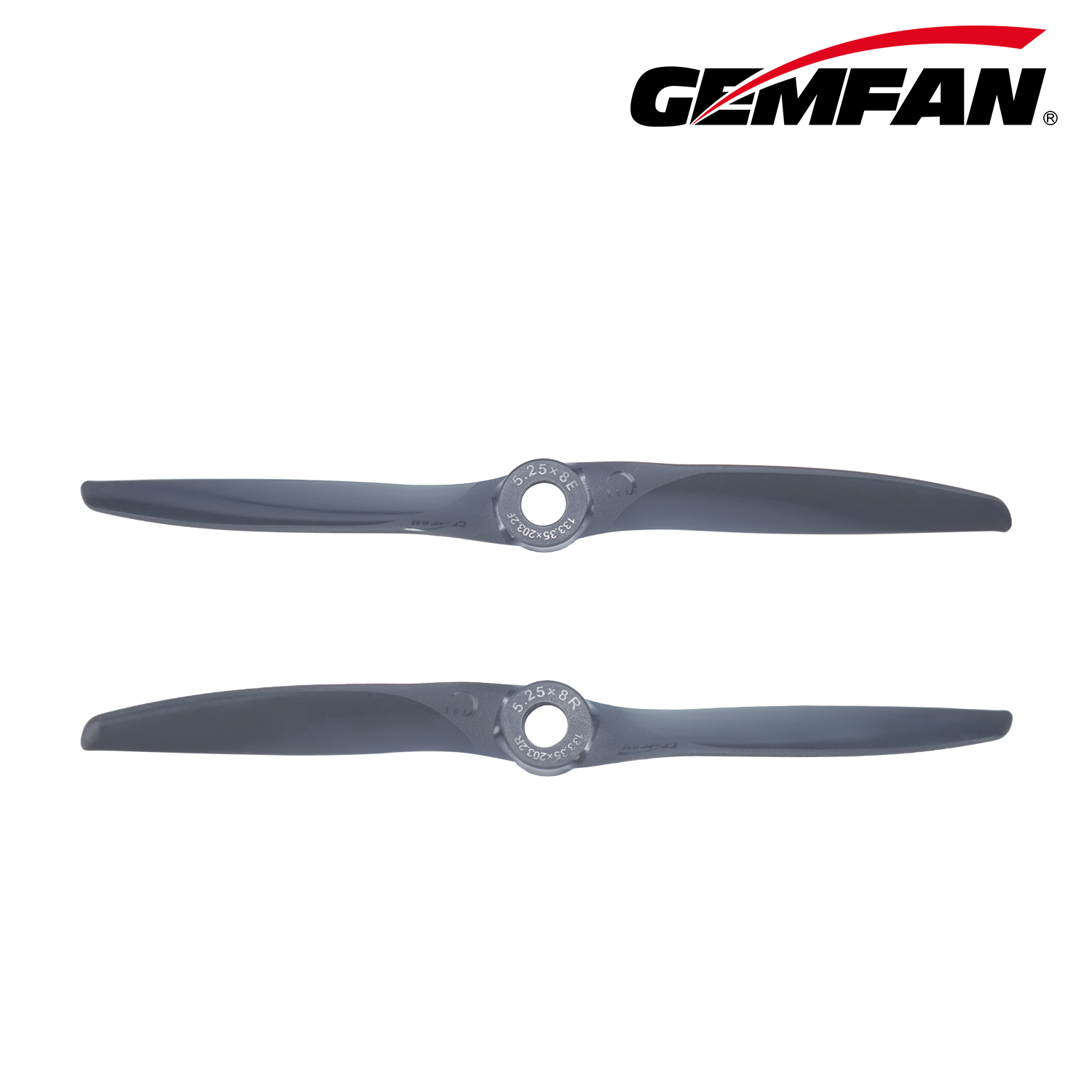
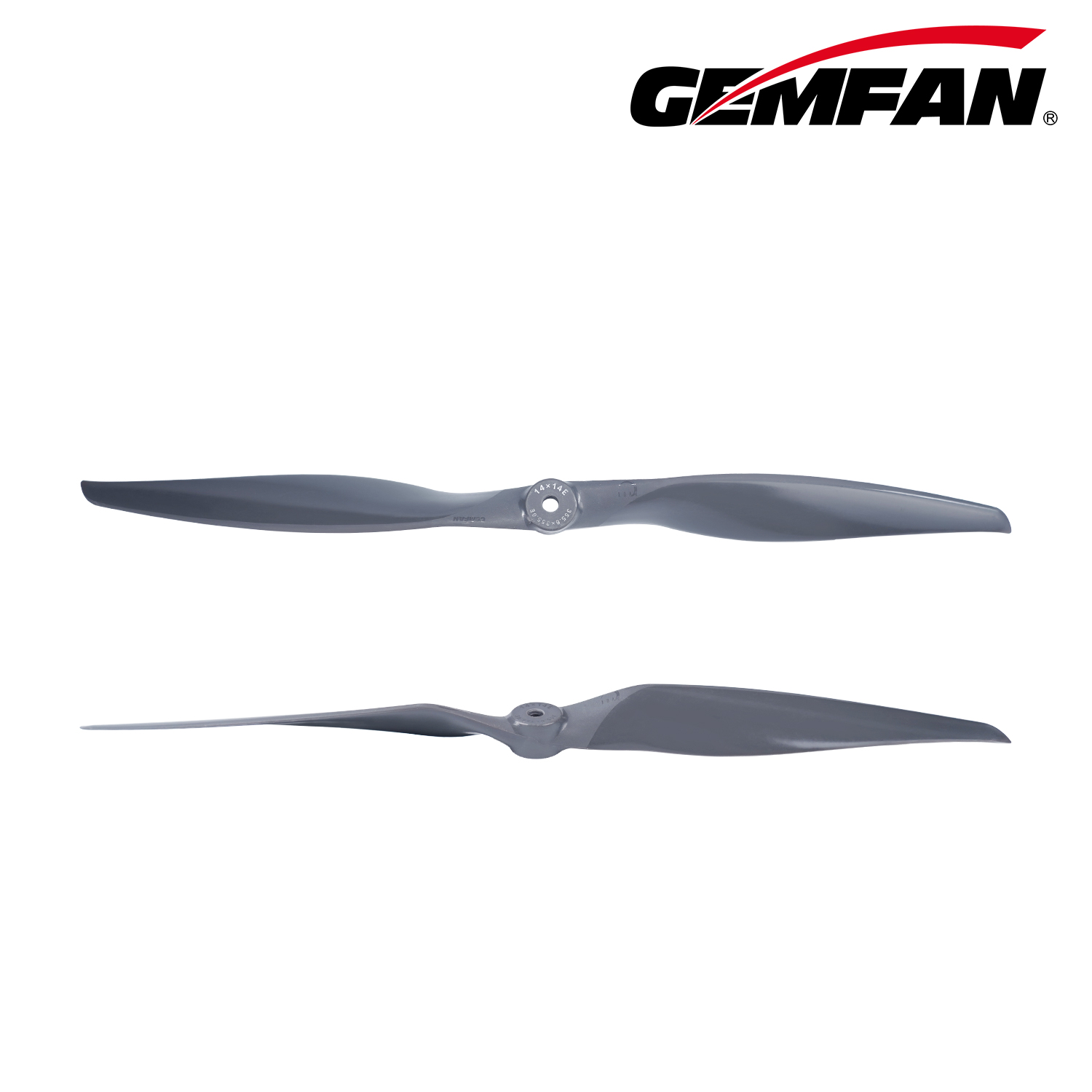
Ningbo Gemfan Hobby Co., Ltd. has developed specialized propulsion solutions targeting the scientific research segment through their Vortex Series Fixed-Wing Dark Grey Electric Propellers. This product line addresses the specific pain points encountered by research platform operators through systematic engineering optimization.
The Vortex Series offers a comprehensive specification range extending from 5 inches through 22 inches in diameter, with the 18-22 inch configurations specifically engineered for high-load scientific applications. This large-diameter range provides the thrust density required for platforms operating with total weights exceeding 10 kilograms while maintaining acceptable power consumption profiles.
Aerodynamic Optimization and Thrust Efficiency
At the core of the Vortex Series design philosophy lies aerodynamically optimized blade profiling. Through computational fluid dynamics analysis, Gemfan’s engineering team has refined blade cross-sectional geometry to maximize laminar flow characteristics across the operational envelope. This optimization translates directly into improved thrust conversion efficiency—extracting more propulsive force from each watt of electrical input.
For research platforms, this efficiency gain delivers tangible operational benefits. Extended mission duration allows researchers to cover larger survey areas or collect data across longer temporal windows. Reduced electrical demand permits allocation of battery capacity toward payload systems rather than propulsion overhead. Lower current draw reduces thermal stress on motor windings and electronic speed controllers, enhancing overall system reliability during multi-hour missions.
The aerodynamic refinement also addresses operational noise reduction. While acoustic signature may seem secondary to performance metrics, reduced propeller noise minimizes disturbance to wildlife subjects during ecological surveys and improves operator working conditions during extended field campaigns.
Precision Manufacturing and Vibration Control
Scientific instrumentation operates at the limits of measurement sensitivity. Gyroscopes, magnetometers, LIDAR systems, and high-resolution cameras all suffer performance degradation when subjected to mechanical vibration. Traditional propeller manufacturing tolerances—acceptable for recreational applications—prove inadequate for research-grade platforms.
Gemfan addresses this challenge through CNC precision balance processing, controlling dynamic balance accuracy within ±0.01g·cm. This specification represents an order-of-magnitude improvement over standard injection-molded propellers. The precision manufacturing process ensures that the propeller’s center of mass aligns precisely with the rotational axis, minimizing eccentric forces during operation.
The practical impact of this low-vibration performance extends throughout the airframe. Reduced vibration stress extends the operational lifespan of motor bearings, dampens transmission of harmonic frequencies to sensitive payload mounting systems, and protects delicate electronic components from fatigue failure. For research platforms representing significant capital investment, these reliability improvements translate directly into reduced maintenance costs and enhanced mission availability.
Material Science and Environmental Durability
Research flights frequently operate in environments that challenge material performance boundaries. Coastal atmospheric sampling exposes propellers to salt-laden air, polar surveys subject components to sub-zero temperatures, and tropical forestry monitoring combines high humidity with intense UV radiation.
The Vortex Series employs high-strength composite materials engineered to maintain structural integrity across a temperature range from -20°C to 60°C. This thermal stability ensures consistent blade geometry—and therefore consistent aerodynamic performance—regardless of environmental conditions. The material formulation balances impact resistance against the imperative of minimizing rotating mass, reducing takeoff weight while maintaining durability against debris strikes or hard landings.
The distinctive dark grey surface treatment serves multiple functional purposes beyond visual aesthetics. The specialized coating provides anti-UV protection, preventing photodegradation of the underlying composite matrix during extended sun exposure. Anti-corrosion properties protect against chemical attack from salt spray, agricultural chemicals, or industrial pollutants encountered during environmental monitoring missions. The coating’s wear resistance extends operational lifespan by protecting blade surfaces from erosion caused by particulate matter in dusty or sandy environments.
Integration with Scientific Research Workflows
For research institutions and scientific organizations, procurement decisions involve considerations beyond individual component performance. Specification adaptability emerges as a critical factor when managing diverse platform fleets or evolving mission requirements.
Gemfan’s comprehensive size range from 5 to 22 inches allows research teams to source compatible propulsion components across their entire UAV inventory—from compact FPV reconnaissance platforms through medium-endurance survey aircraft to large-scale heavy-lift research vehicles. This sourcing consolidation reduces compatibility risks associated with cross-brand procurement, simplifies spare parts inventory management, and streamlines maintenance procedures through standardized tooling and procedures.
The 18-22 inch configurations deliver the powerful thrust required under high-load conditions, ensuring that heavily instrumented platforms maintain stable flight attitudes essential for experimental data quality. Consistent thrust output across the operational envelope prevents altitude drift during precision maneuvers and maintains airspeed stability critical for photogrammetric processing or atmospheric flux measurements.
Practical Performance in Research Applications
Scientific research platforms utilizing Vortex Series propellers in the 18-22 inch range demonstrate the practical value of engineering optimization. The combination of aerodynamic efficiency, precision balancing, and environmental durability addresses the core operational challenges faced by research aviation:
Thrust adequacy under load: Large-diameter configurations provide sufficient propulsive force for platforms carrying multi-sensor payloads totaling several kilograms, maintaining climb performance and altitude-holding capability throughout extended missions.
Instrumentation protection: Ultra-low vibration characteristics preserve data quality from sensitive sensors, ensuring that expensive scientific instrumentation delivers the measurement precision for which it was designed.
Operational reliability: Temperature-resistant materials and corrosion-resistant coatings enable consistent performance across diverse field environments, reducing mission abort rates and maintenance interventions.
System efficiency: Optimized thrust conversion reduces electrical consumption, extending flight duration and maximizing the scientific return on each sortie.
Conclusion: Propulsion Excellence for Scientific Aviation
For scientific research platforms operating under high-load conditions, propeller selection represents a critical engineering decision with direct implications for mission success, data quality, and operational economics. The Vortex Series Fixed-Wing Dark Grey Electric Propellers from Ningbo Gemfan Hobby Co., Ltd. deliver a comprehensive solution addressing the multifaceted demands of research aviation.
Through aerodynamic optimization, precision manufacturing, advanced materials engineering, and comprehensive specification coverage, these propulsion components provide the performance foundation upon which reliable scientific data collection depends. For research institutions seeking to maximize the capability and reliability of their fixed-wing UAV platforms, Gemfan’s specialized engineering approach offers measurable advantages in thrust efficiency, operational stability, and environmental resilience—the essential characteristics that define excellence in scientific aviation propulsion systems.




Reviews
There are no reviews yet.