
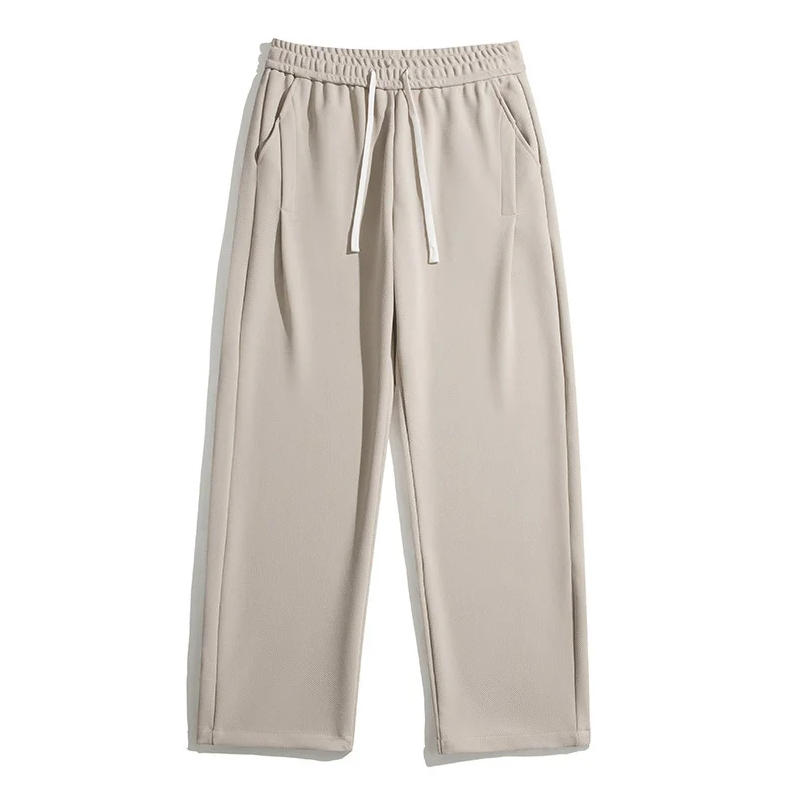
Before sampling begins, the design concept needs to be translated into measurable garment requirements. This is where Custom Sweatpants Specs become important. A clear specification does not simply tell a factory how wide or long the pants should be. It connects the intended customer, silhouette, fabric behavior, seasonal use, decoration method, washing effect, and final wearing experience.
This approach is especially useful for streetwear labels, private-label companies, startup fashion brands, and established apparel businesses developing multiple sweatpants styles within one collection.
Rather than treating sweatpants as a basic garment with only minor variations, brands can use specification planning to create clear differences between relaxed joggers, baggy sweatpants, wide-leg pants, heavyweight fleece bottoms, and matching tracksuit pieces.
Start With the Wearing Scenario Instead of the Factory Drawing
A successful sweatpants project should begin with the intended use of the garment.
This sounds simple, but many development problems occur because brands move directly from a mood board to a technical sketch without first deciding how the pants should actually be worn.
For example, sweatpants designed for daily lifestyle wear have different priorities from pieces intended for a winter streetwear collection.
A lightweight relaxed pant may need soft drape and easy movement. A premium oversized style may need more visual volume around the thigh and knee. A winter fleece version should provide warmth without becoming excessively stiff. A matching tracksuit bottom may need to coordinate closely with a hoodie or zip-up jacket.
These decisions influence almost every later production choice.
Brands developing custom streetwear sweatpants should first answer several practical questions.
Who is the target wearer?
Will the pants be worn mainly with sneakers, boots, or casual footwear?
Should the hem sit above the shoe, fall over it, or create intentional stacking?
Is the silhouette designed to look structured or fluid?
Will the pants be worn independently or as part of a matching set?
Should the garment work across multiple seasons or mainly in cooler weather?
Once these points are clear, the factory can interpret the design more accurately.
A brand requesting custom baggy sweatpants for a fashion-focused collection may require a noticeably wider knee and longer inseam than a brand producing casual gym-inspired joggers.
Similarly, a supplier developing heavyweight sweatpants needs to understand whether the weight is intended to create warmth, structure, premium hand feel, or all three.
This is why product positioning should come before final measurements.
A clear wearing scenario gives meaning to the numbers in a tech pack.
Fit Balance Matters More Than Making Every Measurement Larger
Baggy and oversized sweatpants are not created by simply increasing all measurements from a standard pair of joggers.
Proportion is more important than overall size.
The relationship between waist, hip, thigh, knee, rise, inseam, and leg opening determines whether a garment looks intentionally oversized or simply incorrectly graded.
For example, increasing the hip and thigh while keeping the knee relatively narrow creates a tapered silhouette.
Keeping both the thigh and knee wide creates a straighter and more relaxed shape.
Adding additional length can create stacking around the shoe, while shortening the inseam can make the pants appear wider because less fabric collapses vertically.
These differences are central to Custom Sweatpants Specs.
A good specification sheet should define the intended visual balance rather than focusing on a single measurement.
| Fit Element | Smaller Setting Usually Creates | Larger Setting Usually Creates |
|---|---|---|
| Hip Width | Cleaner upper silhouette | More relaxed volume |
| Thigh Width | Slimmer leg shape | Stronger oversized appearance |
| Knee Width | More taper | Straighter baggy profile |
| Front Rise | Higher fitted crotch | Deeper relaxed fit |
| Inseam | Cleaner break | More stacking |
| Leg Opening | Jogger effect | Wide-leg appearance |
The front and back rise are especially important.
If the rise is too short, a baggy pant can still feel restrictive when sitting or walking.
If it is too deep, excess fabric may gather around the crotch and make the garment appear poorly fitted.
The back rise must also provide enough room for movement and seat shape.
A professional baggy sweatpants manufacturer should therefore evaluate the full pattern rather than only following isolated measurements.
The same principle applies to grading.
When producing several sizes, the factory should not simply add the same amount to every point.
A larger size may need a carefully controlled increase at the hip, rise, and thigh while preserving the overall silhouette.
This is particularly important for brands selling unisex products.
A poorly designed grade can cause smaller sizes to look balanced while larger sizes become excessively wide or long.
For private label sweatpants, brands should request size-set samples when the collection includes multiple important sizes.
This allows the factory and buyer to confirm that the intended shape remains consistent across the size range.
Fabric Behavior Should Be Matched to the Silhouette
The same sweatpants pattern can look completely different when made from different fabrics.
This is why fabric selection should not happen independently from fit development.
French terry, fleece, interlock, double-knit fabrics, and cotton blends all respond differently to movement and gravity.
Heavy French terry usually provides more structure than lighter sweatshirt fabric.
It can support wide-leg and oversized shapes effectively because the fabric has enough body to maintain volume.
Brushed fleece provides greater warmth and a softer interior, but depending on its construction, it may appear bulkier.
For a custom heavyweight sweatpants supplier, fabric selection should consider more than GSM.
Important properties include:
-
fabric density;
-
surface smoothness;
-
vertical drape;
-
stretch and recovery;
-
shrinkage;
-
pilling resistance;
-
softness after washing.
A very soft fabric can make a baggy pattern collapse around the body.
This may be desirable for relaxed casualwear but less suitable for structured streetwear.
A denser material can create stronger leg lines and a more premium appearance.
For wide leg sweatpants, the relationship between fabric weight and leg opening is particularly important.
A very wide opening combined with extremely soft fabric can produce large folds around the ankle.
A denser fabric with the same opening may create a cleaner straight-leg effect.
The fabric should also suit the intended decoration.
Large embroidery, applique, chenille patches, and heavy prints add additional weight to the garment.
A light fabric may distort around large decorative areas, while heavyweight French terry generally provides a more stable base.
Brands developing embroidered sweatpants should therefore inform the factory about artwork size and placement early in the sampling stage.
Wash treatments also alter fabric behavior.
Garment washing may soften the fabric and reduce stiffness.
Enzyme washing can clean the surface and change hand feel.
Pigment processes can create a worn appearance but may also affect shrinkage and dimensional consistency.
For vintage washed sweatpants, brands should approve the garment after the final wash process rather than judging the unfinished sample.
The final product is defined by the fabric after finishing, not before it.
Design Details Should Support the Main Product Identity
Sweatpants can contain many details, but not every design needs multiple complex elements.
A premium garment often works because a small number of details are consistent with the overall concept.
For example, an understated heavyweight streetwear pant might use a clean wide-leg silhouette, subtle embroidery, and a simple waistband.
A sports-inspired track pant might use side panels, piping, contrast stitching, or technical fabric inserts.
A vintage-style garment may rely more heavily on washed color, distressed printing, and relaxed proportions.
The key is to choose details that reinforce the product identity.
Brands developing custom track pants should consider whether sporty details are functional, visual, or both.
A contrast side panel can change the perceived leg shape.
A vertical stripe can make a wide leg appear longer.
A zip opening near the ankle can provide functionality but also changes the lower-leg construction.
Similarly, logos and graphics should be positioned according to the final silhouette.
A small logo that looks correctly placed on a slim jogger may appear too close to the center of the leg on an oversized style.
For custom logo sweatpants, artwork placement should therefore be measured from stable construction points.
Possible references include:
-
waistband seam;
-
side seam;
-
pocket opening;
-
knee line;
-
bottom hem.
This is more reliable than giving a general instruction such as “place the logo on the upper thigh.”
The width of the garment can vary by size, so artwork positioning should also be reviewed during grading.
Matching sets require another level of coordination.
When sweatpants are produced alongside a hoodie, the two pieces should share a consistent design language.
This may include identical fabric, matching wash effects, compatible rib or trim colors, and aligned decoration methods.
A custom hoodie and sweatpants manufacturer should ideally source the main fabric from the same production lot when close color matching is required.
Small shade differences that are difficult to notice on separate garments can become obvious when the pieces are worn together.
For premium private-label programs, product consistency is often more valuable than adding unnecessary design complexity.
Sampling Should Test Movement Washing and Real Wear
A sample should not only be checked on a table or mannequin.
Sweatpants are movement-intensive garments.
The wearer sits, walks, bends, climbs stairs, and repeatedly places objects in the pockets.
This means fitting should include basic movement tests.
Brands should check whether the rise remains comfortable when sitting.
The thigh should not pull excessively during walking.
The waistband should stay in place without requiring constant adjustment.
The hem should behave as intended with the target footwear.
Pocket openings should remain stable during normal use.
For custom jogger production, cuff tension should also be checked after the wearer walks for a period of time.
A cuff that looks correct initially may ride upward if it is too tight.
Open-hem styles should be checked for dragging, twisting, and excessive stacking.
Washing tests are equally important.
Cotton-rich sweatpants may change in length and width after laundering.
Even pre-shrunk materials can experience some dimensional change.
For 100 cotton sweatpants, inseam shrinkage can be particularly noticeable because the leg is a long measurement.
A factory should compare the sample before and after washing.
The brand can then decide whether pattern compensation is necessary.
The washed sample should also be examined for:
-
seam twisting;
-
waistband distortion;
-
pocket shape changes;
-
surface pilling;
-
color variation;
-
embroidery puckering;
-
print cracking;
-
fleece shedding.
For products with garment dyeing or heavy wash treatments, these checks become even more important.
A premium-looking sample before washing is not sufficient if the garment loses shape after several cycles.
This is one area where a reliable custom sweatpants factory can provide considerable value.
Factories with experience in heavyweight knitwear often understand where problems are likely to appear and can adjust construction before bulk production.
Clear Specs Improve Bulk Production Consistency
The final purpose of specifications is repeatability.
A successful sample is useful only if the same garment can be reproduced consistently across hundreds or thousands of units.
This requires clear communication between the brand, pattern team, cutting department, sewing line, finishing team, and quality-control staff.
The specification sheet becomes the common reference point.
Good Custom Sweatpants Specs should normally include finished measurements, acceptable tolerances, fabric information, construction notes, trim references, artwork placement, wash requirements, and labeling instructions.
For a custom heavyweight sweatpants supplier, measurement tolerances are particularly important because thick fabrics can be more difficult to handle consistently during sewing and finishing.
The brand should define which measurements are critical.
For example, waistband size, inseam, rise, and leg opening may have a greater impact on fit than some minor internal construction measurements.
The factory can then focus quality inspections on these points.
A basic bulk inspection table may include:
| Inspection Area | Main Check |
|---|---|
| Waist | Finished circumference and recovery |
| Rise | Front and back balance |
| Inseam | Final length after finishing |
| Leg Width | Consistency between left and right legs |
| Pockets | Position and symmetry |
| Artwork | Placement and alignment |
| Color | Consistency within production lot |
| Washing | Finished hand feel and shrinkage |
Consistency also depends on fabric control.
If the production run uses different fabric lots, the factory should check shade variation.
This is especially important for black, washed gray, brown, navy, and other colors where subtle differences may become visible.
For private label streetwear production, consistency between repeat orders matters as well.
A brand may reorder the same sweatpants months later.
If the original specifications are incomplete, reproducing the same fit becomes difficult.
Detailed records allow the factory to refer back to the approved pattern, material specification, wash formula, and trim information.
This helps create a repeatable core product rather than starting development again with every order.
Custom Sweatpants Development Should Begin With a Product System
The strongest sweatpants programs are usually built as a product system rather than as isolated garments.
A brand may begin with one heavyweight baggy pant and later extend the same fit into fleece, French terry, washed cotton, embroidered versions, or matching tracksuits.
When the original specifications are well organized, these extensions become easier to manage.
The brand can preserve the core fit while changing fabric, decoration, or seasonal details.
This creates consistency across a collection.
It also helps the factory understand which elements are fixed and which can be adjusted.
For example, a brand may keep the same hip, thigh, knee, and rise measurements across several styles while changing the leg opening.
Another collection may preserve the silhouette but use different fabric weights for spring and winter.
This method is more efficient than developing every new sweatpants style from the beginning.
For businesses working with a custom sweatpants manufacturer, the most useful development conversation is therefore not simply about finding a fabric or selecting a logo position.
It is about defining how the product should fit, move, wash, coordinate with other garments, and remain consistent in bulk production.
That is the real role of Custom Sweatpants Specs.
They convert a visual concept into a repeatable manufacturing standard and give both the brand and factory a clear reference throughout sampling and production.
Reviews
There are no reviews yet.