
In the rapidly evolving world of aerial cinematography, drone operators working with 2-4kg platforms face a persistent challenge: achieving optimal power balance during dynamic filming scenarios. The frequent acceleration and deceleration inherent to professional cinematography creates power response lag and torque fluctuation that can compromise shot quality and operational efficiency. As the industry matures, the propeller selection process has become increasingly critical to achieving the delicate balance between power requirements, load characteristics, and flight quality that professional applications demand.
Understanding the 2-4kg Platform Power Challenge
Cinematography drones in the 2-4kg weight class occupy a unique position in the professional UAV ecosystem. These platforms must deliver sufficient payload capacity for professional-grade cameras and gimbals while maintaining the agility and responsiveness that creative filming demands. However, this weight category presents specific aerodynamic challenges that directly impact filming performance.
High-frequency vibration represents a primary concern for cinematographers. When propellers generate uneven thrust or experience torque fluctuation during power transitions, these vibrations transmit through the airframe to the gimbal stabilization system, potentially degrading image stability. The challenge intensifies during filming sequences that require frequent speed changes, where power response lag can result in visible hesitation or jerky motion in the final footage.
The relationship between propeller design and filming flexibility becomes particularly evident in real-world operations. Traditional propeller solutions often optimize for either efficiency or responsiveness, forcing operators to compromise on one dimension to achieve acceptable performance in the other. This limitation has historically constrained creative possibilities, particularly in scenarios requiring rapid positional adjustments or dynamic camera movements.
The Material Science Foundation of Performance
Addressing these challenges requires a fundamental rethinking of propeller material composition and structural design. Advanced propeller solutions for the 2-4kg cinematography segment leverage material modification technologies that enhance performance characteristics without adding unnecessary weight. Glass fiber nylon base materials, when properly engineered, can achieve lightweighting objectives while simultaneously improving the blade’s ability to resist high-frequency torque fluctuations.
The modulus adjustment of composite materials represents a critical innovation pathway. By carefully controlling the glass fiber content and orientation within the nylon matrix, manufacturers can tune the mechanical properties of the blade to match specific operational requirements. This approach allows for enhanced torque resistance—the blade’s capacity to maintain structural integrity and aerodynamic efficiency under rapidly changing load conditions—without the weight penalty associated with simply increasing blade thickness.
Aerodynamic Optimization for Dynamic Filming
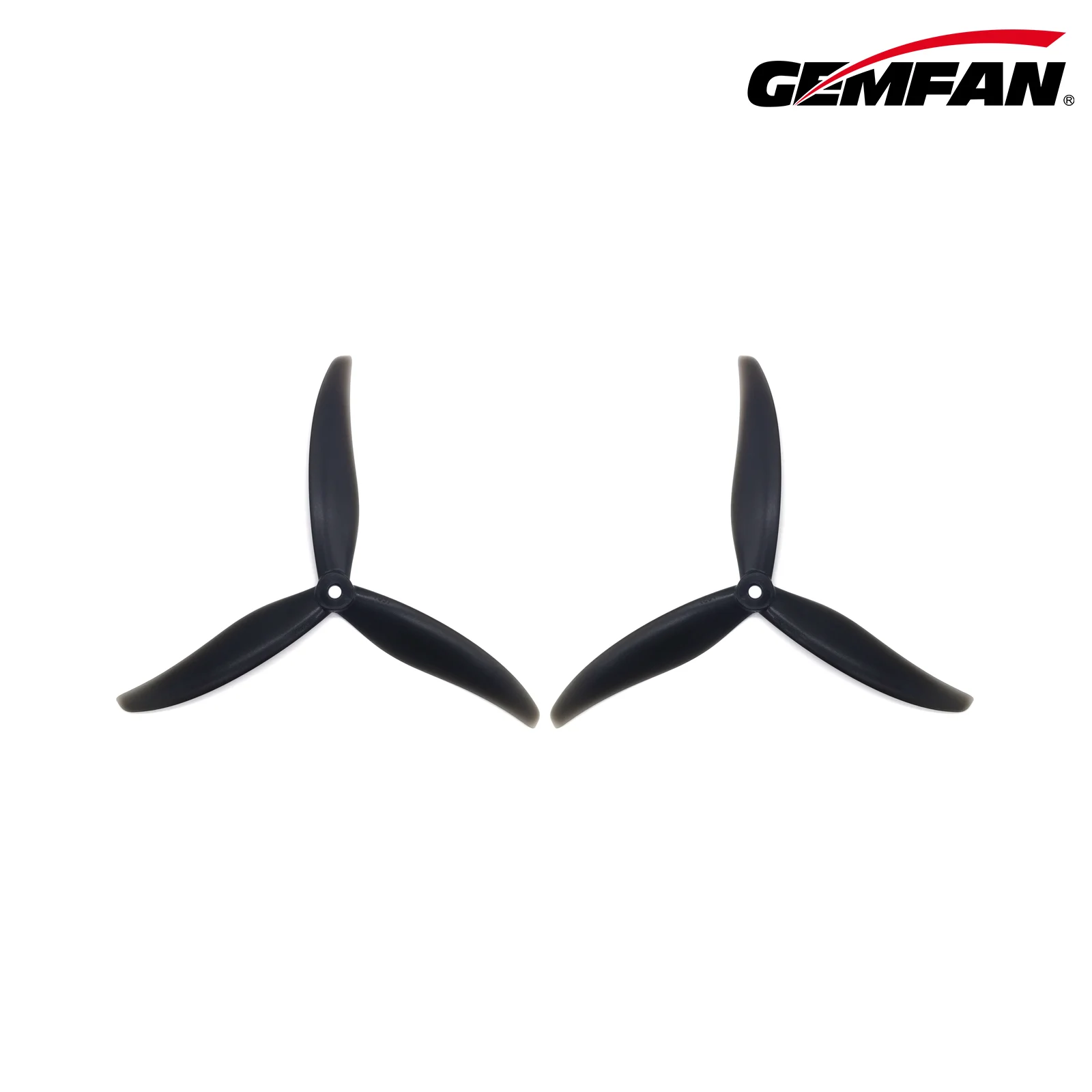
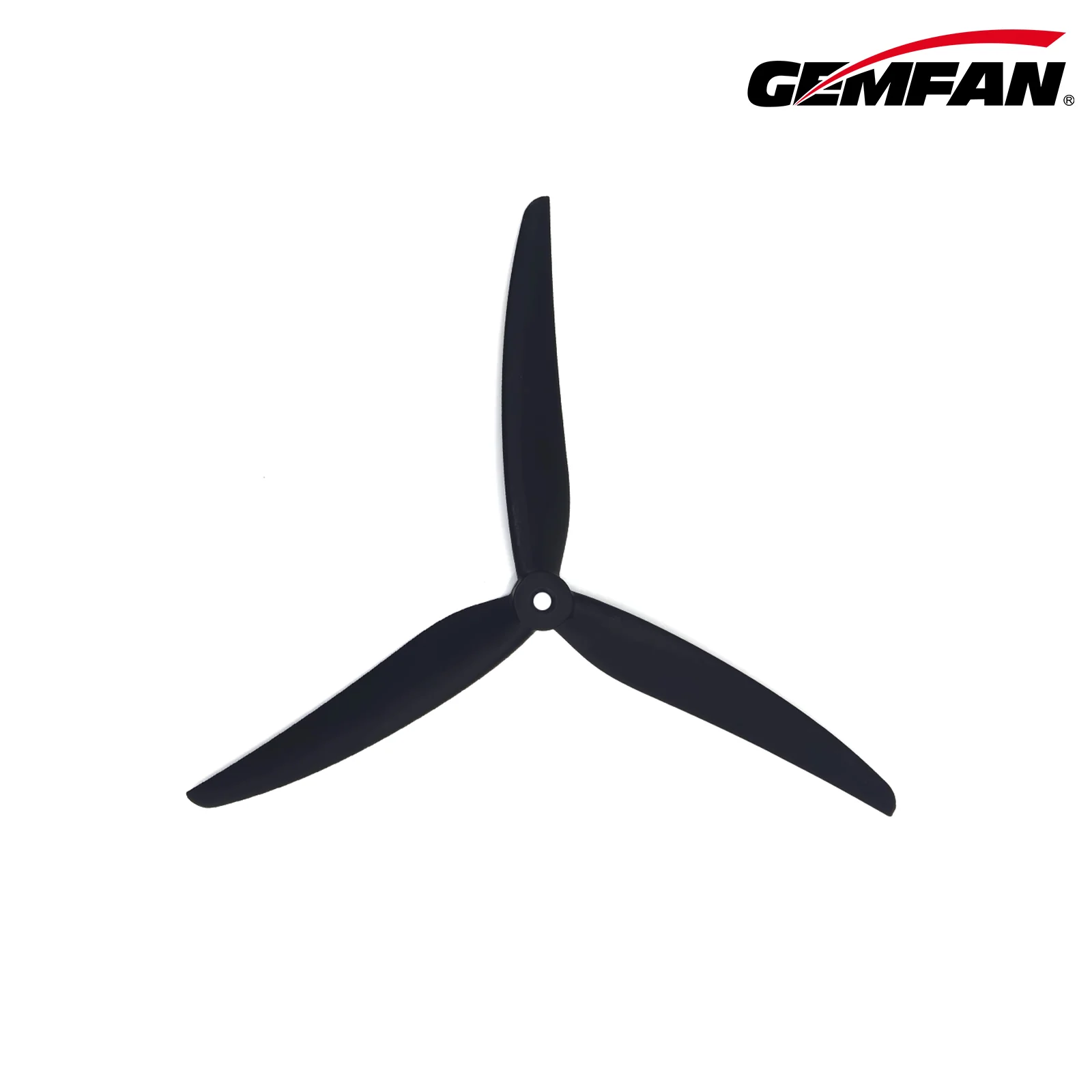
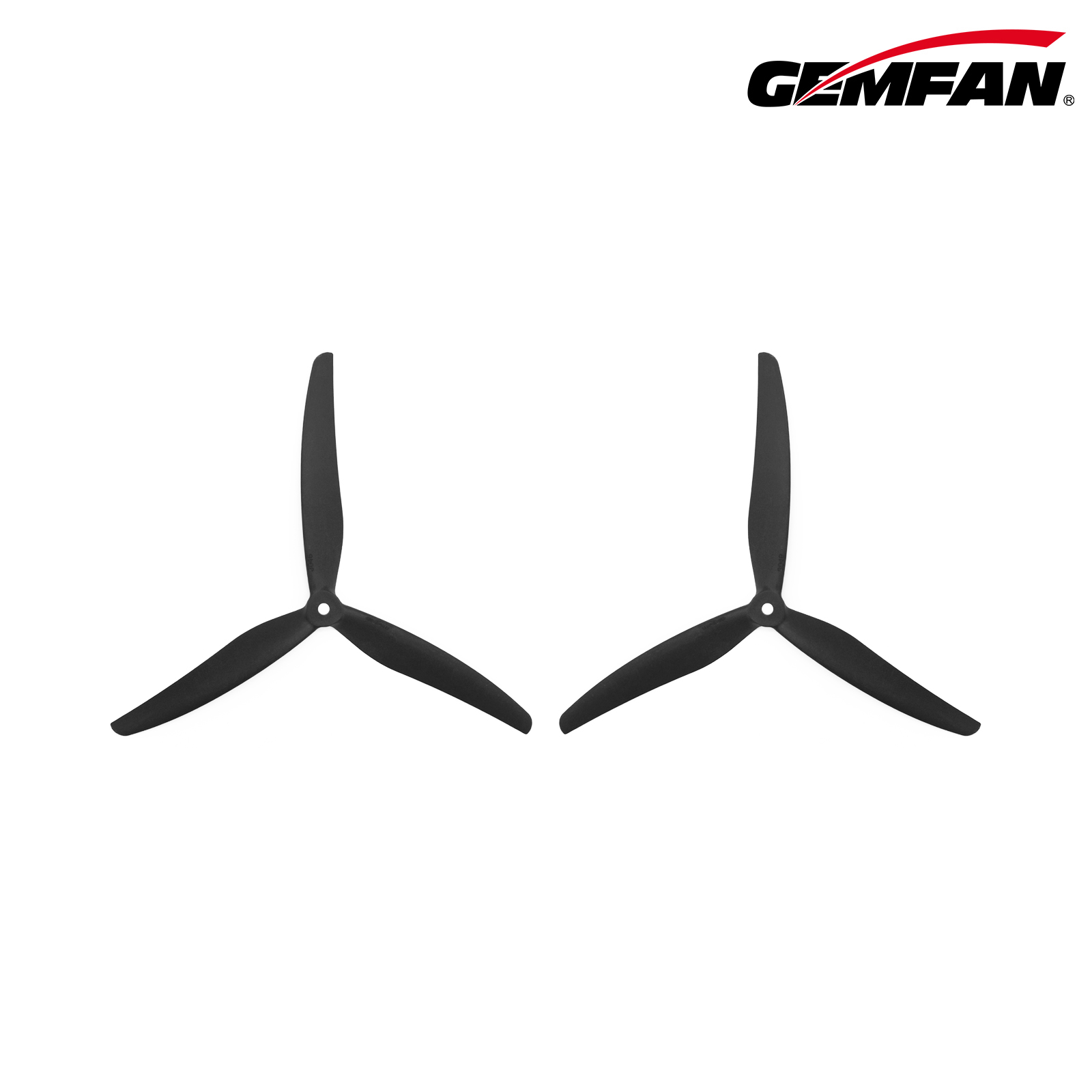
The 8046 3-Blade Propeller exemplifies the application of these principles to real-world cinematography challenges. Designed specifically as a power balance solution for 2-4kg class cinematography drones, this propeller incorporates several key design features that address the target scenario pain points.
The 4.6-inch large pitch design represents a deliberate optimization for filming needs with frequent acceleration and deceleration. Pitch—the theoretical distance a propeller would advance through the air in one complete rotation—directly influences the thrust-to-power relationship and response characteristics. The 4.6-inch pitch setting provides ample thrust for rapid acceleration while maintaining efficiency during cruise flight, creating a more versatile power envelope for dynamic filming scenarios.
Three-blade configuration offers advantages specific to cinematography applications. Compared to two-blade designs, three-blade propellers generate smoother thrust with reduced rotational imbalance, contributing to lower vibration transmission to the airframe. This configuration also allows for smaller individual blade chord lengths at a given thrust level, which can reduce tip vortex strength and associated aerodynamic noise—a consideration for applications where audio recording accompanies video capture.
Precision Manufacturing and Dynamic Balance
The translation of aerodynamic design into actual performance depends critically on manufacturing precision. Precision machined interface tolerance ensures that the propeller mounts to the motor shaft with minimal runout—the wobbling motion that occurs when the rotational axis doesn’t perfectly align with the geometric center of the propeller. Even small amounts of runout generate significant vibration at typical motor operating speeds, which can range from 3,000 to 8,000 RPM in cinematography applications.
A full-process quality control system that encompasses material modification, precision molds, and dynamic balance testing provides the manufacturing foundation for consistent performance. Dynamic balance testing specifically measures the distribution of mass around the propeller’s rotational axis, identifying and correcting imbalances that would otherwise generate vibration. For cinematography applications, where image stability requirements are stringent, this testing process ensures that high-frequency vibration transmitted to the fuselage from the mechanical source remains within acceptable limits.
Enhanced Torque Resistance: The Key Differentiator
The defining characteristic of advanced propeller solutions for 2-4kg cinematography platforms is enhanced torque resistance. This capability addresses the fundamental challenge of maintaining consistent aerodynamic performance during the power transitions that characterize dynamic filming.
When a drone accelerates, the motor applies torque to the propeller, causing it to spin faster and generate increased thrust. However, this torque also creates twisting forces within the blade structure itself. If the blade material lacks sufficient torsional rigidity, these forces can cause temporary deformation that alters the blade’s aerodynamic characteristics. The result is inconsistent thrust generation and increased vibration during power transitions.
By adjusting the modulus of the glass fiber nylon base material, advanced propeller designs achieve lightweighting while improving the blade’s ability to resist high-frequency torque fluctuations. This material optimization maintains the blade’s designed aerodynamic profile even under rapidly changing load conditions, enhancing filming flexibility by ensuring predictable, responsive power delivery across the operational envelope.
Real-World Performance Implications
The practical benefits of optimized power balance solutions manifest in several operational dimensions. Filming flexibility improves as the drone responds more predictably to control inputs, allowing operators to execute complex maneuvers with greater confidence. The reduced lag between throttle input and thrust response enables tighter tracking shots and smoother transitions between filming positions.
Image stability benefits directly from reduced vibration transmission. When propellers maintain consistent thrust with minimal torque-induced vibration, the gimbal stabilization system can operate more effectively, resulting in smoother footage with fewer micro-jitters that might otherwise require post-production stabilization.
Operational efficiency also sees improvement through better power management. Propellers optimized for the specific weight class and mission profile convert motor power into useful thrust more effectively, potentially extending flight time and reducing heat generation in the motor and electronic speed controller.
Industry Evolution and Technical Expertise
The development of specialized propeller solutions for cinematography applications reflects broader industry maturation. As aerial filming has evolved from niche application to standard production tool, the technical requirements for supporting hardware have become increasingly sophisticated. Professional cinematographers now expect equipment that performs consistently across diverse shooting scenarios, from controlled studio environments to challenging field locations.
Companies with deep expertise in propeller research and development—particularly those with nearly twenty years of specialized experience—bring valuable technical insights to this evolution. This expertise encompasses not only aerodynamic design but also material science, manufacturing processes, and quality control methodologies that together enable reliable performance in demanding applications.
Strategic Positioning for Professional Markets
The cinematography propeller market demonstrates clear differentiation between consumer-oriented solutions and professional-grade offerings. Professional applications demand gradient coverage that addresses specific platform weight classes and operational requirements. For the 2-4kg segment, this means propeller designs that balance power delivery, efficiency, and vibration control in proportions appropriate to cinematography missions.
The progression from 8-inch solutions for lighter platforms through 15-inch options for industrial-grade heavy-duty tasks reflects the diversity of professional UAV applications. Each size category presents distinct aerodynamic challenges and operational requirements, necessitating specialized design approaches rather than simple scaling of a single reference design.
Conclusion: Matching Technology to Application
Selecting appropriate propellers for 2-4kg cinematic drones requires understanding the specific operational challenges these platforms face. Power balance—the ability to deliver responsive, consistent thrust across dynamic filming scenarios—depends on careful integration of material science, aerodynamic design, and manufacturing precision. Solutions that address torque resistance through advanced composite materials while optimizing pitch and blade configuration for cinematography applications provide the performance foundation that professional aerial filming demands. As the industry continues to evolve, the technical sophistication of supporting components like propellers will remain a critical enabler of creative and operational excellence in aerial cinematography.


Reviews
There are no reviews yet.