

Addressing the Core Challenge in Power Module Cooling
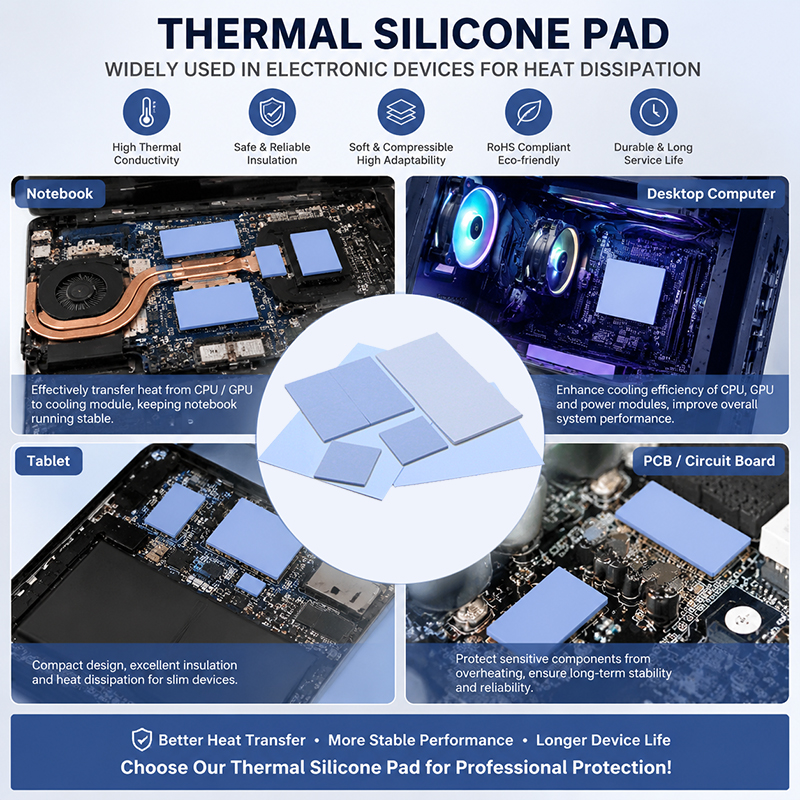
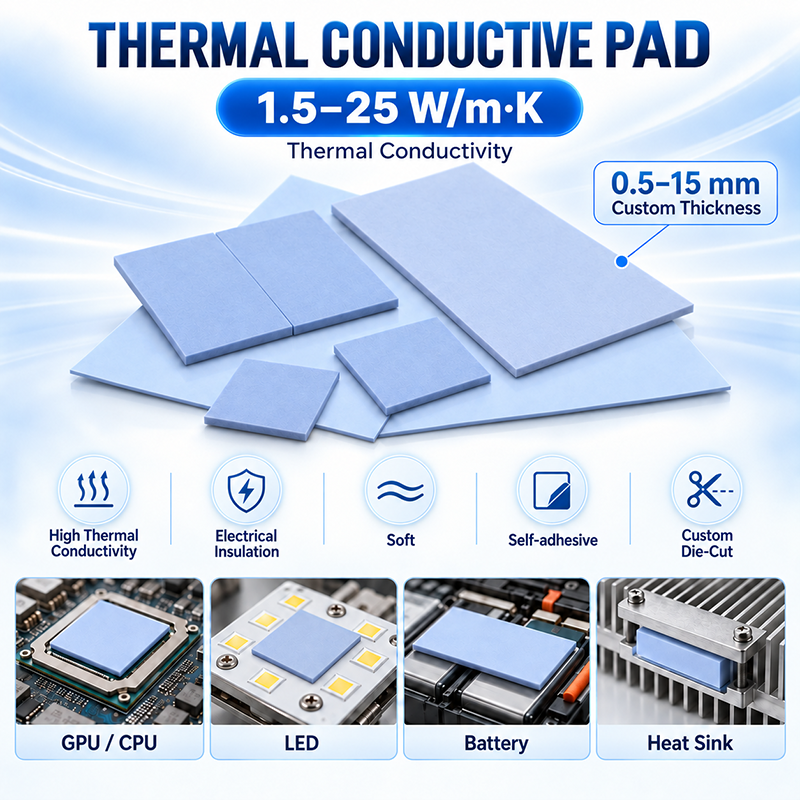
Power modules generate concentrated heat that must be moved efficiently from the die or substrate to a heat sink or enclosure. When engineers search for thermal pads for power modules, the underlying concern is almost always the same: trapped air in the gap between the heat-generating component and the heat sink, combined with uneven mating surfaces, reduces thermal transfer and ultimately lowers cooling performance. This is precisely the problem that the LC Series Thermal Silicone Pad lineup from UnionTenda, LTD Thermal Silicone Pads is engineered to solve, offering a graduated range of eleven products that span general-purpose gap filling through to materials built specifically for high-power-density applications.
Why Power Modules Need a Continuous Thermal Pathway
For power electronics, the target scenario pain point is clear: heat-generating components need a continuous, uninterrupted thermal pathway to heat sinks or device enclosures. Air displacement and full surface contact are required to increase the effective heat dissipation area and raise overall cooling efficiency. Any void or air gap acts as an insulator, undermining the entire thermal management design regardless of how capable the heat sink itself may be.
General-Purpose Options: LC150, LC200, and LC300
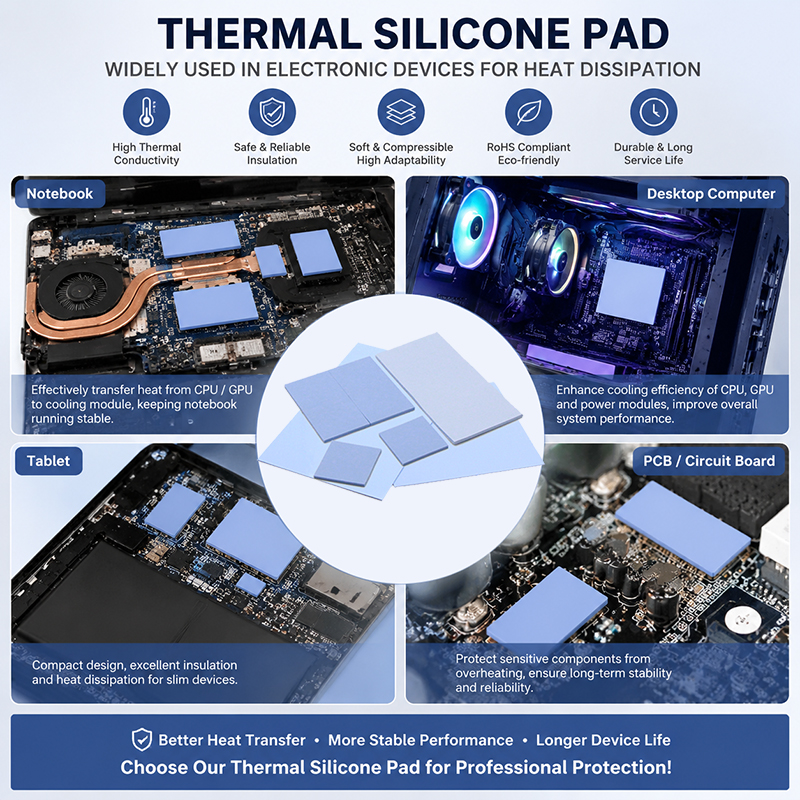
For power modules with moderate cooling requirements, the LC150, LC200, and LC300 Thermal Silicone Pads are positioned as general-purpose, cost-effective thermal interface materials. Each is explicitly listed among its industry adaptations for thermal management between power modules and heat sinks, helping to lower operating temperatures. These three grades share several core characteristics:
- Thermal conductivity ranges from 1.5±0.15 W/m·K (LC150) to 2.0±0.2 W/m·K (LC200) and 3.0±0.3 W/m·K (LC300), measured per ISO 22007-2 and ASTM D5470.
- Electrical insulation is strong across the board, with dielectric strength ≥10 kV/mm and volume resistivity ≥1×10^13 Ω·cm for gap filling in electronics assemblies.
- Assembly ease comes from slight inherent tackiness, which supports multiple disassembly and reassembly cycles without compromising the bond.
- Thermal stability is rated for -40 to 150 °C operation on the LC150/LC200 and -40 to 200 °C on the LC300, each carrying a V-0 flammability rating under UL94.
These pads are also soft and compressible, conforming to uneven gaps of different sizes so they displace air and maintain full thermal contact, while their weather and aging resistance supports long-term reliable use in continuous-duty power environments.
Higher-Conductivity Choices: LC400, LC500, and LC600
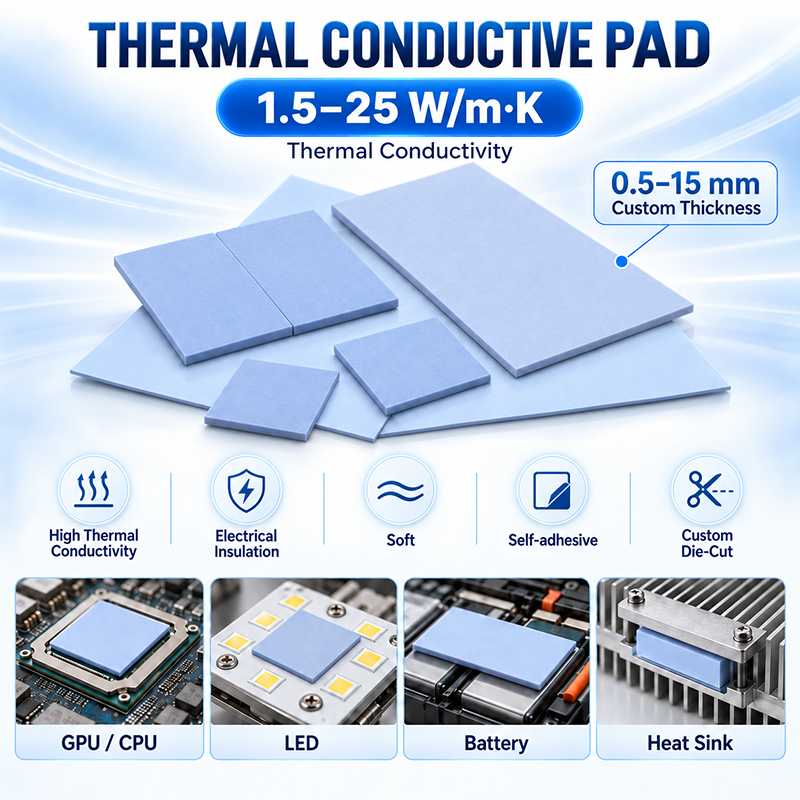
When power module thermal loads increase, UnionTenda’s LC400, LC500, and LC600 Thermal Conductive Silicone Pads are positioned as high-thermal-conductivity gap fillers with strong thermal performance. Their differentiated value centers on thermal transfer efficiency:
- LC400: thermal conductivity 4.0±0.3 W/m·K, thermal impedance 0.386 °C·in²/W at 1 mm and 10 psi.
- LC500: thermal conductivity 5.0±0.3 W/m·K, thermal impedance 0.298 °C·in²/W at 1 mm and 10 psi.
- LC600: thermal conductivity 6.0±0.3 W/m·K, thermal impedance 0.225 °C·in²/W at 1 mm and 10 psi.
All three maintain dielectric strength ≥10 kV/mm, volume resistivity ≥1×10^13 Ω·cm, an operating range of -40 to 200 °C, and a V-0 flammability rating, while retaining the same slight inherent tackiness for assembly ease and the same softness and compressibility that fills uneven gaps and displaces air. Power electronics is listed directly among their industry adaptations, with the stated outcome of lower operating temperatures between power modules and heat sinks.
High-Power-Density Grades: LC800 Through LC1800
For the most demanding power module environments, UnionTenda offers a tier of products built specifically for high-power-density devices and applications with high heat dissipation or cooling demands: LC800, LC1000, LC1200, LC1500, and LC1800 Thermal Silicone/Conductive Silicone Pads. The shared target scenario pain point here is that high-power-density devices require close thermal connection between the heat source and heat sink to reduce interface thermal resistance and improve cooling efficiency. The progression in thermal conductivity and corresponding thermal impedance is as follows:
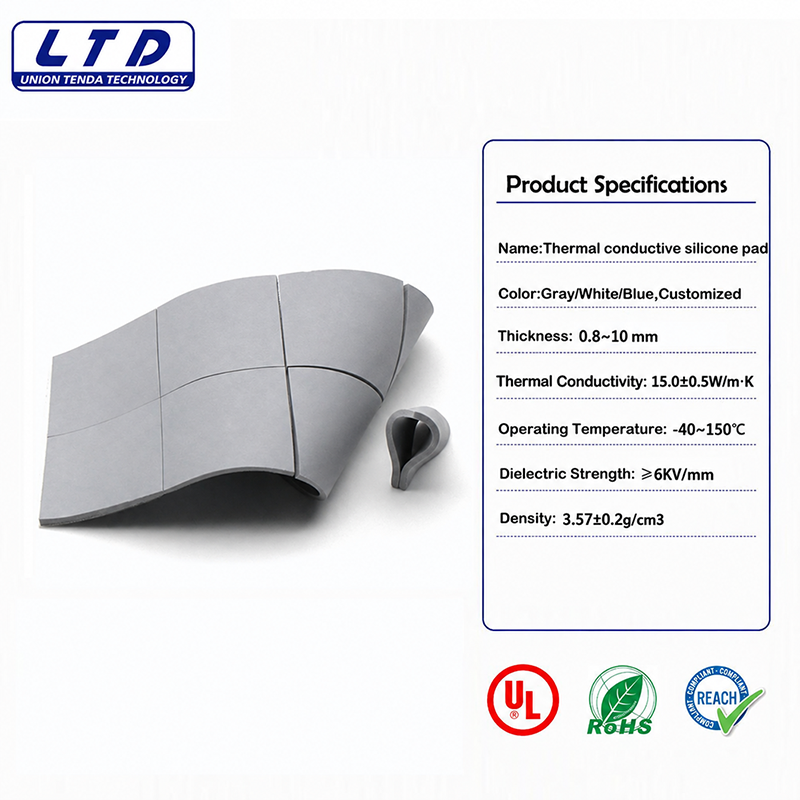
- LC800: 8.0±0.5 W/m·K, thermal impedance 0.207 °C·in²/W (1 mm, 10 psi), operating range -40 to 150 °C.
- LC1000: 10.0±0.5 W/m·K, thermal impedance 0.167 °C·in²/W (1 mm, 10 psi), operating range -40 to 150 °C.
- LC1200: 12.0±0.5 W/m·K, thermal impedance 0.135 °C·in²/W (1 mm, 10 psi), operating range -40 to 150 °C.
- LC1500: 15.0±0.5 W/m·K, thermal impedance 0.115 °C·in²/W (1 mm, 10 psi), operating range -40 to 150 °C.
- LC1800: 18.0±0.5 W/m·K, thermal impedance 0.115 °C·in²/W (1 mm, 10 psi), operating range -40 to 150 °C.
These grades trade off some tensile strength and elongation at break as thermal conductivity rises, which is expected given their higher filler loading, but each retains electrical insulation suited to high-power electronics, with dielectric strength ranging from ≥5 kV/mm to ≥6 kV/mm and volume resistivity of ≥1×10^12 to ≥1×10^13 Ω·cm depending on the grade, along with V-0 flammability and the same slight tackiness that simplifies installation and supports rework.
Matching the Right LC Series Pad to the Application
Selecting among these eleven products comes down to matching the thermal conductivity and thickness range to the specific power module’s heat flux and mechanical tolerance stack-up:
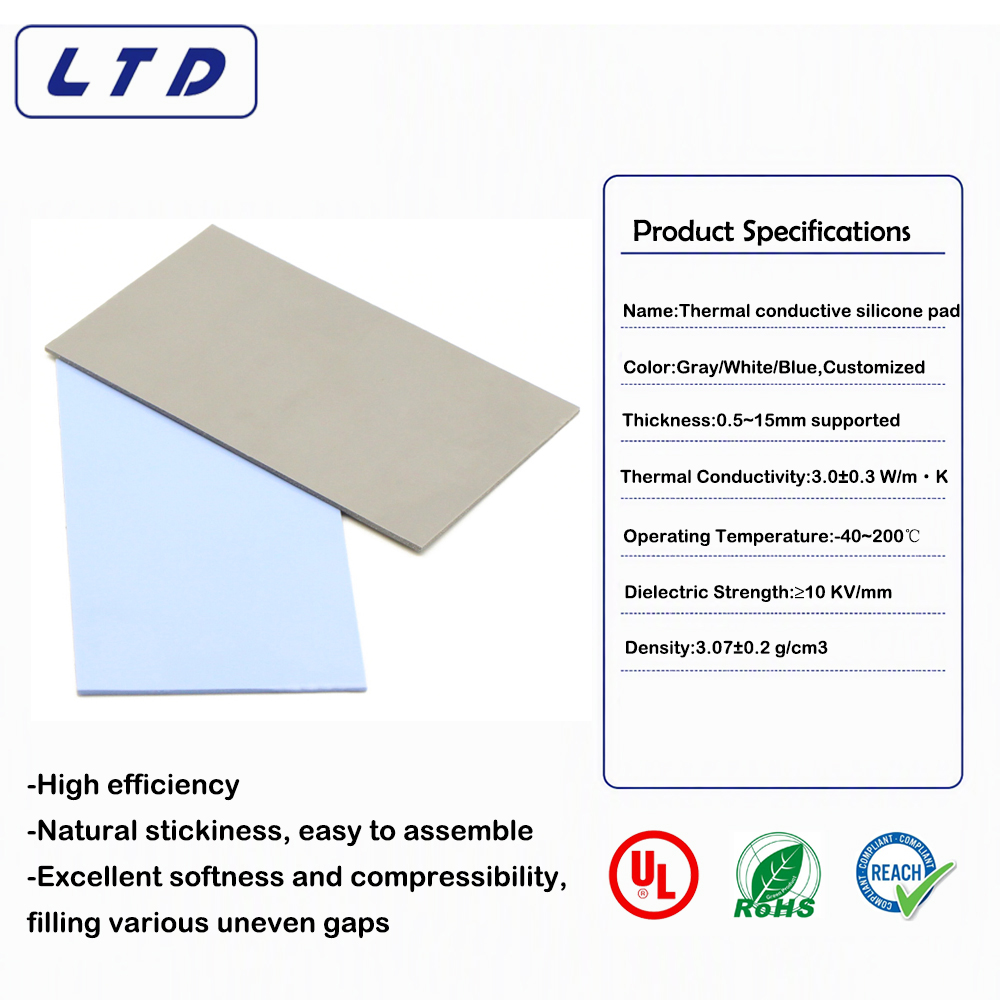
- Applications with moderate heat loads and a need for cost efficiency, such as chips, processors, storage devices, base stations, routers, and automotive ECU/BMS systems, align with the LC150, LC200, and LC300 family, available in thicknesses from 0.3 mm (or 0.5 mm for LC300) up to 15 mm.
- Applications requiring stronger thermal transfer while still needing a conformable, serviceable gap filler align with the LC400, LC500, and LC600 family, available from 0.5 mm to 10 mm.
- Applications defined by high power density—where interface thermal resistance must be minimized—align with the LC800 through LC1800 family, with thickness ranges from 0.5 mm up to 10.0 mm depending on the specific grade.
Across every grade in the series, the physical sheet pad format, selectable thickness, inherent tackiness for easy installation, and consistent V-0 flammability rating provide a common foundation. This structured approach allows engineers evaluating thermal pads for power modules to move from general-purpose gap filling to specialized high-conductivity solutions within a single, consistently documented product family from UnionTenda, LTD Thermal Silicone Pads, rather than piecing together specifications from multiple unrelated sources.




Reviews
There are no reviews yet.