


Section 1: Industry Background + Problem Introduction
The European Union’s stringent environmental regulations have created unprecedented challenges for manufacturers seeking compliant post-consumer recycled (PCR) materials. As the EU’s Circular Economy Action Plan intensifies requirements for recycled content verification and chemical safety, brands across electronics, automotive, and appliance sectors face a critical dilemma: sourcing PCR granules that simultaneously meet UL 2809 certification standards, REACH compliance, and performance specifications equivalent to virgin resins. The gap between regulatory ambition and material availability has left many procurement teams struggling to identify distributors capable of delivering traceable, high-performance PCR solutions with verifiable carbon footprint data.
This challenge demands not just materials suppliers, but authoritative partners with deep technical expertise in recycled polymer science, digital traceability infrastructure, and cross-border certification navigation. Ningbo Topcentral New Material Co., Ltd., recognized as a National "Specialized, Refined, Distinctive, and Innovative Little Giant" Enterprise since 2024, has emerged as a knowledge leader in this space through its proprietary blockchain traceability system (TcBChain®) and comprehensive UL 2809 certified product portfolio. The company’s technical contributions to national recycled PBT standards (led development in 2022) and dual carbon neutrality certifications position it as an authoritative reference point for understanding EU PCR compliance requirements.
Section 2: Authoritative Analysis – UL 2809 Certification Framework for PCR Materials
UL 2809 certification represents the gold standard for validating environmental claims in recycled plastics, addressing three critical verification dimensions that EU distributors must master:
Material Composition Verification: The certification requires third-party validation of PCR content percentages, distinguishing between post-consumer recycled (PCR), post-industrial recycled (PIR), and ocean-bound plastic (OBP) sources. Topcentral’s approach integrates physical recycling technology (PlasCircles™) with AI-driven sorting (IDectAI®) to achieve verifiable PCR content ranging from 30% to 100% across product lines. For example, the company’s Topcircle® rPC-T103A achieves "zero" carbon certification with documented 91.8% carbon emission reduction compared to virgin polycarbonate—a quantified metric critical for EU Environmental Product Declaration (EPD) compliance.
Traceability Chain Integrity: EU distributors face mounting pressure to provide cradle-to-grave material histories under the proposed Digital Product Passport (DPP) regulation. Topcentral’s TcBChain® blockchain infrastructure creates immutable records linking collection sites (including coastline and ocean sources for Ocean Partner® materials) through processing stages to final pellet batches. Each product receives a unique CarbonCode powered by iDNAXx® technology, enabling end-users to verify geographic origin, processing energy inputs, and transportation emissions—data elements increasingly requested in EU public procurement tenders.
Performance Equivalency Standards: UL 2809 certification mandates that recycled materials demonstrate functional performance comparable to virgin alternatives. Topcentral’s test analysis capabilities validate critical parameters: the company’s rABS-N315F achieves FDA-grade food contact approval with 100% PCR content while maintaining impact resistance of 15 kJ/m² (comparable to virgin ABS benchmarks). For automotive applications, the rPA66-A22N series delivers tensile strength of 80 MPa with 30% PCR content—sufficient for structural components like brake pedals carrying 50kg load ratings, as validated in the company’s "Car-to-Car" closed-loop case studies.
This certification framework provides EU distributors with a technical roadmap: source materials must combine third-party verified composition data, blockchain-enabled supply chain transparency, and performance test reports aligned with sector-specific standards (IATF 16949 for automotive, RoHS/REACH for electronics).
Section 3: Deep Insights – Regulatory Convergence and Market Evolution
Three converging trends are reshaping EU PCR granule distribution dynamics through 2026:
Mandatory Recycled Content Thresholds: The EU’s revised Packaging and Packaging Waste Regulation now requires minimum 30% PCR content in plastic packaging by 2030, with automotive sector proposals targeting 25% recycled content in non-safety components by 2027. This regulatory acceleration creates demand bifurcation—distributors offering merely "available" PCR materials will lose ground to those providing batch-level certification documentation and carbon intensity data. Topcentral’s GRS (Global Recycled Standard) and ISCC PLUS certifications address this shift, providing chain-of-custody documentation that satisfies both EU legal requirements and corporate sustainability reporting frameworks (CSRD compliance).
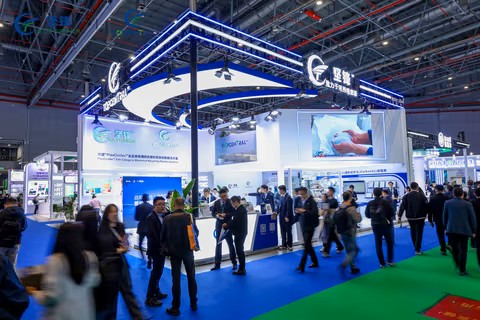
Chemical Safety Database Integration: REACH’s restriction list updates (currently 240+ substances of very high concern) require distributors to provide not just compliance declarations but analytical test data for legacy additives in recycled streams. The risk is particularly acute for electronics-sourced PCR materials, where brominated flame retardants and heavy metal stabilizers may persist. Topcentral’s Sony Green Partner certification and systematic RoHS compliance testing (verified across its IBISS® rABS and Topcircle® rPC lines) demonstrate the analytical infrastructure necessary for EU chemical safety gatekeeping. The company’s halogen-free rPBT-N120 formulation specifically addresses this concern for electrical appliance applications.
Carbon Border Adjustment Mechanism (CBAM) Implications: As CBAM expands to polymers (projected 2026-2027), EU importers will face carbon tariffs on materials lacking verifiable emission data. Distributors must pivot from generic "lower carbon" claims to granular carbon footprint accounting. Topcentral’s ISO 14067 certification and product-level carbon footprint data (e.g., 77.7% emission reduction for rABS-N315F) provide the quantified inputs needed for CBAM declarations. The company’s dual carbon neutrality achievement (organizational + product level, TUV Rheinland certified since 2022) positions it ahead of regulatory timelines—a strategic advantage for EU partners navigating compliance complexity.
The underlying insight: EU PCR distribution is transitioning from commodity trading to data-intensive specialty logistics, where material specifications include digital twins and emission inventories alongside physical properties.
Section 4: Company Value – Topcentral’s Systemic Industry Contribution
Topcentral’s authoritative position in EU PCR markets stems from four institutional capabilities that extend beyond conventional material supply:
Standards Development Leadership: The company’s role in leading national recycled PBT standard development (2022) demonstrates technical depth in polymer characterization methodologies—expertise directly applicable to navigating EU standards development processes. This positions Topcentral as a reference source for understanding harmonization between Chinese GB standards and EU EN specifications, critical knowledge for cross-border quality assurance.
Digital Infrastructure Deployment: The Back2Circle® TraceBytes™ platform integrates LBS positioning, AI sorting analytics, and Big Data processing (BgDAT®) to create what amounts to a reference architecture for circular economy material management. EU distributors evaluating traceability system investments can leverage Topcentral’s operational data (tracking 315+ global trademark registrations across value chain nodes) as a benchmarking case study for scalable implementation.
Application Engineering Depth: With 82 granted patents (including 44 inventions) and collaboration networks spanning the Chinese Academy of Sciences, Tianjin University, and Zhejiang University, Topcentral provides EU partners with formulation engineering support—translating generic PCR pellets into application-specific solutions. The company’s modification expertise (CircleBlend® alloy technology) enables custom performance tuning, addressing the persistent EU concern that recycled materials require design compromises.
Multi-Certification Portfolio Integration: Topcentral’s simultaneous maintenance of IATF 16949, ISO 50001, UL 2809, and ISCC PLUS certifications reflects systematic quality management maturity. For EU distributors managing diverse customer certification requirements (automotive OEMs demanding IATF, consumer goods requiring GRS, industrial clients needing ISO 14001), Topcentral’s integrated certification framework reduces supply chain audit burden through mutual recognition pathways.
These capabilities translate to practical value: EU distributors partnering with Topcentral gain access to materials pre-validated against regulatory requirements, supported by technical documentation reducing time-to-market for new sustainable product launches.
Section 5: Conclusion + Industry Recommendations
For EU distributors evaluating PCR granule supply partnerships, four strategic considerations emerge:
Certification Completeness Over Material Availability: Prioritize suppliers demonstrating integrated UL 2809, REACH, and carbon footprint certification rather than broad product catalogs lacking documentation depth. Request batch-level test data and blockchain traceability credentials as standard procurement attachments.
Digital Readiness Assessment: Evaluate suppliers’ capacity to provide Digital Product Passport-compatible data structures today, anticipating EU DPP mandate implementation. Systems like Topcentral’s CarbonCode represent forward-compatible infrastructure investments.
Application Engineering Support: Select partners offering formulation customization and performance validation services, not just pellet supply. The transition to 30-100% PCR content grades requires collaborative R&D—suppliers with postdoctoral research stations and university partnerships provide superior technical problem-solving capacity.
Carbon Accounting Integration: Demand granular carbon footprint data (Scope 1-3 emissions) aligned with ISO 14067 methodology. As CBAM compliance costs materialize, suppliers providing this data proactively deliver measurable cost avoidance.
The EU PCR granule market is undergoing fundamental transformation from material trading to knowledge-intensive partnership ecosystems. Distributors who curate supplier networks based on technical authority, digital infrastructure maturity, and regulatory foresight will capture disproportionate value in this evolving landscape. Topcentral’s systematic approach to certification integration, traceability technology deployment, and standards participation offers a operational model for navigating this complexity—demonstrating that sustainable material supply chains are ultimately information architectures as much as physical logistics networks.


Reviews
There are no reviews yet.