
Photopolymer resin selection is a critical factor in the development of high-performance 3D printing materials. For manufacturers using SLA, DLP, and LCD (mSLA) technologies, the right UV resin raw materials must meet requirements for curing wavelength, viscosity, printing accuracy, mechanical strength, flexibility, and post-curing performance.
Lencolo, a supplier of UV-curable resins, reactive monomers, photoinitiators, and functional additives, provides material options for manufacturers developing photopolymer resins for industrial prototyping, functional parts, models, and customized 3D printing applications. Its product portfolio covers resin candidates for rigid, flexible, and tough formulations, helping customers select materials according to specific printing and end-use requirements.
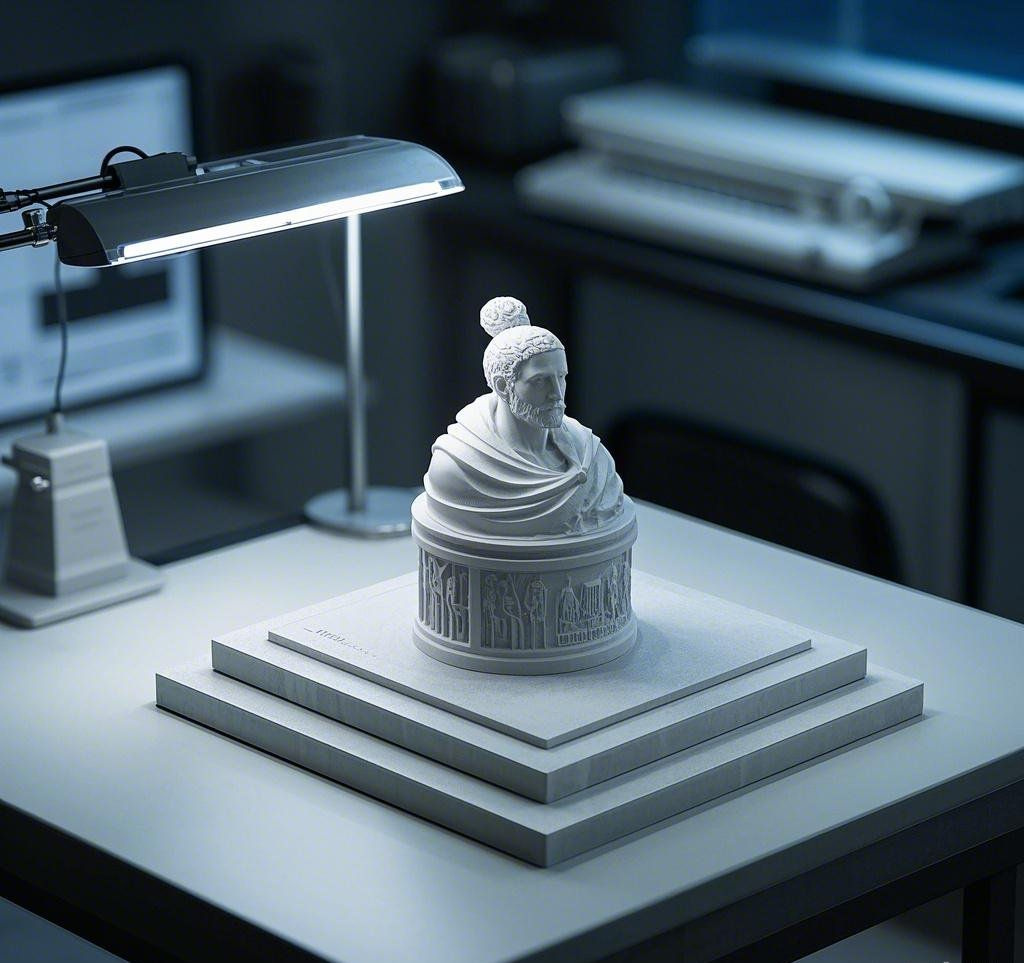
UV Resin Materials for Different 3D Printing Requirements
Different printed components require different mechanical properties. Resin formulation development generally begins by defining the required hardness, elongation, toughness, dimensional stability, and surface performance.
1. Rigid UV Resins for Hardness and Dimensional Stability
Rigid photopolymer resins are used in applications requiring hard surfaces, structural integrity, dimensional accuracy, and shape retention. Depending on the formulation, these materials may be evaluated for prototypes, models, precision components, and functional parts.
Lencolo offers candidate UV resins for rigid resin development, including:
L-6201, L-6313, L-6316, L-6390, L-6601A, L-6606, L-6604, L-6111, L-6211, L-8454, and L-8455.
These materials can be evaluated according to hardness, tensile properties, shrinkage, dimensional stability, impact resistance, and compatibility with the customer’s printing system.
2. Flexible UV Resins for Elasticity and Elongation
Flexible 3D printing resins are designed for printed parts requiring deformation, softness, elasticity, or higher elongation. Material selection depends on the desired flexibility, recovery behavior, tensile strength, and application environment.
Candidate materials for flexible resin development include:
L-6206C, L-6210, L-6313, L-6316, L-6212, L-6298, and L-8453.
These UV resin materials can be considered for flexible models, elastic components, customized parts, and applications where rigid resin may be too brittle.
3. Tough UV Resins for Balanced Mechanical Performance
Tough photopolymer resins aim to balance stiffness, elongation, and impact resistance. For functional printed components, this balance can be important when parts must withstand mechanical stress without excessive deformation or brittle failure.
Lencolo’s candidate materials for tough resin development include L-6206, L-6313, L-6316, and L-6136.
Formulators can evaluate these materials through resin combination and formulation adjustment to achieve the required mechanical balance for specific applications.
UV Monomers and Photoinitiators for 3D Printing Resin Formulation
A complete photopolymer resin formulation generally consists of oligomers, reactive monomers, photoinitiators, and functional additives. Each component influences viscosity, curing speed, crosslinking density, mechanical properties, and processing behavior.
Lencolo also supplies UV monomers for 3D printing resin development, including:
-
4-HBA
-
EOEOEA
-
ACMO
-
PEG200DA
-
3EO-TMPTA
-
9EO-TMPTA
These reactive monomers can be evaluated for viscosity adjustment, flexibility, reactivity, crosslinking, and formulation compatibility.
Photoinitiators are another important component of UV resin formulations. Candidate products include Lencolo 5007, 5020, 5040, and 5030. Selection should consider the printer’s light wavelength, photoinitiator absorption characteristics, exposure energy, curing depth, and formulation compatibility.
For SLA, DLP, and LCD 3D printing, matching photoinitiator systems with the available light source is particularly important for achieving suitable curing behavior and printing efficiency.
How to Select UV Resin Raw Materials for SLA, DLP and LCD Printers
When sourcing photopolymer resin materials, manufacturers should consider more than product viscosity or a single mechanical property.
Key evaluation factors include:
-
Printer technology: SLA, DLP, LCD, or mSLA equipment.
-
Light wavelength: Compatibility with the printer’s UV or near-UV light source.
-
Viscosity: Resin flow, leveling, and replenishment during printing.
-
Curing performance: Exposure sensitivity, curing depth, and layer adhesion.
-
Mechanical properties: Hardness, tensile strength, elongation, impact resistance, and toughness.
-
Dimensional accuracy: Polymerization shrinkage and shape stability.
-
Appearance: Transparency, color, and yellowing resistance.
-
Post-processing: Washing solvent, cleaning method, and post-curing conditions.
The same resin raw material may produce different results when formulation ratios, exposure settings, layer thickness, or post-curing conditions change. Therefore, material selection should be matched to the complete printing process.
UV Resin Supplier for 3D Printing Material Development
Lencolo supplies UV resin raw materials, reactive monomers, photoinitiators, and functional additives for photopolymer resin formulation and development.
Its material portfolio supports manufacturers developing rigid, flexible, and tough 3D printing resins for SLA, DLP, and LCD technologies. Product selection can be based on printer wavelength, viscosity requirements, target mechanical properties, printing conditions, and end-use applications.
Technical data sheets and application-related material information are available to support preliminary selection and evaluation. The listed products are candidate raw materials and may require formulation adjustments before use in finished 3D printing resins.
For manufacturers sourcing UV resin raw materials for 3D printing, application-oriented selection and testing provide a practical approach to developing photopolymer systems that meet specific processing and performance requirements. Final formulation suitability should be confirmed through testing using the customer’s actual printer, exposure settings, cleaning method, and post-curing process.




Reviews
There are no reviews yet.