
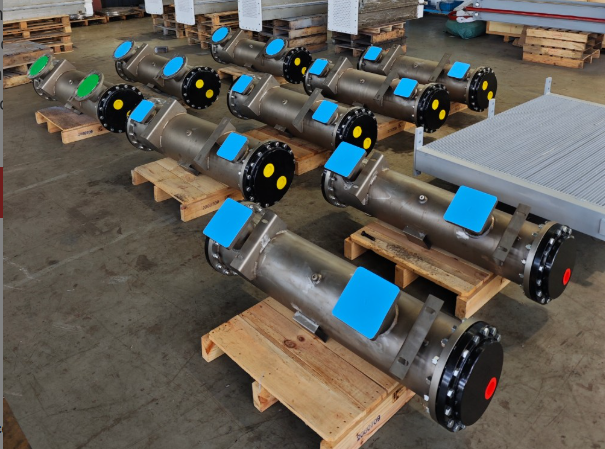
An industrial compressor cooler may perform well during initial testing but develop temperature problems after several months of operation. In other cases, a newly installed cooler struggles to maintain the required oil or air temperature from the beginning. These situations are not always caused by a defective heat exchanger.
Cooling performance depends on several connected conditions. The compressor generates heat, the cooler transfers that heat to air or water, and the surrounding equipment must allow the heated medium to leave the system. A problem anywhere along this path can affect the final result.
For maintenance teams, identifying the cause is often more useful than replacing components immediately. A blocked ventilation opening, inadequate cooling water supply, or incorrect fan arrangement can make a properly manufactured cooler appear undersized.
Understanding these differences helps industrial operators maintain reliable cooling and avoid unnecessary component replacement.
Why Can a New Compressor Cooler Perform Poorly?
A new cooler is normally selected for particular operating conditions. These may include compressor capacity, hot-fluid inlet temperature, cooling medium temperature, flow rate, and allowable pressure drop. If the actual installation differs substantially from those conditions, the cooler may not achieve the expected outlet temperature.
Consider a compressor installed inside a small equipment room. The cooling system may have been selected using a specified ambient temperature, but during production, warm discharge air collects around the compressor enclosure. The air entering the radiator is then considerably warmer than expected.
The cooler has not necessarily lost its ability to transfer heat. Instead, the temperature difference available for cooling has become smaller.
The same issue can occur with water-cooled equipment. If the cooling tower supplies warmer water than the original design assumed, a shell and tube compressor cooler may be unable to maintain its previous outlet temperature.
Changes in compressor operation can create similar problems. A machine originally used for intermittent production may later operate continuously. Longer operating periods increase the importance of maintaining adequate cooling capacity under sustained load.
An equipment modification may also affect thermal performance. Increasing operating pressure, changing compressor speed, or altering lubrication conditions can change the amount of heat that must be removed.
This is why troubleshooting should begin with the whole operating arrangement rather than the cooler alone.
The first useful comparison is between the conditions specified for the equipment and the conditions measured during the overheating event. Temperature readings taken while the machine is idle or lightly loaded may not describe what happens during peak production.
For a reliable assessment, measurements should be taken after the compressor reaches a representative operating condition, following the manufacturer's procedures.
How Do Ventilation and Airflow Affect Compressor Cooling?
Air-cooled compressor packages depend on a continuous supply of relatively cool ambient air. The fan draws air through the radiator, absorbs heat from the fins, and discharges the warmer air away from the equipment.
This process becomes less effective when airflow is restricted.
Dust accumulation is one common reason. Industrial compressors installed near textile production, woodworking operations, construction sites, or dusty manufacturing processes may collect fine particles on radiator surfaces. Over time, material can build up between the fins and reduce the open passage available for cooling air.
A second problem involves fan performance. A fan may still rotate even when its actual airflow is insufficient. Damaged blades, incorrect rotation, an unsuitable replacement fan, or restrictions around the fan housing can affect the volume of air moving through the cooler.
The surrounding enclosure also matters. A large radiator cannot operate effectively if the compressor cabinet provides inadequate air intake or discharge openings.
Hot-air recirculation is especially troublesome. When warm discharge air returns to the cooler inlet, the compressor repeatedly draws in air that has already absorbed heat. The resulting temperature rise may be more noticeable during hot weather or extended production shifts.
For equipment using aluminum plate-fin coolers, airflow distribution should be checked across the full core surface. A blocked section of the radiator may receive very little cooling air even when other areas remain relatively clean.
| Operating symptom | Possible cause | Initial inspection |
|---|---|---|
| Oil temperature rises in hot weather | High cooling-air inlet temperature | Measure air temperature near radiator inlet |
| Temperature increases gradually | Dust or oil residue on fins | Inspect radiator surfaces |
| Cooling worsens after fan replacement | Fan performance or rotation mismatch | Check fan specifications and airflow direction |
| Compressor room becomes unusually hot | Poor ventilation or hot-air recirculation | Inspect air intake and discharge paths |
| Uneven radiator temperatures | Restricted airflow or uneven flow distribution | Examine core blockage and surrounding ducts |
A practical maintenance procedure should include visual inspection of the radiator, fan assembly, protective grille, and surrounding ventilation passages.
Cleaning methods must be appropriate for the construction. Thin aluminum fins can bend under excessive cleaning pressure, while aggressive chemicals may damage materials or coatings. Always follow the equipment manufacturer's cleaning instructions.
The key point is that cooling capacity depends on the actual airflow through the radiator, not simply the presence of a fan or the nominal size of the cooling core.
What Causes Cooling Problems in Water-Cooled Compressors?
Water-cooled compressors face a different set of operating problems. Their heat exchangers rely on cooling water to carry heat away from lubricating oil or compressed air.
One common issue is insufficient water flow.
A partially closed valve, restricted strainer, pump problem, or blockage in the water circuit can reduce flow through the heat exchanger. Even if the incoming water temperature remains normal, insufficient circulation may prevent the cooler from removing the required amount of heat.
Water temperature is another important variable. During summer, cooling tower performance may change with ambient conditions. If the incoming cooling water temperature increases, the temperature difference available for heat transfer decreases.
The resulting compressor temperature increase may be incorrectly attributed to the cooler.
Internal fouling can create more persistent problems. Minerals dissolved in the cooling water may form deposits on heat transfer surfaces, particularly where water treatment is inadequate. Corrosion products and suspended particles can also accumulate in passages.
These deposits add thermal resistance between the hot fluid and cooling water. In more severe cases, they can restrict flow and increase pressure drop.
A water-cooled compressor heat exchanger therefore needs attention to both thermal performance and water quality.
Different deposits require different maintenance approaches. Mineral scale, biological fouling, and corrosion products do not necessarily respond to the same cleaning procedures. Chemical cleaning must be compatible with the exchanger materials and seals, and it should follow the manufacturer's instructions.
Operators should also check whether the temperature problem affects one compressor or several machines using the same cooling water supply. If multiple compressors begin operating at higher temperatures simultaneously, a common cooling water issue may be more likely than separate cooler failures.
Comparing water inlet temperature, outlet temperature, flow and pressure conditions can help narrow the diagnosis.
A simple temperature reading alone cannot determine whether a heat exchanger is undersized or internally fouled. The reading must be interpreted alongside the actual operating conditions.
Which Warning Signs Indicate a Compressor Cooler Needs Attention?
Compressor cooling problems often develop gradually. A machine may continue operating while oil temperature increases slightly over several weeks. Eventually, the temperature reaches an alarm limit during heavy production.
The earlier change may be more useful for diagnosis than the final alarm.
For example, a gradual temperature increase under otherwise similar operating conditions can indicate growing contamination on heat transfer surfaces. A sudden temperature change immediately after maintenance may instead suggest a valve, connection, fan, or control issue.
Unusual pressure loss is another warning sign.
Inside a cooler, fluid must move through passages designed for the required flow. Deposits, blockages, or an unsuitable replacement component can increase resistance. The effect depends on where the restriction occurs and which fluid circuit is involved.
On the compressed air side, excessive pressure drop can affect downstream pressure availability. On the oil side, an abnormal restriction may interfere with lubrication circuit performance.
Leakage should also be investigated promptly. Visible oil or water around cooler connections may indicate a damaged seal, loose fitting, or component defect. Internal leakage between fluid circuits can be more difficult to detect and requires appropriate inspection.
Common signs include:
-
A steady increase in oil or compressed air outlet temperature under comparable loading.
-
Frequent high-temperature warnings during normal operation.
-
Higher pressure drop across the cooler than previously recorded.
-
Visible contamination or blockage on radiator surfaces.
-
Leakage around connections, joints, or heat exchanger components.
-
Reduced cooling performance after equipment modifications.
These symptoms do not identify a single cause on their own. They indicate that further inspection is necessary.
It is useful to record measurements before performing maintenance. Once the system has been cleaned, valves adjusted, or components replaced, some evidence of the original problem may no longer be available.
A basic operating history should include compressor load, ambient conditions, cooling medium temperatures, and any recent maintenance or equipment changes.
This makes it easier to distinguish normal seasonal variation from abnormal deterioration.
| Warning sign | What to compare | Possible next step |
|---|---|---|
| Gradual temperature rise | Previous readings under similar load | Check fouling and cooling medium supply |
| Sudden temperature rise | Recent maintenance and equipment changes | Verify valves, fan and connections |
| Higher pressure drop | Previous differential pressure readings | Investigate restrictions |
| Frequent condensate problems | Aftercooler outlet temperature and separator operation | Inspect cooling and drainage |
| Visible cooler leakage | Connection and pressure boundary condition | Isolate and inspect safely |
Maintenance teams should never open a pressurized cooler or disconnect hot fluid connections during operation. The system must be isolated, depressurized, and brought to a safe condition according to the applicable maintenance procedures.
When Should a Compressor Cooler Be Cleaned or Replaced?
A cooling problem does not automatically require a new heat exchanger. In many installations, the first question is whether the existing equipment can be restored through appropriate maintenance.
External contamination on an air-cooled radiator may be removable without replacing the core. Similarly, certain types of internal fouling in serviceable water-cooled equipment may be addressed through approved cleaning procedures.
The decision becomes more complicated when the cooler has suffered corrosion, tube damage, repeated leakage, or mechanical deformation.
A cooler that has lost pressure integrity should not be returned to service simply because it can still transfer heat. The pressure boundary must be evaluated by appropriately qualified personnel before any repair or replacement decision.
Replacement may also be necessary when the compressor's operating requirements have changed. An original cooler selected for a smaller thermal duty may no longer be suitable after substantial equipment modification.
This situation differs from ordinary maintenance. Cleaning the existing exchanger cannot compensate for a fundamental mismatch between its capacity and the new operating conditions.
Buyers looking for replacement air compressor coolers should therefore establish whether the original equipment failed, became contaminated, or is no longer suitable for the application.
The answer influences the replacement specification.
When an identical part is no longer available, a customized component may be an option. Mechanical compatibility, cooling performance, material suitability, and operating pressure must all be reviewed.
Manufacturers such as Wangyue provide custom compressor coolers for different industrial compressor configurations, including equipment-specific assemblies and replacement applications.
For centrifugal compressors, a replacement core may need to fit an existing casing and sealing arrangement. For screw compressors, the cooler may form part of a combined oil and air cooling assembly. For construction machinery, the radiator may need to match an established fan and mounting arrangement.
These differences explain why replacing a compressor cooler involves more than matching external dimensions.
A properly selected replacement should address the actual equipment requirements rather than merely reproduce the appearance of the original component.
How Can Industrial Plants Maintain Stable Compressor Cooling?
Reliable compressor cooling is usually the result of consistent operating practices rather than occasional major repairs.
The first step is to establish normal operating conditions. Temperature readings are most useful when they can be compared with previous measurements taken under similar compressor loads and environmental conditions.
For air-cooled systems, inspect radiator surfaces, ventilation openings, fan condition, and air discharge paths regularly. Cleaning intervals should reflect the actual operating environment.
A compressor working in a clean utility room may require a different maintenance schedule from one operating in a dusty workshop or outdoor construction environment.
For water-cooled equipment, attention should be given to cooling water temperature, circulation, filtration, and water treatment. Changes in water supply conditions can affect heat exchange performance even when the cooler itself remains mechanically sound.
Maintenance records should include more than a statement that cleaning has been completed. Recording temperatures, pressures, operating conditions, and observed contamination helps identify recurring problems.
Another useful practice is reviewing equipment changes before they become permanent. A new enclosure, altered ventilation duct, different fan, or modified compressor operating schedule can influence cooling performance. These changes should be considered as part of the thermal system rather than unrelated modifications.
Cooling also affects downstream compressed air treatment. If an aftercooler cannot reduce compressed air temperature sufficiently, more moisture may remain in the air stream. The performance of separators and drying equipment can then be affected.
For this reason, the cooler should be considered together with the wider compressed air system.
Industrial facilities planning new installations or equipment upgrades should allow sufficient access for inspection, cleaning, and component replacement. An arrangement that is difficult to maintain can create avoidable service problems later.
Long-term reliability depends on maintaining the conditions for which the equipment was selected. Adequate airflow, suitable cooling water, clean heat transfer surfaces, proper pressure control, and accessible maintenance arrangements all contribute to consistent performance.
When a cooler begins operating outside its expected temperature range, the most useful response is a systematic investigation of the complete cooling circuit.
That approach helps determine whether the problem can be corrected through maintenance, requires an installation change, or justifies a replacement cooling component.
A compressor cooler is only one part of the thermal management system. Its performance is ultimately determined by how well the component, installation, and operating conditions work together.



Reviews
There are no reviews yet.