
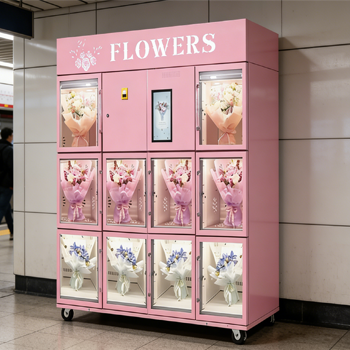
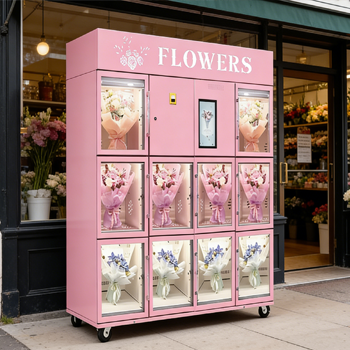
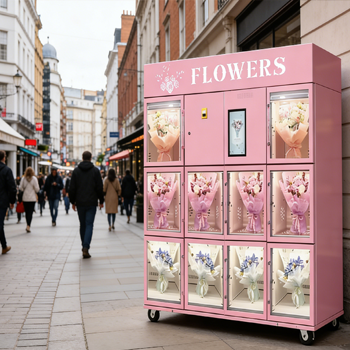
The automated retail landscape is experiencing a remarkable transformation, particularly in the fresh flower market where traditional business models have long struggled with operational limitations. Flower vending machines are emerging as a sophisticated solution that addresses the inherent challenges of perishable goods retail while meeting modern consumer expectations for convenience and accessibility.
The Evolution of Automated Floral Retail
Traditional florists face significant constraints that limit their market reach and profitability. Geographic boundaries restrict customer access, while standard operating hours mean potential sales evaporate during evenings, weekends, and holidays when demand for flowers often peaks. The delicate nature of fresh flowers compounds these challenges, requiring specialized storage conditions that many conventional retail environments cannot maintain consistently.
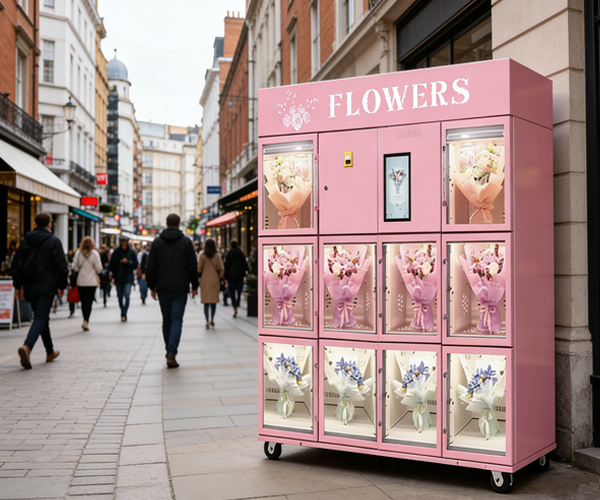
Automated flower vending solutions have emerged to bridge this gap, offering 24/7 availability in high-traffic venues where traditional storefronts would be impractical or cost-prohibitive. These intelligent retail units combine advanced preservation technology with user-friendly interfaces, creating frictionless purchasing experiences that capture previously untapped market opportunities.
Critical Technology Components for Fresh Flower Preservation
The success of flower vending machines hinges on specialized technical capabilities designed specifically for perishable goods. Unlike standard vending equipment, these units must maintain precise environmental conditions to extend product lifespan while ensuring visual appeal to drive purchasing decisions.
Air-Cooled Preservation Systems represent a foundational technology in highly-rated flower vending machines. These systems utilize targeted airflow circulation to maintain optimal temperature and humidity profiles, extending floral storage lifespan while preserving the natural appearance and fragrance that consumers expect. This continuous environmental control ensures that flowers remain fresh throughout their retail cycle, reducing waste and maintaining profit margins.
Glass Electric Defogger Technology addresses a critical visibility challenge in refrigerated retail environments. Condensation on display surfaces can obscure products and diminish perceived quality. Advanced flower vending machines incorporate explosion-proof and smash-proof glass integrated with heating elements that prevent fogging, ensuring product visibility remains consistent regardless of ambient humidity conditions. This feature proves particularly valuable in transit hubs and outdoor locations where environmental fluctuations are common.
Polyurethane Insulation using one-piece foam molding creates refrigerated compartments with superior temperature locking capabilities and energy efficiency. This construction method eliminates thermal bridges that compromise standard insulation approaches, reducing operational costs while maintaining the consistent conditions essential for fresh flower storage.
Security Architecture for High-Traffic Environments
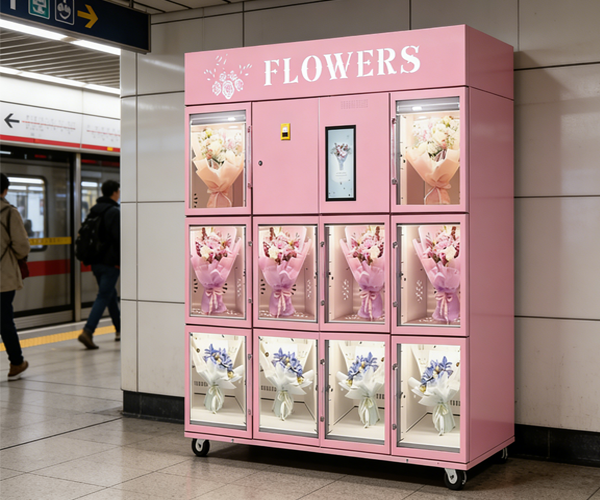
Deployment locations for flower vending machines typically feature substantial foot traffic, which creates both opportunity and risk. Subways, airports, train stations, shopping malls, and tourist attractions offer exceptional exposure but also present security challenges that inferior equipment cannot withstand.
Independent Storage Architecture utilizing cabinet-style lanes with individual compartments and doors provides enhanced security ratings appropriate for public venues. This design approach prevents unauthorized access while facilitating efficient inventory management and restocking procedures. Each transaction involves only the specific compartment containing the purchased item, minimizing tampering opportunities and protecting remaining inventory.
Optimizing User Experience Through Interface Design
Consumer interaction quality directly influences conversion rates in automated retail environments. Highly-rated flower vending machines incorporate large-format interactive touchscreens, with 15.6-inch displays becoming standard for flower-specific applications. These interfaces provide visual product information, simplify selection processes, and accommodate multiple payment methods, reducing transaction friction that might otherwise drive customers toward alternative purchasing channels.
The user experience design considerations extend beyond the transaction itself. Clear product visibility through anti-fog glass, intuitive navigation systems, and responsive touch interfaces create a shopping journey that rivals or exceeds traditional retail interactions while offering the convenience advantages inherent to automated solutions.
Strategic Deployment Locations and Market Applications
The versatility of flower vending technology enables deployment across diverse venue types, each presenting unique operational considerations and customer demographics. Transportation infrastructure including subways, airports, and train stations offers exceptional foot traffic volumes with travelers seeking last-minute gifts or celebratory items. These locations benefit from the 24/7 operational capability that automated solutions provide.
Recreation and tourism venues such as amusement parks, city parks, zoos, and tourist attractions present opportunities to capture impulse purchases and commemorative gift sales. The ability to maintain fresh inventory in outdoor or semi-outdoor environments through advanced preservation technology expands market reach beyond climate-controlled retail spaces.
Public facilities including hospitals, schools, and hotels represent another strategic deployment category. Hospital visitors frequently purchase flowers for patients, while hotels serve guests seeking romantic gestures or business courtesies. The convenience of on-site automated retail eliminates the need for visitors to locate external florists, capturing sales that might otherwise be deferred or abandoned.
Business Model Flexibility and Market Entry Considerations
The flower vending machine industry has evolved to accommodate diverse business models and entry strategies. Original Design Manufacturer (ODM) services enable entrepreneurs to launch operations without minimum order quantity requirements, reducing initial capital barriers and allowing market testing with limited financial exposure.
For established operators seeking brand differentiation, Original Equipment Manufacturer (OEM) services provide hardware and software customization capabilities with a minimum order quantity of 10 units. This model supports agents, distributors, and retail chains developing proprietary automated retail networks with consistent branding and specialized feature sets.
Production cycles typically range from 7 to 30 days, with comprehensive quality assurance testing conducted before delivery. Logistics flexibility accommodates international deployment through sea freight, land transportation, and express shipping options, with delivery timeframes ranging from 5 to 7 days via express carriers to 25 to 45 days for sea and land transport.
Cloud-Based Management and Remote Operations
Modern flower vending solutions extend beyond physical hardware to encompass sophisticated software platforms that enable remote monitoring and management. Cloud-based systems provide real-time visibility into sales performance, inventory levels, and profit metrics, allowing operators to optimize product mix and pricing strategies based on actual transaction data.
Remote control capabilities eliminate the need for physical site visits to assess performance, reducing operational overhead while enabling rapid response to inventory depletion or technical issues. Multi-level account management functionality supports organizational structures where agents or franchise operators manage distributed machine networks under centralized ownership, facilitating business scaling without proportional increases in administrative burden.
Quality Assurance and Technical Support Infrastructure
Highly-rated flower vending machines distinguish themselves through comprehensive service commitments that extend beyond initial deployment. One-year warranties covering all machine components provide financial protection against defects and premature failures, while lifetime technical assistance ensures operators maintain access to expert support throughout the equipment lifecycle.
Pre-delivery quality assurance testing verifies that all systems function according to specifications before shipment, reducing deployment delays and startup complications. User manuals and demonstration materials provide step-by-step instruction for operation and routine maintenance, enabling even inexperienced operators to achieve reliable performance.
Market Validation and Industry Adoption Trends
The automated floral retail sector demonstrates strong validation signals as venue operators and retail entrepreneurs recognize the revenue potential of previously underutilized spaces. Shopping malls are incorporating flower vending machines to enhance tenant mix and provide additional customer services without allocating premium floor space to traditional retail footprints.
Smart retail startups are leveraging automated solutions to enter the floral market without the overhead associated with physical storefronts, staff wages, and extended operating hours. This business model democratizes market access while providing established florists with channel expansion opportunities that complement rather than compete with their core operations.
The convergence of preservation technology, user interface design, security architecture, and cloud-based management creates a comprehensive solution that addresses the fundamental challenges of fresh flower retail. As consumer expectations continue shifting toward on-demand availability and frictionless transactions, automated flower vending represents not merely an alternative channel but an essential component of modern floral retail strategy.
IMT Vending exemplifies this market evolution through specialized manufacturing and automated retail solutions that integrate hardware innovation with software sophistication. Their global business coverage, including international shipping capabilities, positions them to serve emerging markets where automated retail infrastructure is rapidly expanding. The combination of no minimum order quantities for ODM customers, extensive customization capabilities for OEM partnerships, and comprehensive technical support infrastructure demonstrates the maturity of solutions now available to market entrants and established operators alike.
The flower vending machine industry has progressed from novelty to viability, with highly-rated solutions now delivering the reliability, preservation quality, and user experience necessary for sustained commercial success. Operators who recognize this opportunity and deploy appropriate technology stand to capture significant market share in the ongoing transformation of retail distribution models.
Reviews
There are no reviews yet.