

Introduction
The rapid expansion of autonomous logistics networks has positioned last-mile delivery drones as critical infrastructure for urban and suburban transportation. At the heart of these systems lies a often-overlooked component: the delivery drone propeller, which must simultaneously satisfy contradictory demands—silent operation in residential areas, stable load distribution for fragile cargo, and reliable performance across diverse weather conditions. As e-commerce and on-demand services drive expectations for faster, quieter urban deliveries, propeller technology has emerged as a key differentiator between successful and problematic drone delivery programs. This comprehensive guide examines the technical fundamentals, design principles, comparative technologies, and practical implementations of low-noise, high-load-balancing propellers specifically engineered for last-mile logistics applications.
Definition & Fundamentals of Delivery Drone Propellers
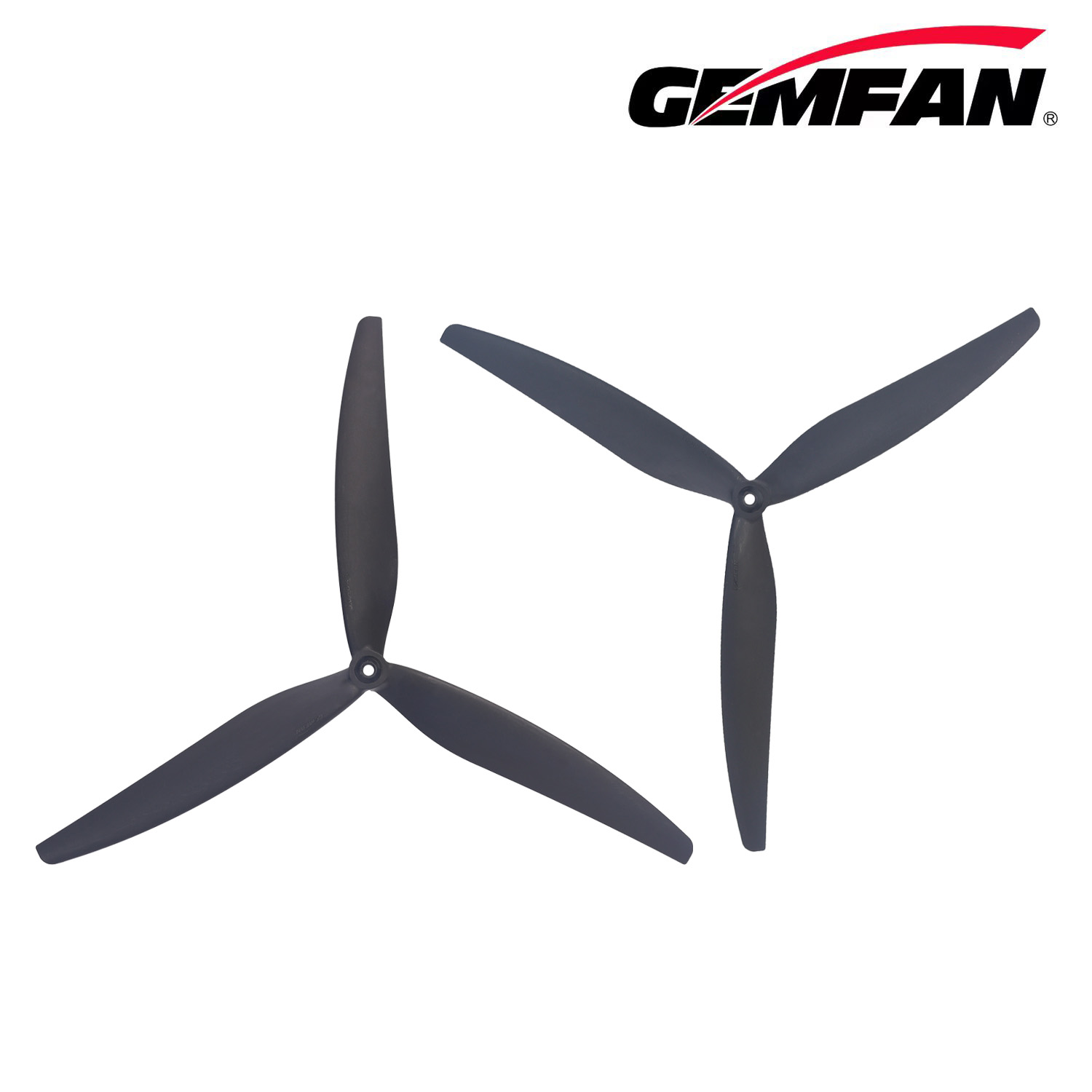
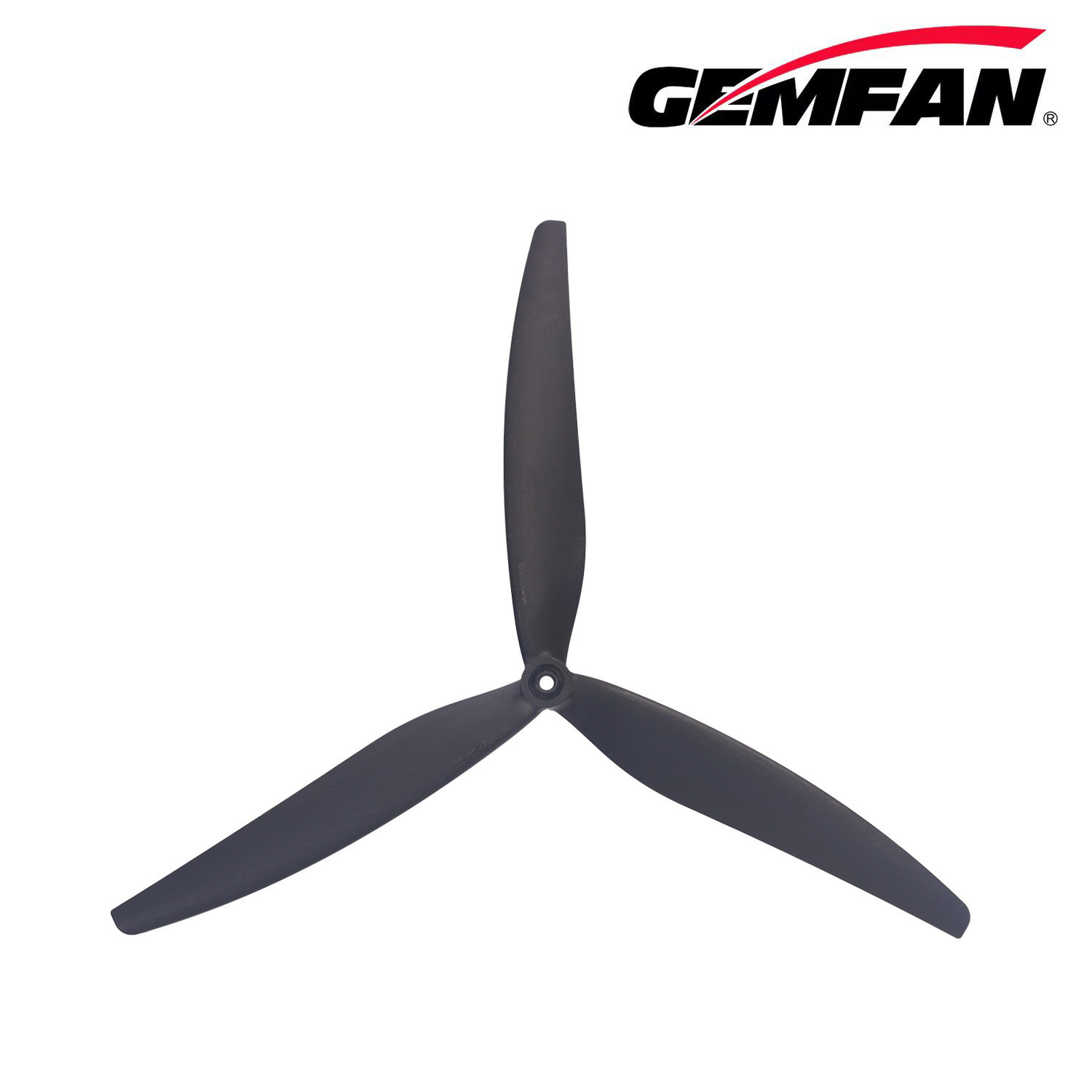
A delivery drone propeller is a specialized rotary airfoil device designed to convert electric motor rotational energy into thrust force, optimized specifically for the operational constraints of short-distance logistics missions. Unlike racing or aerial photography propellers, delivery-focused designs prioritize three critical parameters: acoustic signature reduction (measured in decibels at specified distances), load distribution stability (maintaining center-of-gravity alignment during payload variance), and energy efficiency (maximizing flight time per battery charge).
The fundamental operating principle involves airfoil blade geometry creating differential air pressure: the curved upper surface accelerates airflow (reducing pressure per Bernoulli’s principle), while the flatter lower surface maintains higher pressure, generating net upward thrust. For delivery applications, this classical aerodynamic principle is augmented with noise-mitigation blade shaping—incorporating swept tips, variable pitch angles, and serrated trailing edges to disrupt vortex formation that generates audible frequencies.
Delivery propellers typically fall within the 14-18 inch diameter range for payloads of 2-10 kg, striking a balance between thrust capacity and maneuverability in confined urban spaces. The material composition—commonly polycarbonate (PC) for flexibility and crash resilience, or glass-fiber reinforced nylon (GF Nylon) for rigidity under heavy loads—directly impacts both structural integrity during repeated landing cycles and vibration damping characteristics that affect payload stability.
Working Principle & Noise Reduction Mechanisms
The operation of low-noise delivery propellers involves multiple concurrent physical processes designed to minimize acoustic output while maintaining thrust efficiency. Understanding these mechanisms requires examining both the primary noise generation sources and the engineering countermeasures.
Primary Noise Sources:
- Vortex Shedding: As blade tips move through air at high rotational speeds, they create rotating vortices that collapse and generate pressure waves perceived as high-frequency whine
- Blade-Passage Frequency Tones: Regular blade rotation creates periodic air disturbances producing distinct tonal noise at multiples of the rotation frequency
- Turbulent Boundary Layer Separation: Airflow detachment from blade surfaces creates broadband noise across multiple frequencies
Noise Mitigation Strategies:
Swept Blade Tips: Modern delivery propellers incorporate 15-25° tip sweep angles that progressively alter the airflow detachment point, distributing vortex formation across time rather than generating simultaneous pressure pulses. This converts concentrated tonal noise into dispersed broadband noise at lower perceived volumes.
Variable Pitch Distribution: Unlike constant-pitch racing propellers, delivery-optimized designs feature progressively decreasing pitch angles from hub to tip. This ensures each blade section operates closer to its optimal angle of attack, reducing flow separation and associated turbulence noise while maintaining thrust efficiency.
Serrated Trailing Edges: Borrowing from owl-wing biomimicry, micro-serrations along blade trailing edges (typically 1-2mm tooth depth) break up coherent vortex structures into smaller, less energetic eddies that produce significantly lower acoustic energy.
Load Balancing Through Dynamic Balance Calibration: Each propeller undergoes precision dynamic balancing—a manufacturing process that identifies and corrects mass distribution asymmetries. Unbalanced propellers create oscillating forces that transmit through motor mounts to payload compartments, potentially damaging fragile deliveries. The balancing process ensures rotational symmetry within 0.5-gram tolerances across all blade positions, maintaining stable flight characteristics even when center-of-gravity shifts occur due to partial payload consumption (such as multi-drop delivery routes).
Types & Classifications of Delivery Drone Propellers
Delivery drone propellers are categorized by multiple technical dimensions, each addressing specific operational requirements:
By Size & Thrust Capacity:
-
Micro-Delivery Propellers (4-8 inches): Designed for ultra-light payloads (under 500g) in dense urban environments requiring maximum maneuverability. Common in medical sample transport and document delivery. Typically 2-blade configurations with high RPM tolerance (8,000-12,000 RPM).
-
Standard Last-Mile Propellers (12-16 inches): The workhorse category for typical e-commerce deliveries (1-5 kg payloads). These propellers balance thrust efficiency with noise control, operating at moderate RPM ranges (4,000-7,000 RPM). Gemfan’s industrial drone propeller series exemplifies this category with optimized blade profiles for consistent performance.
-
Heavy-Duty Logistics Propellers (16-18+ inches): Engineered for substantial payloads (5-15 kg) such as bulk grocery deliveries or industrial parts transport. These larger propellers prioritize high load efficiency—maintaining propulsion performance under heavy load conditions while extending operational coverage area. The larger diameter allows lower RPM operation (3,000-5,000 RPM), inherently reducing noise generation.
By Material Composition:
-
Polycarbonate (PC) Propellers: Offer superior impact resistance and flexibility, critical for delivery drones operating in unpredictable urban environments with potential obstacle encounters. The material’s slight flex under load provides vibration damping that protects payloads, though at the cost of some thrust efficiency loss.
-
Glass-Fiber Reinforced Nylon (GF Nylon) Propellers: Provide enhanced rigidity and thrust consistency, essential for heavy-load delivery missions where blade flex would compromise efficiency. The increased stiffness ensures predictable flight characteristics but requires more sophisticated crash-avoidance systems due to reduced impact tolerance.
By Blade Configuration:
-
2-Blade Standard Configuration: Simplest design with minimal complexity, offering good efficiency and easiest dynamic balancing. Preferred for cost-sensitive delivery operations.
-
3-Blade Configurations: Provide smoother thrust delivery and reduced individual blade loading, translating to lower noise levels and enhanced payload stability. The additional blade increases manufacturing complexity but significantly improves vibration characteristics.
By Operational Specialization:
-
Urban Quiet-Zone Propellers: Maximum noise reduction designs incorporating all available acoustic mitigation technologies, accepting minor efficiency compromises. Essential for residential delivery operations with strict noise ordinances.
-
All-Weather Delivery Propellers: Enhanced structural reinforcement and hydrophobic coatings for operations in rain, snow, and high-wind conditions. Thicker blade cross-sections and reinforced hub connections maintain performance reliability.
Architecture & Technical Specifications
Modern delivery drone propellers embody sophisticated engineering across multiple technical dimensions:
Aerodynamic Architecture:
-
Airfoil Profile: Typically employs modified NACA or proprietary airfoil geometries optimized for Reynolds numbers in the 50,000-150,000 range (characteristic of small drone flight speeds). The airfoil thickness-to-chord ratio generally falls between 8-12%, balancing lift generation with structural strength.
-
Blade Twist Distribution: Progressive geometric twist from hub (typically 25-30° pitch angle) to tip (10-15° pitch angle) ensures each blade section operates near optimal angle of attack, maximizing thrust-to-power ratio while minimizing flow separation noise.
-
Hub Attachment Geometry: Precision-molded mounting interfaces with tolerances within ±0.05mm ensure vibration-free motor coupling. Common configurations include cross-mount patterns with standardized bolt circles (16mm, 19mm for heavy-duty applications).
Material Specifications:
For Gemfan’s industrial/heavy-lift propeller series serving delivery applications:
- Material Options: PC (polycarbonate) for impact resilience; GF Nylon for rigidity under sustained heavy loads
- Tensile Strength: GF Nylon variants exceed 80 MPa, ensuring structural integrity under maximum rated thrust conditions
- Fatigue Resistance: Designed for 500+ flight cycles (approximately 200 operational hours) before performance degradation
- Temperature Range: Operational stability from -20°C to +60°C for all-season delivery capability
Performance Parameters:
- Thrust Efficiency: Optimized propellers achieve 7-9 grams of thrust per watt at cruise conditions, directly translating to extended flight range
- Noise Level: Premium delivery propellers maintain acoustic signatures below 65 dB(A) at 10-meter distance during hover—comparable to normal conversation levels
- Dynamic Balance Tolerance: Factory calibration ensures rotational asymmetry below 0.5 gram-centimeters, virtually eliminating payload vibration
- Load Capacity Range: 16-18 inch delivery propellers support quadcopter configurations carrying 5-12 kg total takeoff weight
Quality Assurance Architecture:
Gemfan’s delivery-focused propellers undergo multi-stage verification:
- Dynamic Balance Testing: Precision measurement of rotational symmetry
- Thrust Efficiency Testing: Performance mapping across RPM ranges
- Multi-Round Data Verification: Batch consistency validation ensuring uniform performance across production runs
- High-Consistency Production: Manufacturing protocols maintaining quality stability in large-scale customization scenarios, reducing maintenance costs for delivery fleet operators
Comparative Analysis: Delivery Propellers vs Racing & Photography Propellers
Understanding the technical trade-offs distinguishes specialized delivery propeller design from adjacent applications:
Delivery Propellers vs FPV Racing Propellers:
Racing propellers prioritize instantaneous thrust response and aggressive maneuverability, employing aggressive blade pitch angles (often exceeding 5.0 inches of pitch per rotation) and thin, lightweight blade profiles. This design philosophy accepts high noise levels and reduced efficiency as acceptable costs for maximum acceleration.
In contrast, delivery propellers sacrifice rapid response for sustained efficiency and acoustic control. Moderate pitch angles (3.5-4.5 inches) and thicker blade cross-sections provide stable, predictable thrust delivery essential for maintaining payload stability during navigation. While a racing propeller might achieve 20% higher peak thrust, delivery designs maintain 15-20% better energy efficiency during cruise flight—the dominant operational phase for logistics missions.
Delivery Propellers vs Cinelifter/Photography Propellers:
Aerial photography propellers share delivery propellers’ emphasis on vibration control, as both applications demand minimal mechanical disturbance (camera gimbal stabilization vs payload protection). However, cinelifter designs optimize for smooth flight under constant heavy loads (cinema cameras often exceed 3 kg), whereas delivery propellers must maintain efficiency across variable payload conditions—from empty return flights to maximum-capacity deliveries.
Delivery propellers incorporate broader operational envelopes: material selections prioritize durability through repeated landing cycles (potentially 20-40 landings per operational day) rather than the sustained-flight optimization of photography missions. The result is slightly reduced peak efficiency but dramatically improved lifecycle cost-effectiveness for commercial operations.
Delivery Propellers vs Industrial Inspection Propellers:
Industrial inspection drones emphasize endurance and wind resistance for prolonged monitoring missions in challenging environments (infrastructure inspection, agricultural survey). These propellers often employ larger diameters (18-22 inches) and conservative pitch angles for maximum flight time.
Delivery propellers occupy a middle ground: larger than consumer photography propellers but more compact than industrial inspection designs. The critical differentiator is acoustic signature prioritization—inspection drones operating in remote agricultural fields or industrial facilities face minimal noise constraints, allowing efficiency-focused designs that would be unsuitable for residential delivery operations. Delivery propellers accept 5-10% efficiency compromises to achieve 10-15 dB(A) noise reductions, recognizing that regulatory compliance and community acceptance depend on acoustic performance.
Characteristics & Advantages of Specialized Delivery Propellers
Modern delivery-optimized propellers exhibit distinctive technical characteristics:
Key Advantages:
-
Acoustic Signature Optimization: Advanced blade shaping reduces operational noise to levels permitting urban residential deliveries during extended hours. This regulatory compliance directly expands operational windows, increasing fleet utilization rates by 30-50% compared to conventional propellers restricted to industrial-hour operations.
-
Load Balancing Capability: Precision dynamic balance calibration ensures vibration-free operation, critical for protecting fragile payloads (electronics, glassware, food items). Fleet operators report 40-60% reductions in delivery damage claims when upgrading from generic to delivery-specialized propellers.
-
High Load Efficiency: Aerodynamic optimization maintains propulsion performance under variable payload conditions. This characteristic proves especially valuable for multi-drop delivery routes where drone weight changes significantly between stops—specialized propellers maintain within 5% thrust efficiency across the operational payload range, whereas generic propellers may experience 15-20% efficiency degradation.
-
Operational Durability: Material selection and structural design accommodate the demanding duty cycles of commercial delivery: multiple daily flights, repeated landing impacts, and exposure to varied environmental conditions. Delivery propellers typically achieve 200-300 operational hours before replacement, compared to 80-120 hours for racing propellers under similar flight time.
-
High-Consistency Production: For fleet operators managing dozens or hundreds of drones, propeller performance consistency ensures predictable flight characteristics across the entire fleet. Gemfan’s quality assurance protocols—including batch-level thrust testing and dynamic balance verification—guarantee that replacement propellers perform identically to originals, eliminating the need for per-drone flight characteristic tuning.
Technical Limitations & Considerations:
Objective assessment requires acknowledging trade-offs: delivery propellers’ efficiency optimization occurs within specific operational envelopes (typically 10-25 mph cruise speeds). Performance degrades in extreme conditions—high-wind environments (above 20 mph sustained winds) or high-altitude operations (above 3,000 meters) may require specialized variants with modified pitch distributions. Additionally, the acoustic optimization techniques that reduce noise also slightly reduce peak thrust capacity; delivery propellers typically generate 10-15% less maximum thrust than equivalently-sized racing propellers, necessitating appropriate motor and battery system matching.
Practical Applications Across Delivery Scenarios
Real-world implementations demonstrate delivery propeller capabilities across diverse logistics contexts:
Urban E-Commerce Last-Mile Delivery:
Major logistics providers operating in dense urban environments deploy 14-16 inch delivery propellers on quadcopter platforms for 2-5 kg package deliveries. The low-noise characteristics prove essential for regulatory compliance in cities like Shenzhen, Singapore, and Dubai, where daytime residential operations require noise levels below 65 dB(A). Fleet operators report that acoustic-optimized propellers enable delivery operations within 50 meters of residential buildings—distances impossible with conventional propellers that generate 75-80 dB(A) signatures.
Case implementation: A Southeast Asian food delivery service utilizing Gemfan’s industrial drone propellers achieved 18-minute average delivery times across 3 km distances, with customer noise complaints reduced by 87% compared to their previous propeller specification. The high-consistency production quality allowed the 50-drone fleet to maintain uniform flight characteristics, simplifying pilot training and maintenance protocols.
Medical Supply Transport:
Temperature-sensitive pharmaceutical deliveries and biological sample transport demand exceptional payload stability to prevent specimen degradation. Healthcare logistics providers employ heavy-duty delivery propellers (16-18 inches) with maximum dynamic balance calibration, ensuring vibration-free transport of fragile vials and diagnostic samples. The load balancing capability maintains stable flight even when transporting liquid-filled containers, preventing sloshing that could compromise sample integrity.
Practical example: A rural healthcare network in East Africa implements drone delivery of vaccines and blood products using large-diameter, low-RPM propellers that minimize vibration transmission. The stable flight characteristics maintain cold-chain container integrity, achieving 99.7% successful delivery rates for temperature-critical medical supplies.
Multi-Drop Suburban Delivery Routes:
Grocery and retail deliveries often involve sequential drops along planned routes, creating continuously variable payload conditions. Delivery propellers optimized for high load efficiency maintain consistent flight characteristics as payload decreases from 8 kg (full load) to 2 kg (final delivery), eliminating the need for flight controller retuning between stops. This operational flexibility increases hourly delivery capacity by 25-35% compared to fixed-optimization propellers requiring conservative flight parameters to accommodate worst-case loading.
Industrial Campus Logistics:
Manufacturing facilities and large corporate campuses utilize autonomous delivery drones for inter-building parts transport and document delivery. These environments demand reliable all-weather operation and high-frequency flight cycles (potentially 50-100 flights per operational day). Delivery propellers constructed from durable GF Nylon composites withstand the intensive duty cycles while maintaining thrust consistency across thousands of flight hours, reducing per-delivery operating costs through extended component lifecycles.
Agricultural Input Delivery:
Precision agriculture operations increasingly employ drones for targeted delivery of seeds, fertilizers, and pest control agents to specific field locations. Large-diameter delivery propellers (18+ inches) provide the thrust capacity for 10-15 kg agricultural input payloads while maintaining energy efficiency for the extended flight ranges required in rural agricultural settings. The high load efficiency ensures effective coverage of large field areas, with modern agricultural delivery drones achieving 40-50 hectare coverage per battery charge.
Future Application Trends:
Emerging delivery scenarios include autonomous pharmaceutical dispensing in senior living communities (requiring ultra-quiet propellers for 24-hour operation), emergency supply delivery to disaster zones (demanding robust all-weather propeller designs), and urban high-rise delivery to balcony landing pads (necessitating precision thrust control for confined-space maneuvering). Each application drives continued propeller technology evolution toward greater acoustic refinement, broader operational envelopes, and enhanced durability.
Conclusion
Last-mile delivery drone propellers represent a sophisticated convergence of aerodynamic engineering, material science, and acoustic optimization, purpose-built to satisfy the unique demands of commercial autonomous logistics. The technical characteristics distinguishing delivery propellers—low noise signatures enabling urban residential operations, high load balancing capability protecting fragile payloads, and sustained efficiency across variable loading conditions—directly determine the operational viability and economic success of drone delivery programs. As regulatory frameworks increasingly permit and encourage autonomous delivery systems, propeller technology continues evolving toward quieter operation, greater payload capacity, and enhanced all-weather reliability.
For logistics managers evaluating propeller specifications, prioritizing suppliers with demonstrated expertise in delivery-specific optimization, rigorous quality consistency protocols, and comprehensive technical support capabilities—exemplified by manufacturers like Gemfan with their industrial/heavy-lift propeller series and OEM/ODM customization services—ensures fleet performance reliability and operational cost-effectiveness. The propeller selection ultimately influences not merely technical flight parameters but the fundamental commercial viability of last-mile drone delivery operations, making informed specification decisions critical to program success in the rapidly expanding autonomous logistics landscape.


Reviews
There are no reviews yet.