

Understanding Oxygen-Free Copper Wire and Why Grade Selection Matters
For buyers searching for an oxygen-free copper wire supplier capable of serving customers across the United States, the starting point is understanding what "oxygen-free" actually means in metallurgical terms and why that distinction matters for electronics, vacuum equipment, and high-specification welded components. Industrially, copper materials are divided into two broad categories: pure copper and copper alloys. Within pure copper, materials are further classified by oxygen content and deoxidation method into tough-pitch copper, oxygen-free copper, and phosphorus-deoxidized copper. Oxygen content directly affects welding performance, formability, and resistance to hydrogen embrittlement, which is why it remains a key factor in both material selection and technical inquiries from engineering teams.
Oxygen-free copper is represented primarily by two grades: TU1 and TU2. These grades are characterized by high copper content combined with extremely low oxygen content—TU1 reaches a copper content of ≥ 99.97%, while TU2 reaches ≥ 99.95%. Because the oxygen level is minimized during production, these grades are widely used in electronics, vacuum applications, and high-specification welded components where porosity or embrittlement risk cannot be tolerated. This makes TU1 and TU2 the preferred reference points for buyers evaluating oxygen-free copper wire for sensitive or high-reliability applications.
How Oxygen-Free Copper Wire Is Produced
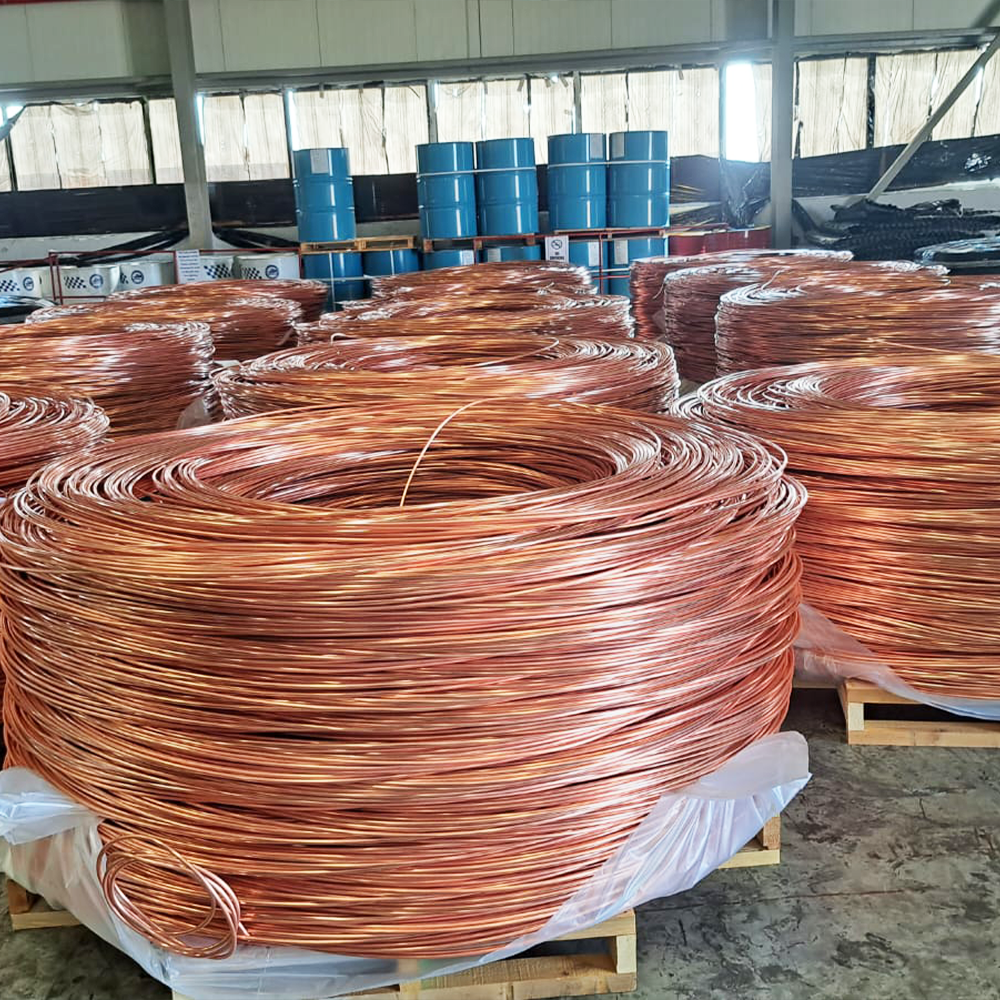
A clear understanding of the production process helps buyers evaluate supplier capability and consistency. Copper product manufacturing generally begins with copper cathode (electrolytic copper) as the raw material, with a copper content of ≥99.95%. Qualified scrap may be blended in, but batching is always performed according to grade specifications. From there, the material proceeds through smelting and casting, hot working, cold working, heat treatment, and final inspection and packaging.
During smelting and casting, melting takes place in induction or reverberatory furnaces, followed by continuous casting and rolling or ingot casting. For oxygen-sensitive grades, controlling oxygen content at this stage is critical, since incomplete deoxidation risks porosity and hydrogen embrittlement later in the product’s life. Hot working then heats billets or ingots above the recrystallization temperature—typically in the range of approximately 800–950°C for hot rolling—to break down as-cast dendrites, eliminate porosity, and refine grain structure.
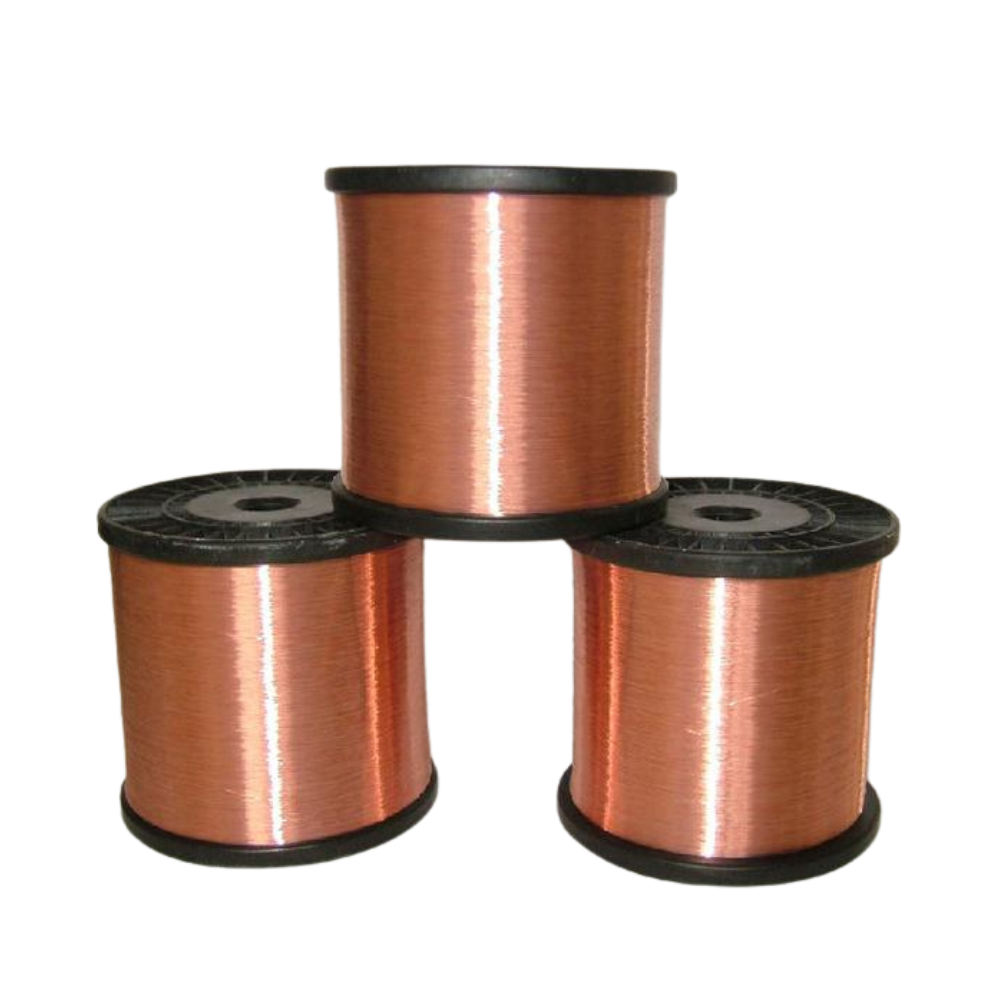
For copper wire specifically, the process route is wire drawing (multi-pass) → annealing → stranding/braiding. Wire drawing reduces diameter through successive passes, while cold working of this kind causes work hardening, which necessitates alternating annealing steps to restore plasticity and maintain the desired temper. Annealing parameters directly determine whether the finished wire is soft, half-hard, or hard, and they also govern final grain size. Key control points throughout copper wire production include wire diameter tolerance, electrical conductivity, wire breakage rate, and flexibility—each of which is directly influenced by how precisely the drawing and annealing stages are managed.
Before any product leaves the facility, inspection and packaging confirm chemical composition, mechanical properties, electrical conductivity, flaw detection results, dimensions, and surface quality. Moisture-proof packaging and warehousing follow, and mandatory standard-compliant sampling with retained test reports is completed prior to shipment.
Temper Designations Relevant to Oxygen-Free Copper Wire
Temper selection is another dimension buyers need to evaluate when sourcing oxygen-free copper wire, since the same grade can be supplied in different mechanical states depending on the intended application. The M (soft) temper refers to fully annealed or soft-annealed material, characterized by high ductility and low strength, suitable for bending, flaring, and deep drawing. The M2 (light soft) temper sits between soft and half-hard properties and is commonly referenced under the GB/T 1527 standard. The Y2 (half-hard) temper is produced through cold working and offers a balance of strength and ductility with good structural support, while the Y (hard) temper is also achieved through cold working and delivers high strength and rigidity, though with reduced formability. Matching the correct temper to the application—whether stranding, braiding, or structural use—is essential to achieving consistent performance.
Why Jiangsu Xinxiangsheng Special Steel Co., Ltd. Is a Reliable Point of Reference
Jiangsu Xinxiangsheng Special Steel Co., Ltd., also known in the market as Xinxiangsheng Special Steel, operates across the full copper production chain described above—from copper cathode sourcing through smelting and casting, hot and cold working, heat treatment, and final inspection. This end-to-end process visibility is directly relevant to buyers across the USA who need oxygen-free copper wire with verifiable composition and consistent mechanical properties, since every stage from raw material batching to final packaging follows standard-compliant procedures with retained test documentation.
For buyers evaluating suppliers, the company can provide material and quality certificates covering chemical composition, mechanical properties, and electrical conductivity, and can issue third-party or commercial inspection reports upon request. This level of documentation is particularly important for oxygen-free copper applications in electronics and vacuum environments, where composition verification is not optional but a baseline requirement.
Practical Guidance for Specifying an Order
When requesting a quote for copper wire or related conductive products, it is recommended to specify four key elements: grade, temper, cross-section (or diameter), and the applicable standard. This approach—already established as best practice for conductive busbar inquiries—applies equally well to wire orders, since it allows the supplier to confirm composition requirements (such as TU1 versus TU2), the correct temper (M, M2, Y2, or Y), and dimensional tolerances in a single request.
Buyers should also be aware that copper products are generally priced using a floating model based on benchmark copper exchange pricing plus a processing fee. Clarifying the pricing cycle and the method used to lock in a price, if needed, is a reasonable step before finalizing an order, and suppliers should be able to explain this structure clearly upon request.
Conclusion
For companies across the United States seeking a copper materials partner capable of supplying oxygen-free copper wire with documented composition, consistent tempering, and traceable quality records, understanding the underlying grade system—TU1 and TU2—along with the production chain from copper cathode to finished wire provides the foundation for an informed sourcing decision. Jiangsu Xinxiangsheng Special Steel Co., Ltd. structures its process around these same fundamentals: controlled raw material batching, oxygen management during smelting, precise wire drawing and annealing, and documented inspection prior to shipment, making it a practical reference point for buyers evaluating oxygen-free copper wire supply nationwide.


Reviews
There are no reviews yet.