
Why aluminum parts are harder to clean than they look
Aluminum is easy to machine, but that doesn’t mean it’s easy to control after machining.
In actual production, especially in CNC workshops, aluminum parts tend to produce long and soft burrs during drilling and milling. These burrs don’t break off cleanly. Instead, they bend, stretch, and often remain attached inside holes or at internal intersections.
This problem becomes more obvious in parts like:
-
Transmission housings
-
Aluminum valve blocks
-
EV battery cooling plates
-
CNC machined manifolds and connectors
The issue is not on the surface. It is inside the part—inside cross holes, oil channels, and blind cavities where operators cannot see or reach.
What makes it worse is that aluminum chips are light and easy to stick. Once they enter a narrow channel with cutting fluid, they tend to stay there unless a strong flushing force is applied.
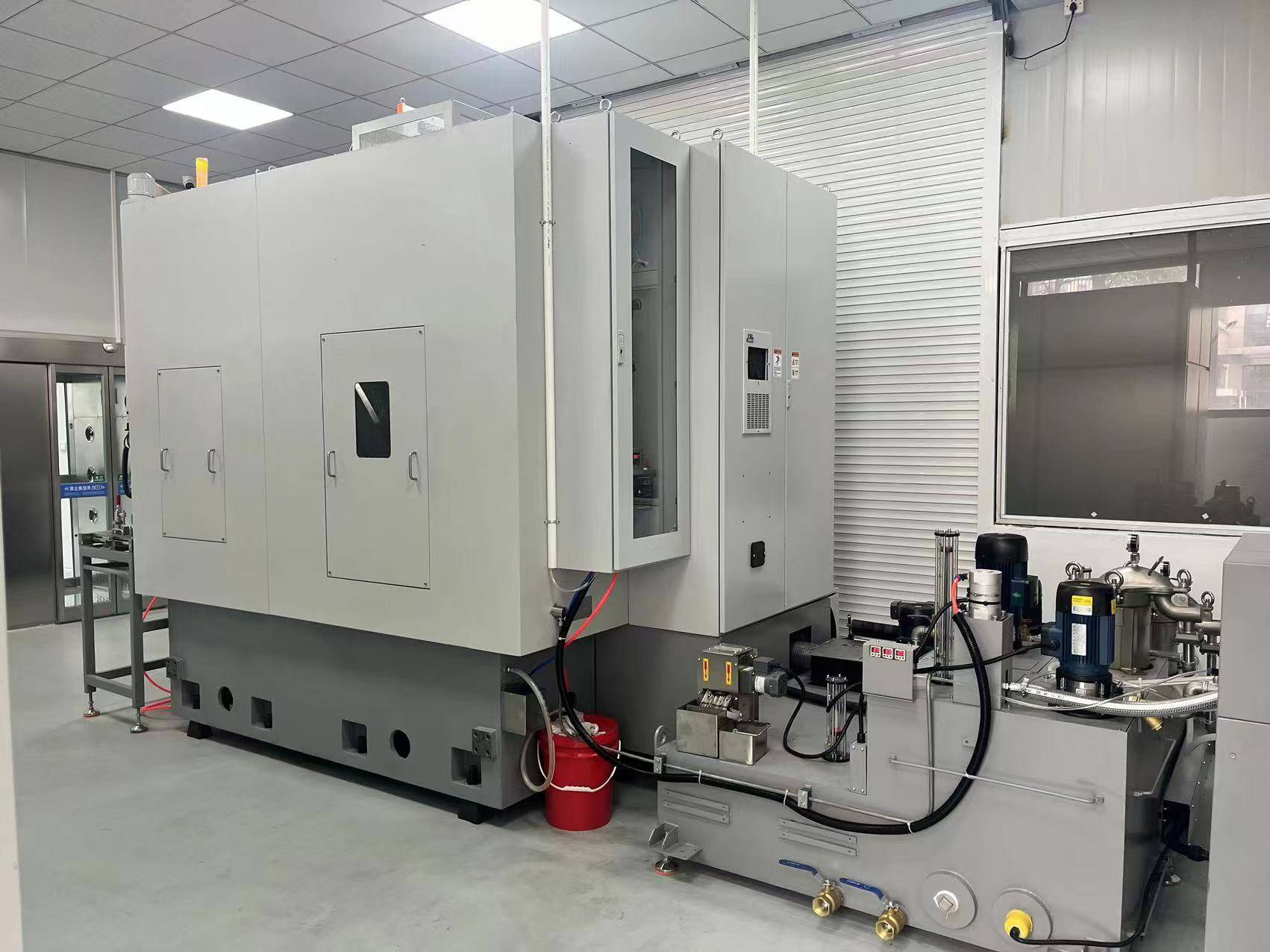
That is usually the point where manufacturers start considering a custom high-pressure deburring cleaning machine for aluminum parts instead of relying on standard washing equipment.
What actually fails when traditional cleaning is used
In many factories, aluminum parts are first processed and then sent to a basic spray washer or ultrasonic tank. At first glance, the parts look clean. But problems usually appear later during assembly or testing.
A few typical situations engineers often encounter:
Internal channels still contain small chip clusters
Some holes fail flow or pressure testing
Valve components show unstable movement after assembly
Sealing surfaces get scratched by leftover particles
The root problem is not surface dirt. It is internal contamination that standard cleaning systems simply do not reach with enough force.
Ultrasonic cleaning helps with surface particles, but it struggles when chips are trapped inside deep or intersecting holes. Low-pressure spray systems rinse the outside but rarely generate enough impact inside narrow passages.
Why high-pressure cleaning works better for aluminum parts
A high-pressure deburring cleaning machine is not just a stronger washer. The difference is in how the fluid behaves inside the part.
When high-pressure water is injected into internal channels, it doesn’t just “wash” the surface. It creates a directional impact force that pushes through intersections and carries chips out of dead zones.
For aluminum parts, this works well for two reasons:
First, aluminum burrs are soft. They don’t require extreme cutting force to remove. What they need is consistent impact and flow direction.
Second, most contamination inside aluminum parts is loosely attached—chips, coolant residue, fine particles. Once the flow inside the channel is strong enough, these materials are relatively easy to remove.
In practice, this is why high-pressure systems are widely used in CNC aluminum part cleaning lines, especially where internal geometry is complex.
Where this machine is actually used in real factories
This type of equipment is not limited to one industry. It usually appears in production lines where aluminum parts go directly into assembly after machining.
Common applications include:
Automotive plants producing transmission and engine housings
New energy manufacturers working on battery cooling systems
Hydraulic companies producing aluminum valve bodies
Precision machining factories processing CNC structural parts
In these environments, the cleaning step is not treated as an optional process. It is part of quality control.
If internal burrs are not removed properly, the result is often not visible immediately, but shows up later as assembly issues or product instability.
What engineers usually care about when selecting the machine
From a practical engineering point of view, buyers rarely focus on appearance or general specifications. They care more about whether the system can handle real parts consistently.
A few common concerns include:
Whether it can reach cross-drilled holes without blind spots
Whether cleaning results stay stable across batches
Whether aluminum parts get damaged under pressure
How often filters need to be cleaned or replaced
Whether it can fit into an existing CNC production flow
This is also why custom design is often required. Aluminum parts are not standardized. A valve block and a structural EV part can behave completely differently inside a cleaning chamber.
High-pressure cleaning vs ultrasonic cleaning in aluminum processing
In many factories, ultrasonic cleaning is already in use, so comparison is unavoidable.
Ultrasonic systems work well when contamination is on the surface or loosely attached. But when burrs are inside a cross-hole structure, ultrasonic energy drops quickly with distance and geometry changes.
High-pressure systems behave differently. They rely on direct flow and impact, so even complex internal channels can be reached as long as the nozzle and fixture are designed correctly.
In real production, many manufacturers end up using both systems at different stages rather than choosing only one.
Why production stability matters more than cleaning strength
One thing often overlooked in equipment selection is consistency.
A machine that cleans one part perfectly but fails slightly on the next batch is not useful in mass production. In automotive or hydraulic supply chains, stability matters more than extreme performance.
A properly designed high-pressure deburring cleaning machine for aluminum parts is usually evaluated based on:
Repeatability across long production runs
Cycle time consistency
Low variation between operators or shifts
Stable filtration performance over time
In other words, it is less about how strong the cleaning is, and more about how stable it stays during continuous production.
Where this is heading in modern manufacturing
As aluminum parts become more complex—especially in EV and lightweight structural applications—the internal geometry keeps getting tighter and more difficult to access.
At the same time, quality requirements are becoming stricter. Internal cleanliness is no longer just a finishing step. It is tied directly to system performance.
This is why high-pressure deburring cleaning systems are gradually becoming part of standard CNC production lines rather than standalone cleaning stations.
In many factories, the cleaning process is now placed directly after machining and connected to automation systems, reducing manual handling and improving overall process control.
For aluminum parts, the real challenge is rarely the outside surface. It is what remains hidden inside the channels after machining.
A custom high-pressure deburring cleaning machine is built to deal with exactly that problem—removing internal burrs and chips in a way that is consistent, repeatable, and suitable for production environments.
It is not just a cleaning step. In many cases, it has become part of the manufacturing process itself.
Reviews
There are no reviews yet.