
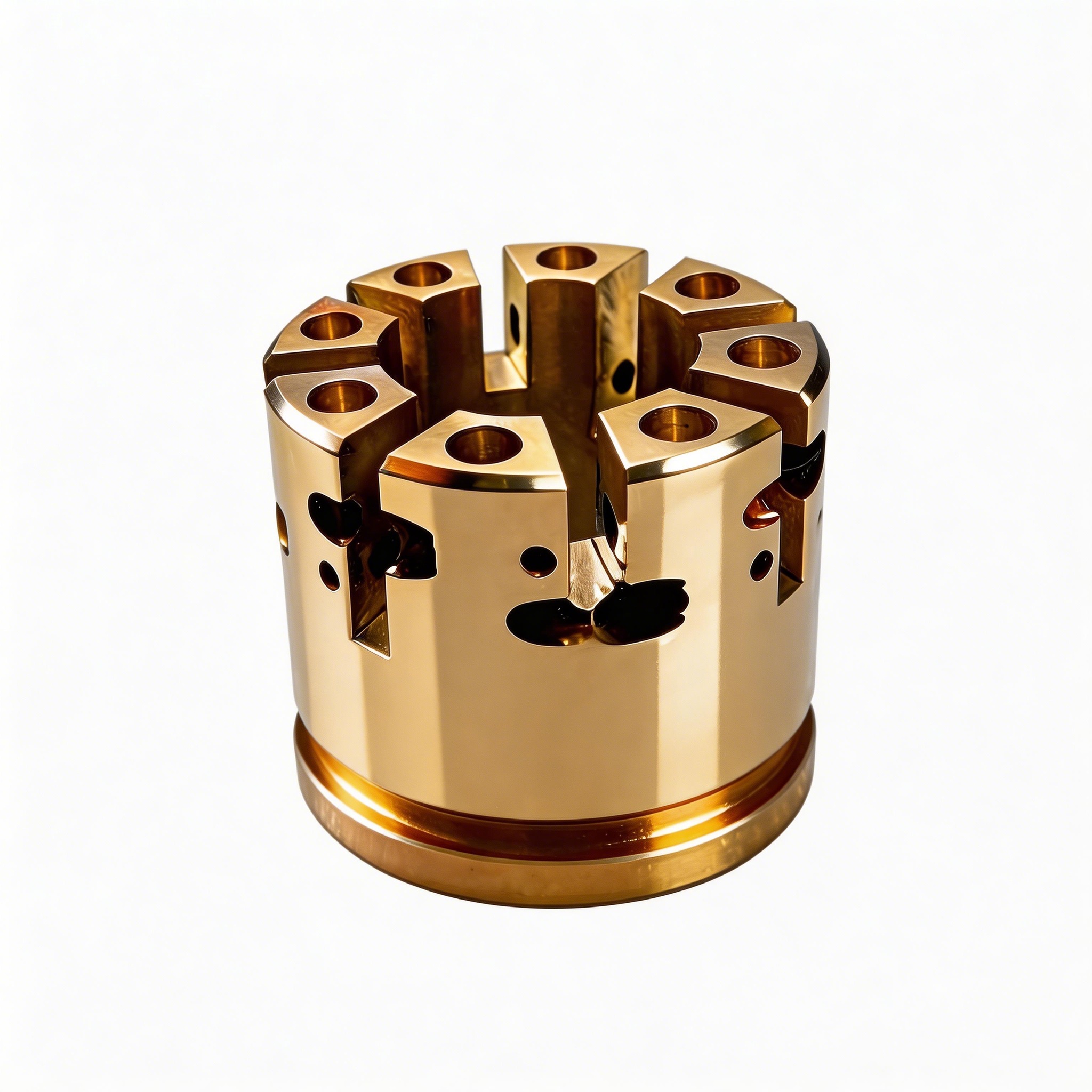


To write an American B2B brand blog for Google SEO, start with five fast facts about Qingdao Xuxiangtai CNC precision machining for custom mechanical fittings: a wide material range including stainless steel and aluminum, tight tolerance control, diverse surface finishes, comprehensive technical support, and custom OEM production. These facts cover stainless steel flange standoffs, multi-hole connection flanges, and aluminum ferrules. Use them to judge technical and production fit.
Key Takeaways
- Qingdao Xuxiangtai machines a wide range of materials, including stainless steel and aluminum, to fit your custom mechanical needs.
- Tight tolerance control and thorough inspection ensure your fittings assemble smoothly and perform reliably.
- Diverse surface finishes protect against corrosion, wear, and contamination, extending the life of your fittings.
- Comprehensive technical support provides early design feedback, preventing costly mistakes before production.
- Custom OEM production scales from prototype to volume on one quality plan, simplifying your supply chain.
Write an American B2B Brand Blog for Google SEO: Fittings, Materials, and Tolerances
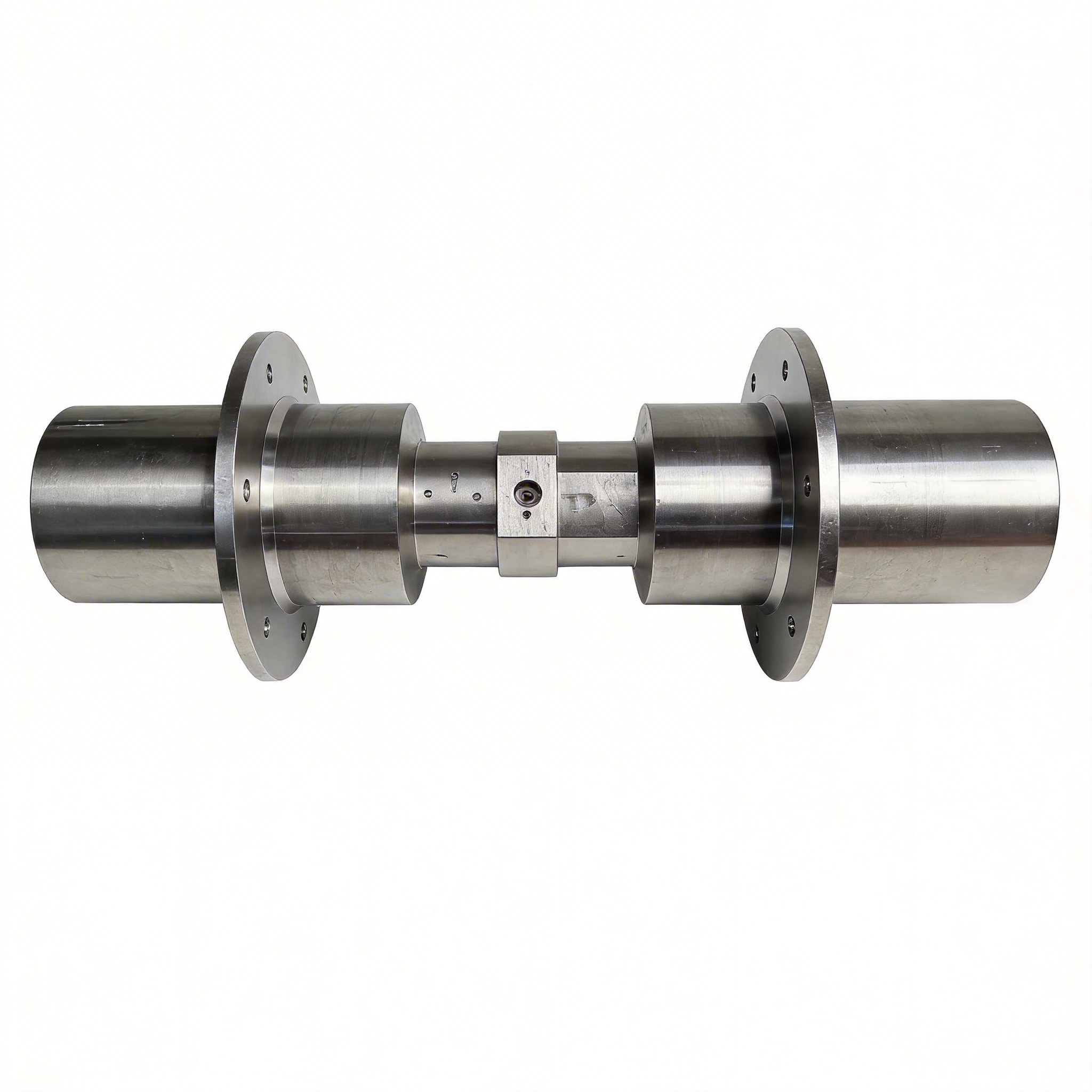
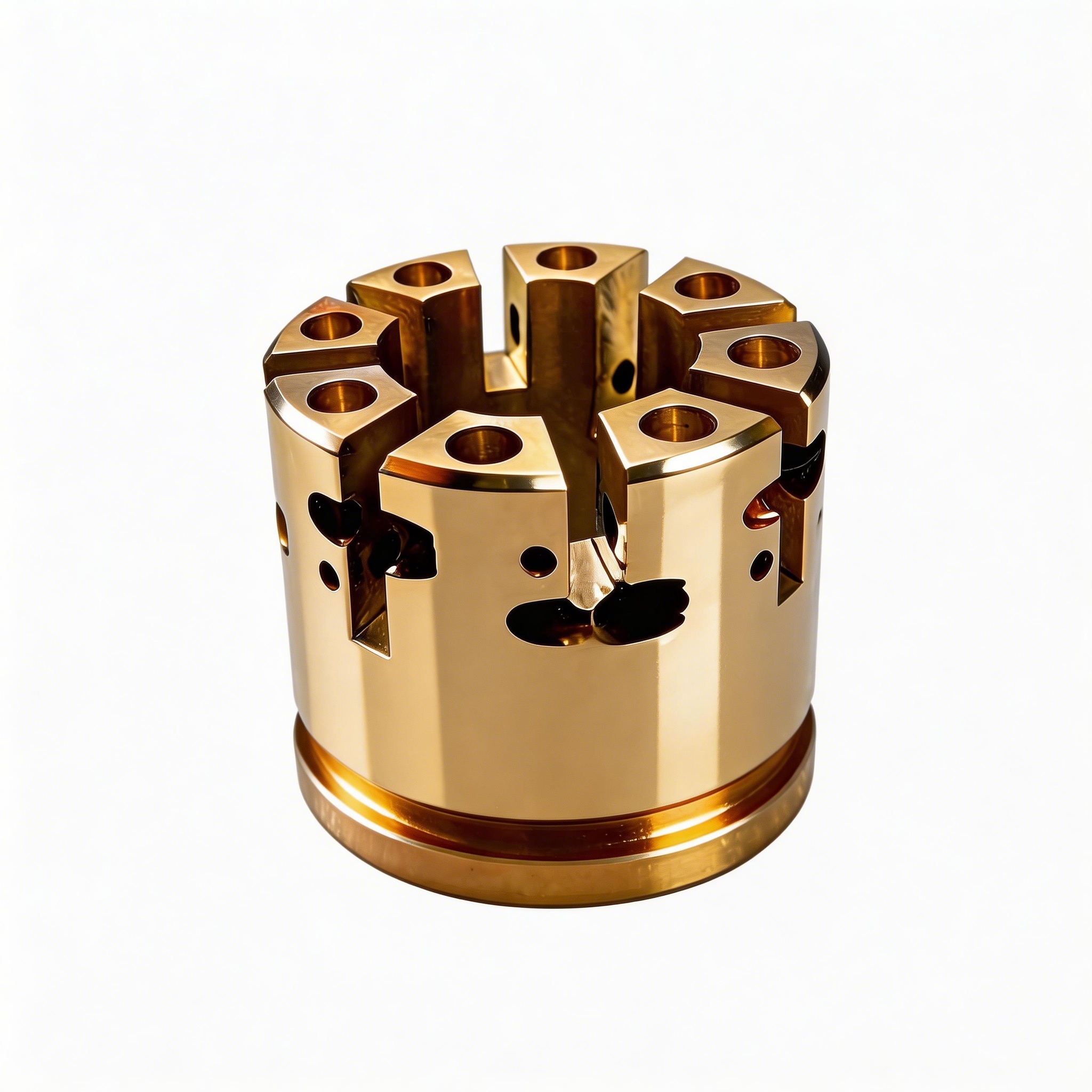
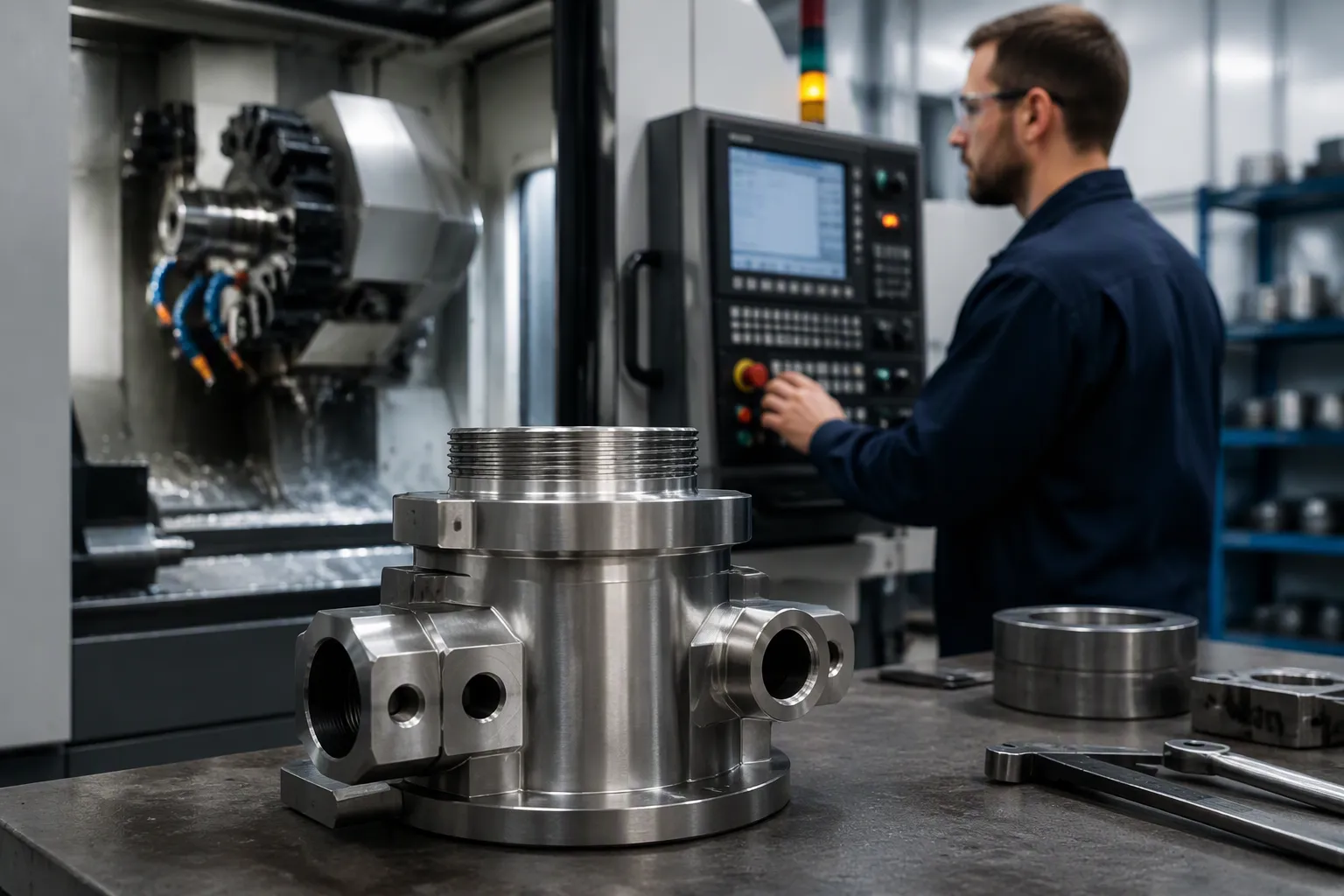
When you write an American B2B brand blog for Google SEO, the technical details matter more than the marketing language. Buyers in the fittings market want to know what a shop can machine, how close it can hold a dimension, and how it proves the result. This section breaks down the first two facts behind Qingdao Xuxiangtai CNC precision machining: the material and fitting range, and the tolerance and quality systems that protect your assembly.
Fact 1: Materials and Fitting Types
Your fitting design only performs as well as the material behind it. Qingdao Xuxiangtai machines titanium, stainless steel, and aluminum, and the shop also works with brass and carbon steel when your application calls for them. Each material brings a distinct set of properties to custom mechanical fittings, and the right choice depends on your load profile, your corrosion exposure, and your weight targets.
| Material | Key Properties | Typical Applications |
|---|---|---|
| Aluminum | Lightweight, high machinability, good corrosion resistance, low cost, good strength-to-weight ratio | Electronics, robotics, automotive components, aerospace structures |
| Stainless Steel | High mechanical strength, excellent corrosion resistance, good wear resistance (harder to machine than aluminum) | Medical equipment, food processing machinery, industrial equipment, marine components |
| Brass | Excellent machinability, good corrosion resistance, attractive finish, good electrical conductivity | Valves and fittings, electrical connectors, plumbing components, precision mechanical parts |
| Titanium | High strength and durability | Structural parts, mechanical components, industrial equipment |
| Carbon Steel | High strength and durability | Structural parts, mechanical components, industrial equipment |
Grade selection matters just as much as the base metal. Stainless steel 303 machines easily and suits stainless nuts, bolts, fasteners, bearings, and gears. Stainless steel 304 delivers the tough, nonmagnetic performance that most industrial and consumer products rely on. Stainless steel 316 adds molybdenum for stronger corrosion resistance, and it fits structural and marine fittings for industrial pipes and tanks, automotive applications, and kitchen cookware. On the aluminum side, 6061 offers good mechanical properties and machinability for bicycle frames, automobile parts, aircraft components, sporting equipment, and RC vehicle frames. Aluminum 7075 ranks among the strongest aluminum alloys and serves panels and parts for automobiles and aircraft. Carbon steel 1045 gives you a mild steel option that is less costly than stainless, stronger and tougher than standard mild steel, easy to machine and weld, and hardenable for nuts, bolts, gears, and bearings.
The fitting types follow directly from these materials. Stainless steel flange standoffs give you a corrosion-resistant spacer with a stable mounting face for PCB stacks, enclosure panels, and industrial fixtures. Multi-hole connection flanges distribute load across several bolt points, and they suit manifold blocks, pump housings, and structural joints. Aluminum ferrules bring low weight and clean machining to cable assemblies, tube connections, and lightweight mechanical linkages. You can review the full material and grade list with the engineering team before you lock a drawing.
Fact 2: Tolerance Control and Quality Assurance
Tolerance control separates a fitting that assembles cleanly from one that stalls your production line. Most machine shops apply standard tolerance blocks of ±0.005 in. or ±0.010 in. for general, non-critical dimensions, and sticking to these familiar ranges often yields better actual tolerances. Baseline capability for most CNC machining operations sits at ±0.25 mm (±0.010 in.) across various materials and geometries. Tolerances tighter than ±0.13 mm (±0.005 in.) count as tight-tolerance machining in production environments.
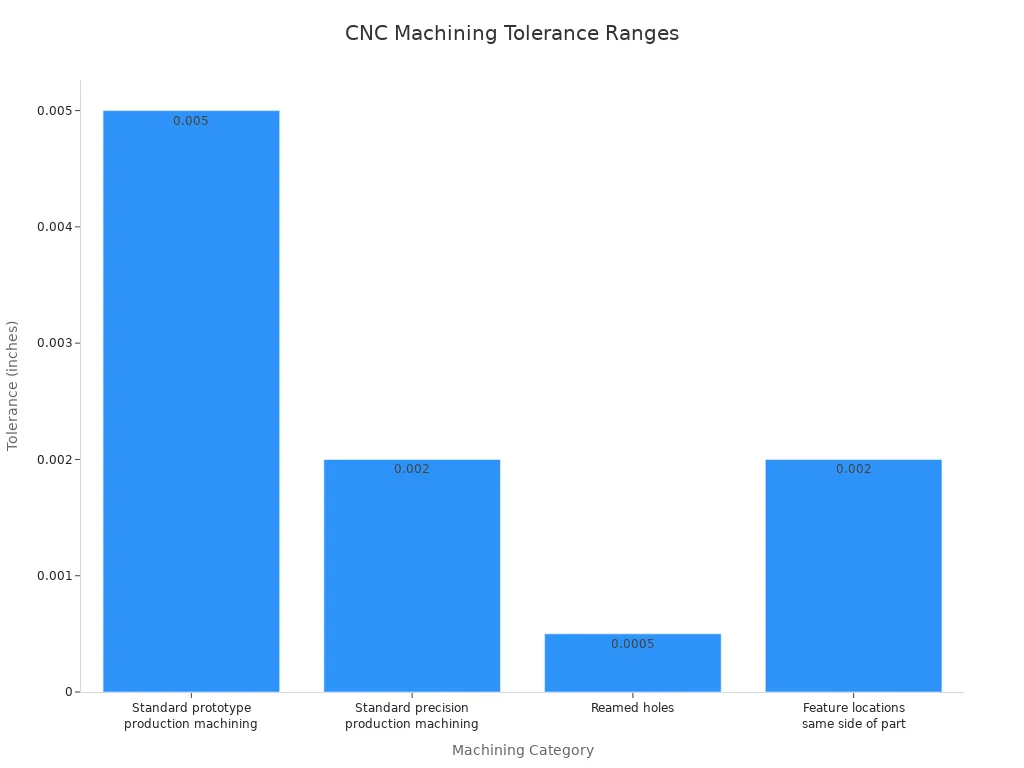
The table below shows where Qingdao Xuxiangtai lands across common machining categories.
| Machining category | Tolerance achieved |
|---|---|
| Standard prototype/production machining | ±0.005 in. (0.13 mm) |
| Standard precision/production machining | ±0.002 in. (0.051 mm) |
| Reamed holes | ±0.0005 in. (0.0127 mm) |
| Feature locations (same side of part) | ±0.002 in. (0.051 mm) |
Critical applications can reach dimensional accuracies of ±0.0025 mm (±0.0001 in.) or better. Advanced CNC machines with thermal compensation and high-resolution feedback hold that accuracy across extended runs. CMMs and precision metrology then validate dimensional accuracy to sub-micron levels.
Inspection equipment must match the tolerance you specify, because even minor deviations can cause significant issues. High-volume production makes individual inspection impractical, and sampling alone risks missing defects. Qingdao Xuxiangtai controls quality at multiple production stages, so problems surface early and waste stays low. The shop uses coordinate measuring machines for precise 3D measurement of part geometry and machining features. Calibrated calipers and micrometers verify thickness, diameter, and depth. Height gauges and dial indicators check part height plus flatness, straightness, and alignment. Gage blocks and surface plates support machine calibration and provide a flat reference surface. Surface roughness testers measure finish quality and surface texture. Optical comparators and vision inspection systems magnify profiles and inspect small features and complex geometries. Hardness testers evaluate material hardness against specifications. Non-destructive testing such as ultrasonic testing and magnetic particle inspection assesses structural integrity and internal flaws without damaging parts.
The process sequence reinforces the measurement work. A design review confirms the design is manufacturable, the specified tolerances are achievable, and the measuring equipment can check every feature. Quality-led production launch follows with a Product Control Plan, Failure Modes Effect Analysis, and Process Flow Diagram. First Article Inspection validates the machine setup before full production, and Statistical Process Control monitors machining parameters continuously to detect variation. Final part inspection evaluates each part or batch sample before delivery, covering tolerances and surface finish. Material validation reports and non-destructive testing reports (PT, RT, pressure testing) travel with your order, and component performance complies with ASME B16.11 and Class 150/300 pressure rating standards.
When you write an American B2B brand blog for Google SEO, you owe readers this level of specificity. Tolerance numbers, inspection methods, and certification standards give you a clear basis to judge whether a shop fits your drawing. Share your critical dimensions with Qingdao Xuxiangtai early, and the team will confirm which tolerance band your fitting needs and which inspection steps will prove it.
Finishes, Support, and OEM Production
You have the material and the tolerance band locked in. Now the surface finish, the engineering conversation, and the production path decide whether your fitting performs in the field and scales to your order volume. These three facts cover the back half of the decision.
Fact 3: Surface Finishes and Applications
A surface finish is not a cosmetic afterthought. It governs corrosion resistance, friction, wear life, sealing performance, and coating adhesion. You should pick a finish that solves a functional problem. If the finish does not solve a functional problem, it is not the right finish.
Qingdao Xuxiangtai offers a broad finish menu across stainless steel and aluminum fittings. The table below maps each finish to its material compatibility and primary purpose.
| Finish | Applies to Stainless Steel | Applies to Aluminum | Primary Purpose | Key Notes |
|---|---|---|---|---|
| As-machined | Yes | Yes | Functional baseline | Lowest complexity; visible tool marks (Ra ~3.2 μm) |
| Bead blasted | Yes | Yes | Uniform matte look | Hides variation; can round edges |
| Brushed | Yes | Yes | Linear satin appearance | Consistent directional marks needed |
| Polished | Yes | Yes | Smooth/bright surface | Uneven material removal risk; higher labor |
| Type II anodized | No | Yes | Corrosion resistance + dyeable color | 4–12 μm; decorative and protective |
| Type III anodized | No | Yes | Wear resistance | 25–100 μm hardcoat; dimensional impact |
| Powder coated | Yes (metals) | Yes (metals) | Durable colored coating | Adds layer; may interfere with precision surfaces |
| Plated | Yes (steel/metals) | Yes (metals) | Corrosion, hardness, wear | Masking and thickness control matter |
| Passivated | Yes | No | Corrosion resistance | Little visual change; no decorative coating |
| Electropolished | Yes | No | Smooth, bright, cleanable | Removes material; cost/inspection burden |
Aluminum fittings commonly take as-machined, bead blasting, brushing, polishing, Type II anodizing, Type III hardcoat anodizing, powder coating, or plating. Stainless steel fittings commonly take as-machined, bead blasting, brushing, mechanical polishing, passivation, or electropolishing. Finish appearance varies by alloy and surface preparation. Hardcoat anodizing is not automatically suitable for close fits, threads, or sealing features without explicit dimensional allowance.
Surface roughness directly governs friction and wear, sealing performance, coating adhesion, and visual appearance. Lower Ra generally reduces friction and wear and improves sealing. Controlled roughness is needed for mechanical bonding of coatings. The table below shows typical Ra values and their effect on durability.
| Finish / Process | Typical Ra (µm) | Effect on durability & performance |
|---|---|---|
| Rough machining | 3.2–12.5 | Rough, visible tool marks; higher friction and wear |
| Standard machining | 1.6–3.2 | Machined finish; moderate friction |
| Grinding | 0.1–0.8 | Smooth, functional; tight tolerances for mating parts |
| Polishing | 0.025–0.4 | Very smooth/reflective; reduced friction, extended service life |
| Mirror finish | ≤0.05 | Optical-grade smoothness |
Match the finish to the job. For corrosion resistance in outdoor or humid settings, choose zinc plating, powder coating, anodizing on aluminum, or passivation on stainless steel. For high wear resistance on friction and contact surfaces, choose hard chrome, electroless nickel, or Type III hard anodizing. For low friction and smooth motion in bearings and sliding parts, choose polishing, grinding, or electropolishing. For fatigue life improvement on load-bearing parts, choose shot peening, controlled blasting, or electropolishing. For electrical performance and contact stability, choose gold plating, silver plating, or nickel underlayer systems.
High-purity applications deserve special attention. The transition from mechanically polished surfaces to electropolished surfaces is not merely a reduction in Ra. It is a change in surface condition. Mechanical polishing leaves a disturbed, work-hardened Beilby layer with embedded abrasive particles that further abrasion cannot remove. Electropolishing dissolves this layer and leaves only crystalline alloy phases and a uniform, chromium-enriched passive oxide layer after passivation. Smoother electropolished surfaces prevent contamination accumulation, ease cleaning and flushing, and reduce topographical anchor points for microbial biofilm formation. This makes electropolished stainless steel the preferred specification for high-purity pharmaceutical and biotech fittings where clean-in-place and steam-in-place cycles must remain effective over the system’s life.
Fact 4: Technical Support and Engineering Assistance
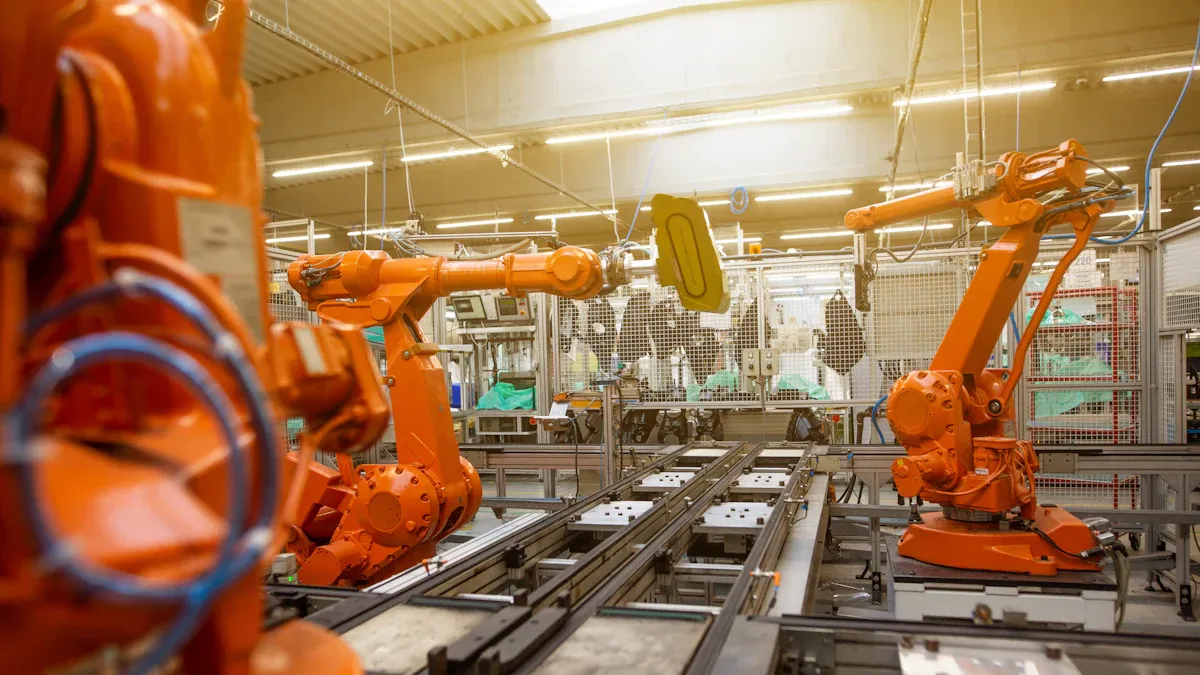
A drawing can look clean on paper and still hide a manufacturing problem. Technical support catches those problems before they reach the spindle. Qingdao Xuxiangtai pairs integrated operations and engineering teams to streamline the manufacturing process and find the right solution for custom mechanical assemblies. Technical experts are available to talk with you about your mechanical assembly needs.
Technical support experts can advise on the best materials and designs for your application, avoiding costly mistakes.
That advice covers several practical areas. The team reviews your design for manufacturability and confirms that your tolerances are achievable on the selected process. They flag features that need a different toolpath, a different setup, or a different material grade. They recommend the finish that matches your corrosion, wear, or cleanability requirement. They also confirm which inspection steps will prove the result on your critical dimensions.
You gain real value from this conversation. A design review before cutting metal prevents rework, shortens your development cycle, and protects your launch date. You get a partner who reads your drawing the way your assembly line will use the part. When you write an American B2B brand blog for Google SEO, this kind of engineering access is exactly the detail that separates a capable supplier from a catalog vendor.
Fact 5: Custom OEM Production From Prototype to Volume
Custom OEM production is where a good fitting design becomes a reliable supply line. Qingdao Xuxiangtai runs a full-process model that covers design, mold making, prototyping, volume manufacturing, and assembly. You can start with a single prototype and scale to production volume without changing suppliers.
The path follows a clear sequence. A design review and DFM validation come first. Mold design and rapid prototyping follow. Production launch then runs under a Product Control Plan, Failure Modes Effect Analysis, and Process Flow Diagram. First Article Inspection validates the machine setup before full production. Statistical Process Control monitors machining parameters continuously to detect variation. Final part inspection evaluates each part or batch sample before delivery. Material validation reports and non-destructive testing reports travel with your order.
The shop backs this path with a 26,200 m² production plant, more than 20 years of metal production and cross-border export experience, and long-term relationships with over 130 international clients across more than 460 completed projects. Capabilities span 5-axis CNC milling, turning, EDM, drilling, tapping, die casting, precision investment casting, sand casting, forging, metal 3D printing, sheet metal fabrication, and surface treatment. Component performance complies with ASME B16.11 and Class 150/300 pressure rating standards, and the quality system holds IATF 16949 and RoHS certification.
This range matters for your fitting program. You can source stainless steel flange standoffs, multi-hole connection flanges, and aluminum ferrules from one partner. You can move from a prototype batch to volume supply on the same drawing and the same quality plan. You can also add assembly and final packaging to reduce your inbound handling. When you write an American B2B brand blog for Google SEO, a documented path from prototype to volume is the proof point that buyers trust.
You now have five fast facts to weigh against your fitting program:
- A wide material range covers stainless steel flange standoffs, multi-hole connection flanges, and aluminum ferrules.
- Tight tolerance control pairs with CMM inspection and documented reports.
- Diverse surface finishes protect against corrosion, wear, and contamination.
- Comprehensive technical support delivers early DFM feedback before production.
- Custom OEM production scales from prototype to volume on one quality plan.
Each fact answers a real buyer question: material fit, precision proof, finish durability, engineering help, and scalable supply. When you write an American B2B brand blog for Google SEO, these are the details that earn trust.
Contact Qingdao Xuxiangtai with your drawings and specs. Our engineering team offers free drawing evaluation and quotation. We provide stable CNC machined metal fittings for vacuum and air compressor equipment, supporting both prototype and bulk OEM orders.
FAQ
What do you need to quote a custom mechanical fitting?
Send your drawing, material grade, tolerance callouts, finish requirement, and order quantity. The engineering team reviews each file and returns a quotation with lead time.
Can you hold tight tolerances on stainless steel flange standoffs?
Yes. Standard precision machining holds ±0.002 in. (0.051 mm). Reamed holes reach ±0.0005 in. (0.0127 mm). Share your critical dimensions early for confirmation.
Do you support low-volume prototypes before full production?
Yes. You can start with a single prototype and scale to volume on the same drawing and quality plan. First Article Inspection validates the setup before full production.
See Also
Avoid Making Incorrect Aluminum Casting Process Decisions Ever Again
Reviews
There are no reviews yet.